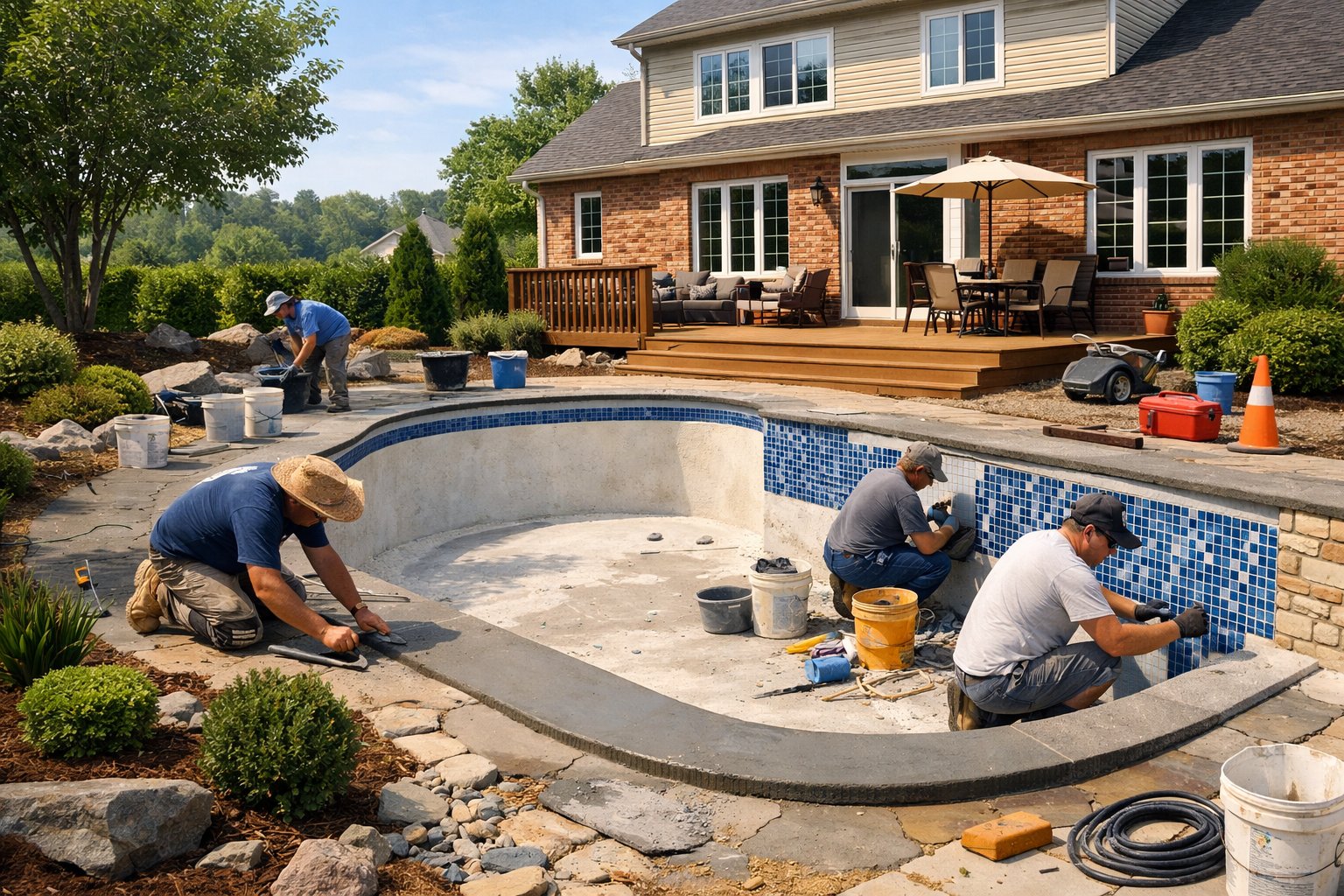
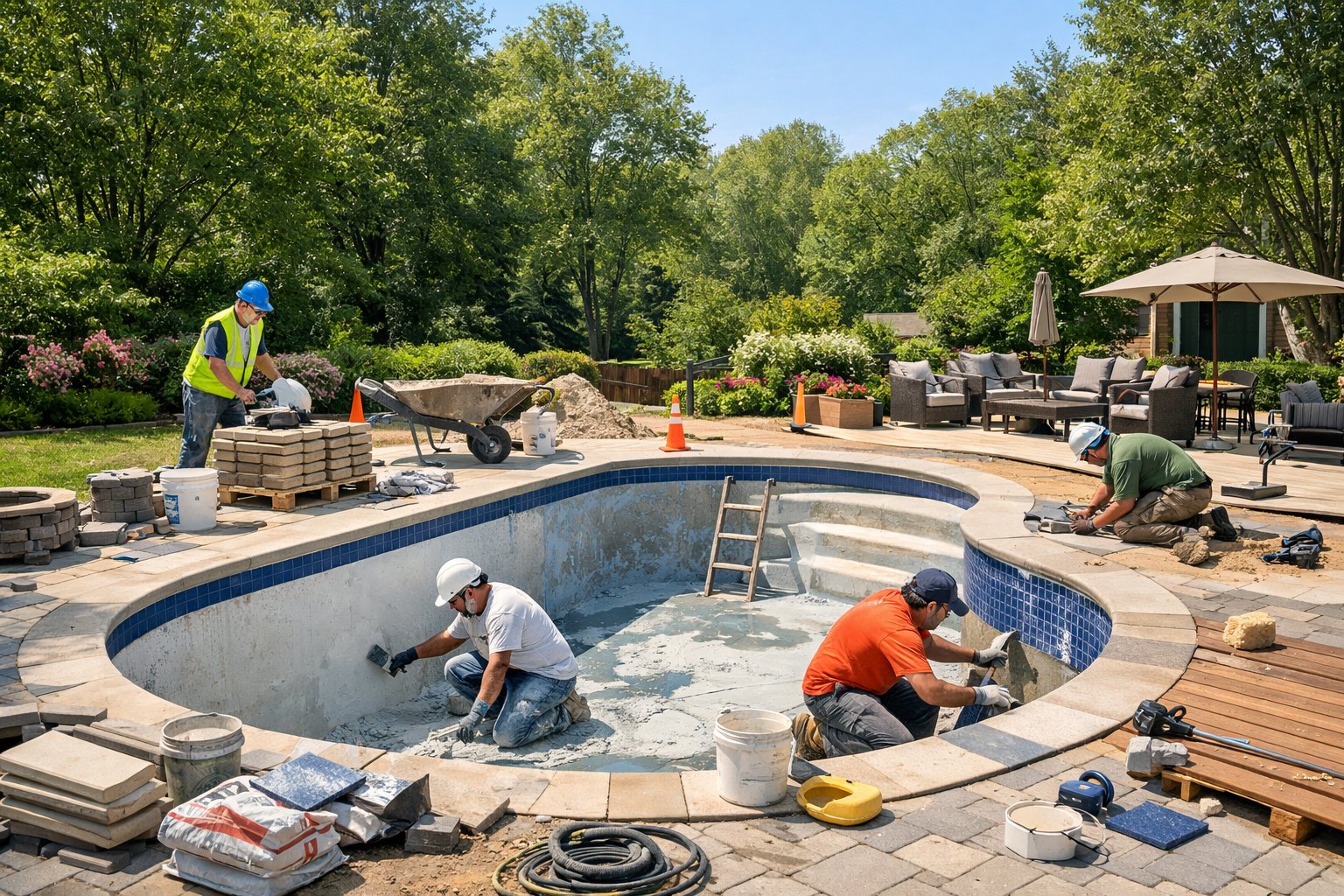
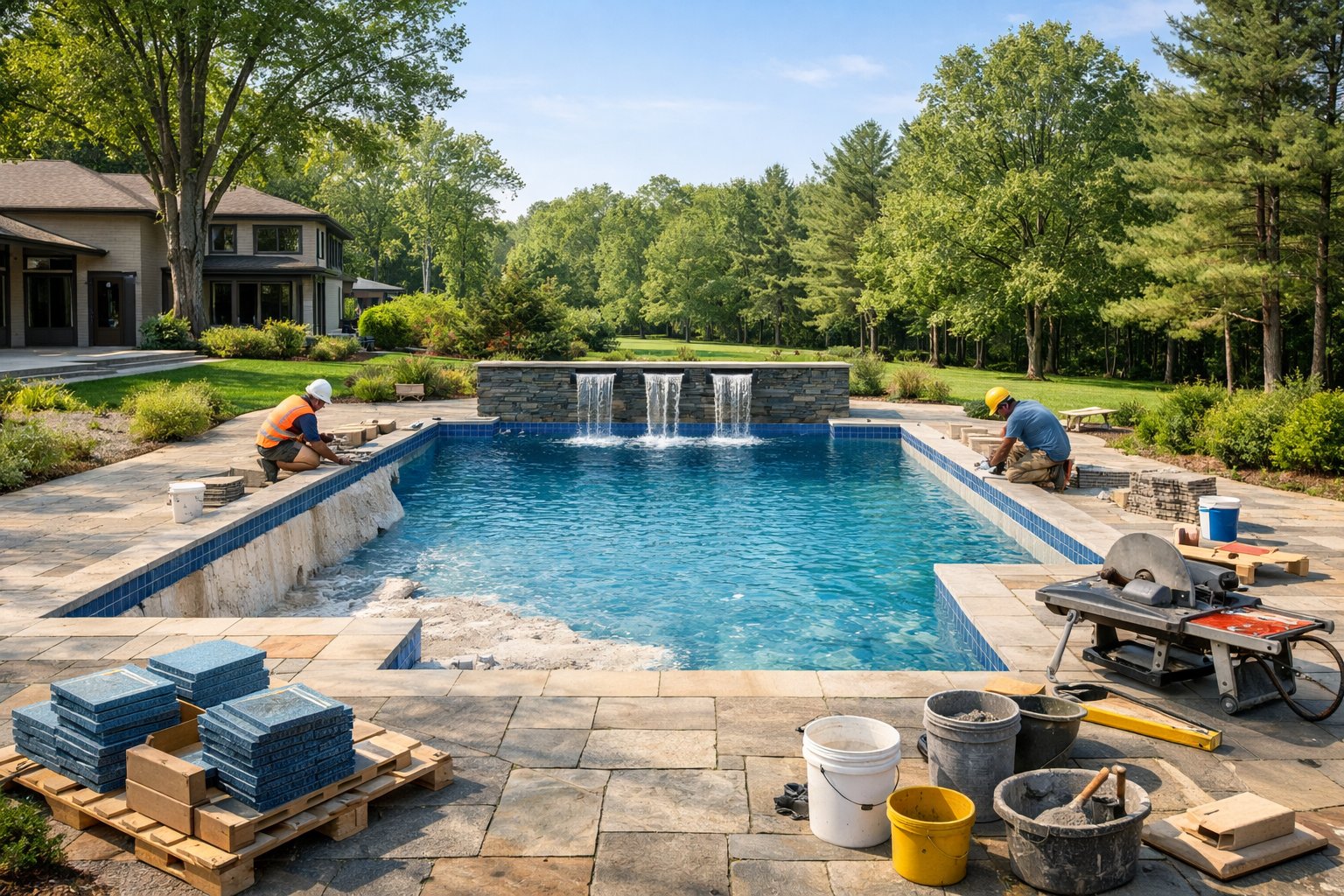
When your pool starts showing cracks, stains, or just feels rough, it’s probably time to think about resurfacing or replastering. Baltimore pool resurfacing and replastering can really extend your pool’s life by fixing damage and giving you a smooth, sturdy finish. Not only does this make your pool look better, but it also helps protect the structure from more serious problems down the road.
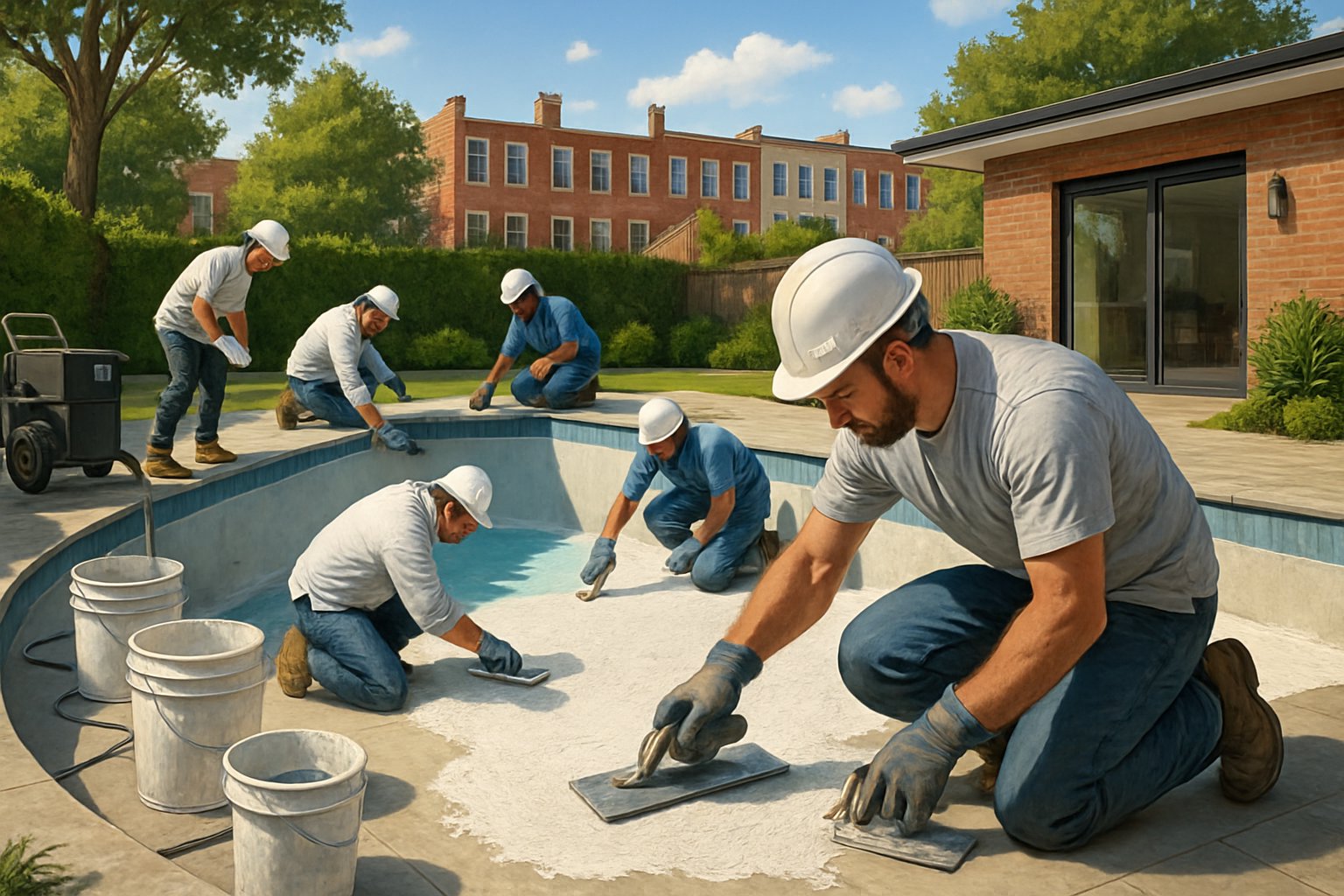
We understand how important it is to work with a company you trust for your pool project. At Dolphin Pool Services, we bring real experience and attention to detail to every job. We make sure your pool gets restored the right way and as efficiently as possible.
Choosing the right materials—and the right trusted experts—really makes a difference in how long your pool stays in great shape.
After resurfacing, keeping up with maintenance is just as important as the work itself. We want you to enjoy a safe, beautiful pool for years, so we focus on giving you honest advice and service you can rely on.
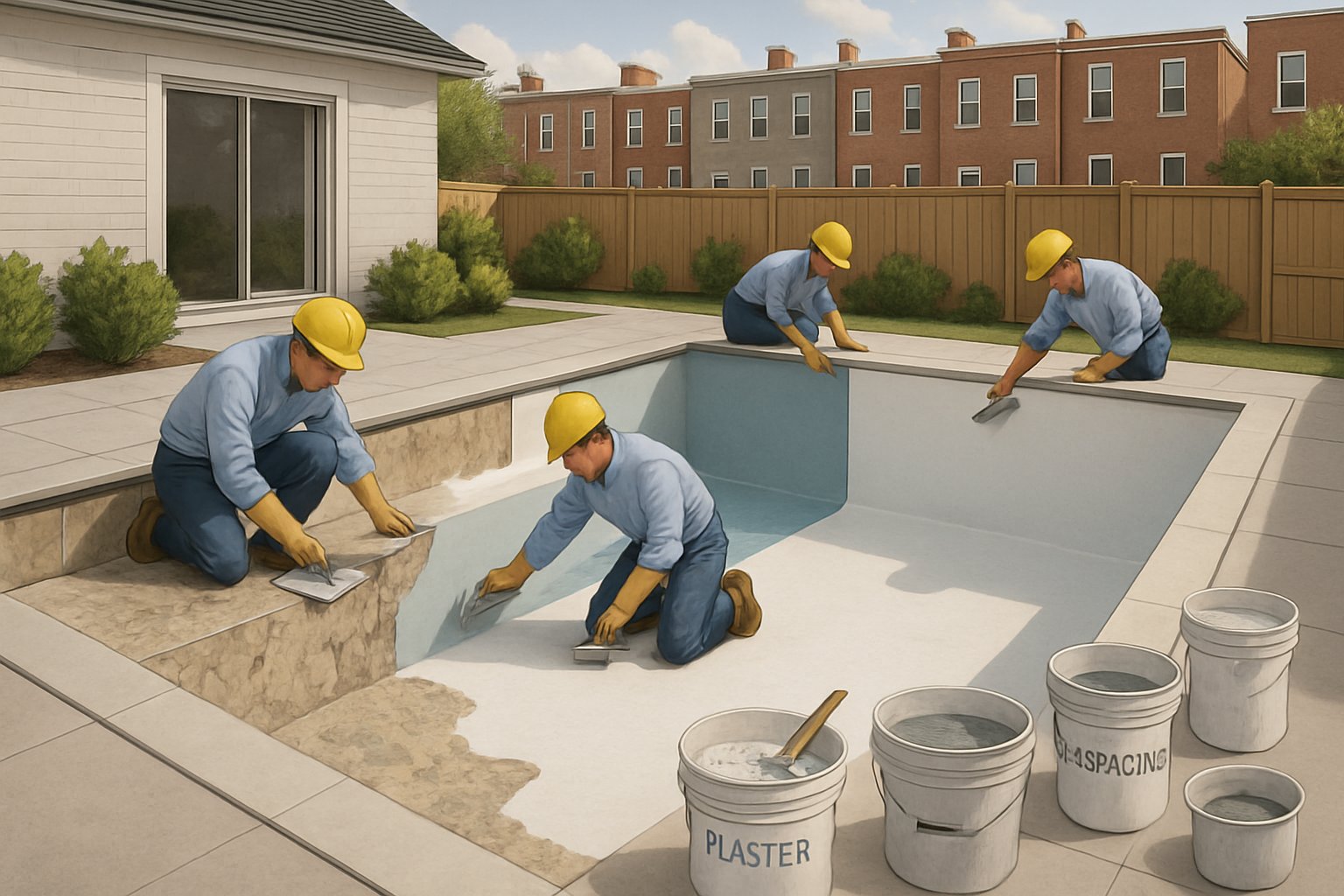
Resurfacing and replastering are essential steps in pool renovation. These updates keep your inground pool both safe and attractive.
Over time, pools just wear out. Resurfacing and replastering fix that damage so your pool can last longer and work better. Knowing what’s involved, when to do it, and why it matters helps every Baltimore pool owner.
When we resurface a pool, we put down a fresh layer on the pool’s inside surface. This can be plaster, pebble, or quartz. Replastering means we renew just the plaster layer, which protects the shell and gives swimmers that smooth feel.
We start by removing the old, damaged surface. Then, we apply new materials. That process fixes cracks, stains, or rough patches that show up from constant water and chemicals.
Maryland weather can be tough on pools, so resurfacing is a must for long-term care.
We always recommend working with professionals like us at Dolphin Pool Services. The right tools and skills matter if you want a durable, high-quality finish that lasts.
Baltimore pool owners should call us for resurfacing when they notice:
Most concrete pools need resurfacing every 10-15 years, depending on how much you use them and your water chemistry. If you ignore these problems, they can get worse and end up costing a lot more to fix.
It’s better to resurface early than wait for a big repair. We offer free assessments at Dolphin Pool Services, so you’ll know exactly when your pool needs attention.
Resurfacing and replastering can really pay off:
For Maryland homeowners, these upgrades mean a safer, more enjoyable pool every summer. When you choose Dolphin Pool Services, you get expert work, good materials, and personal care that fits Baltimore’s unique pool needs.
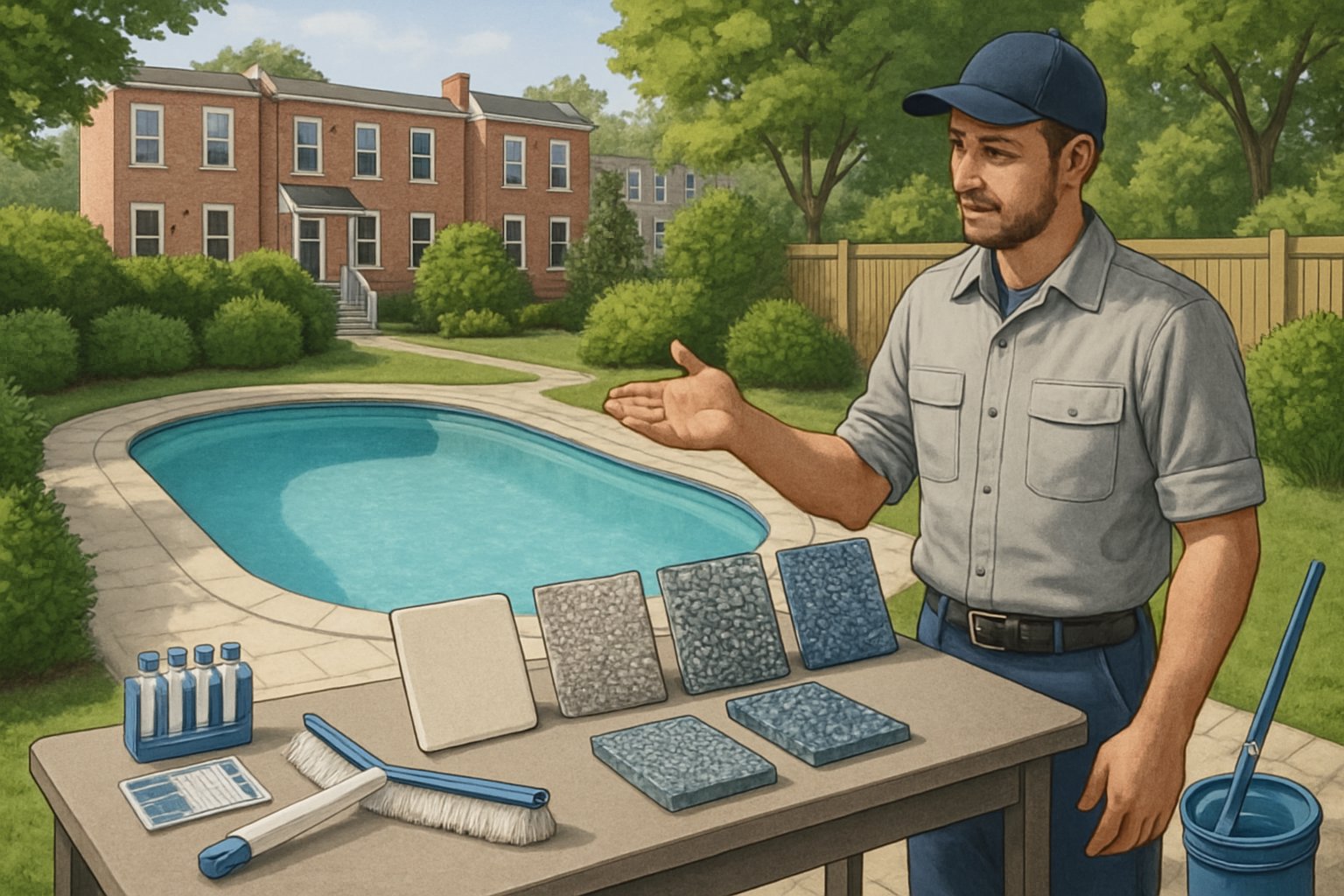
Picking the right resurfacing material really affects how your pool looks and lasts. Good care afterward protects your investment. And honestly, having trusted experts on your side just makes the whole process easier.
We offer several choices for Baltimore pools that balance style and strength. Traditional white plaster is affordable and smooth, but you’ll probably need to replaster every 7-10 years.
Quartz finishes mix crushed quartz with cement, so they last 12-15 years and resist stains and chemical wear. If you want a more natural look, pebble finishes blend plaster with pebbles. They last 15-20 years but can feel a bit rougher underfoot.
Looking for something fancy? Glass bead surfaces give a shiny, long-lasting finish for 15-20 years. Tile offers tons of design options and can last 20+ years, though it’s more expensive.
We always recommend professional installation. The way we apply these materials really affects how long they last and whether your warranty stays valid.
After resurfacing, regular maintenance keeps your new surface looking great. We suggest brushing the walls and floor every week to stop algae, especially in spots where water doesn’t move much.
Vacuuming and cleaning your filters regularly helps keep the water clear.
It’s important to keep your water chemistry balanced. Aim for a pH of 7.2-7.8, alkalinity between 80-120 ppm, and calcium hardness around 200-400 ppm. This prevents stains and surface damage.
Don’t use harsh chemicals or acidic cleaners that can hurt plaster or pebble finishes. Covering your pool when you’re not using it protects against sun damage and debris, which helps your surface last longer.
Choosing a reliable pool company in Baltimore, Virginia, or DC really matters. At Dolphin Pool Services, we bring years of resurfacing and maintenance experience.
Our team handles everything—from prep to application to repairs—with care and precision. That means your surface lasts, looks great, and feels right.
When you work with us, you avoid problems like cracks, uneven finishes, or poor bonding that can happen with DIY or inexperienced contractors.
We focus on clear communication, fair pricing, and personal service. With our help, you can dodge costly repairs and keep your pool safe and beautiful for seasons to come.
Knowing the basics about costs, service quality, pool condition, timing, upkeep, and how weather affects your pool helps you make smart choices for resurfacing in Baltimore. We’re here to give you straightforward answers so you can protect your pool investment.
Pool size, the current condition of your surface, and the materials you pick all affect the price. Upgrades like pebble or quartz finishes cost more but last longer. If you need tile or coping repairs, that’ll add to the total.
Check for companies with solid local experience and great customer reviews. Make sure they’re licensed and insured. We believe you’ll get the best results with trusted experts like Dolphin Pool Services.
If your plaster feels rough or sharp, you see cracks, or notice white calcium deposits, your pool probably needs resurfacing. Water loss and faded or stained plaster are also red flags. Fixing these problems early helps you avoid bigger headaches later.
Most resurfacing jobs take 3 to 7 days, depending on the weather and your pool’s size. Good prep and curing time matter, so we don’t rush or cut corners.
Keep up with vacuuming, skimming, and brushing to keep the surface clean. Balance your water: pH around 7.2-7.6, alkalinity at 80-120 ppm, and chlorine between 1-3 ppm. Skip harsh chemicals, and schedule professional checkups twice a year to keep things running smoothly.
Absolutely. Cold temperatures and those freeze-thaw cycles can really do a number on pool plaster, especially if you don’t keep up with maintenance.
We’ve seen how winter in Baltimore can make plaster crack or erode much faster than you’d expect. That’s why, at Dolphin Pool Services, we bring our experience with the local climate to every job. We know how to help protect your inground pool’s surface, so you can worry less when the temperatures drop.