Columbia Pool Coping Stone Replacement: Process, Benefits & Regional Tips
Marko M
27th October 2025
Replacing coping stones on your inground pool in Columbia? It’s a big deal for safety, style, and keeping your pool in shape.
Weather, chemicals, and just everyday use can crack or loosen those stones before you know it. If you ignore the problem, it just gets worse—and fast. Swapping out damaged pool coping keeps your pool’s edge safe and helps you avoid accidents.
We’ve seen how much the right materials and a solid installation matter. Whether you love brick, natural stone, or concrete, careful work keeps your coping looking sharp and lasting longer.
Trying to DIY this? Honestly, it’s risky and can cost you more in the end.
At Dolphin Pool Services, we bring our experience and all the right tools to every Columbia project. Pool coping isn’t just for looks—it’s a big part of your pool’s safety and strength.
We’re here to help you get through the process with as little stress as possible, so your pool keeps turning heads for years.
Picking tough materials and getting pros to install them makes your pool edge last.
Experienced help means a smoother, safer, and quicker job.
Essential Guide to Columbia Pool Coping Stone Replacement
Swapping out coping stones is about more than just looks—it’s also a safety thing. The right materials and a good process protect your pool’s structure.
Columbia’s weather? Yeah, it matters. Humidity, freeze-thaw cycles, and sun all play a role in what you should pick and how often you’ll need to replace coping.
Signs You Need Pool Coping Stone Replacement
Notice cracks spreading or deep chips? That’s your first warning.
If coping stones wiggle when you step on them, the mortar or adhesive probably failed. You might also see discoloration or rough patches—chlorine and weather can really eat away at stone.
When grout crumbles or you spot gaps, water can sneak in and mess up your pool’s structure. Uneven stones? Big trip hazard.
Don’t wait too long—catching these issues early makes life easier.
Types of Pool Coping Materials and Their Benefits
Brick: Classic and popular in Virginia and Maryland. Bricks last, but you’ll need to keep an eye out for cracks in cold weather. Install runs $8 to $15 per linear foot.
Pavers: Choose from concrete or clay pavers. Concrete’s affordable and easy to swap out. Clay gives you better grip—less slipping.
Natural Stone: Think travertine, limestone, granite. These look amazing and hold up well, but they’re pricier. Travertine’s a favorite since it stays cool and has a nice texture.
Concrete: Budget-friendly, and you can get it stamped or colored to fake the look of stone. Just remember to seal it every few years.
If you’re not sure what to pick, we at Dolphin Pool Services are happy to help you match your style, budget, and local weather.
Step-by-Step Replacement Process for Coping Stones
We start by clearing the area and laying down tarps to protect everything nearby.
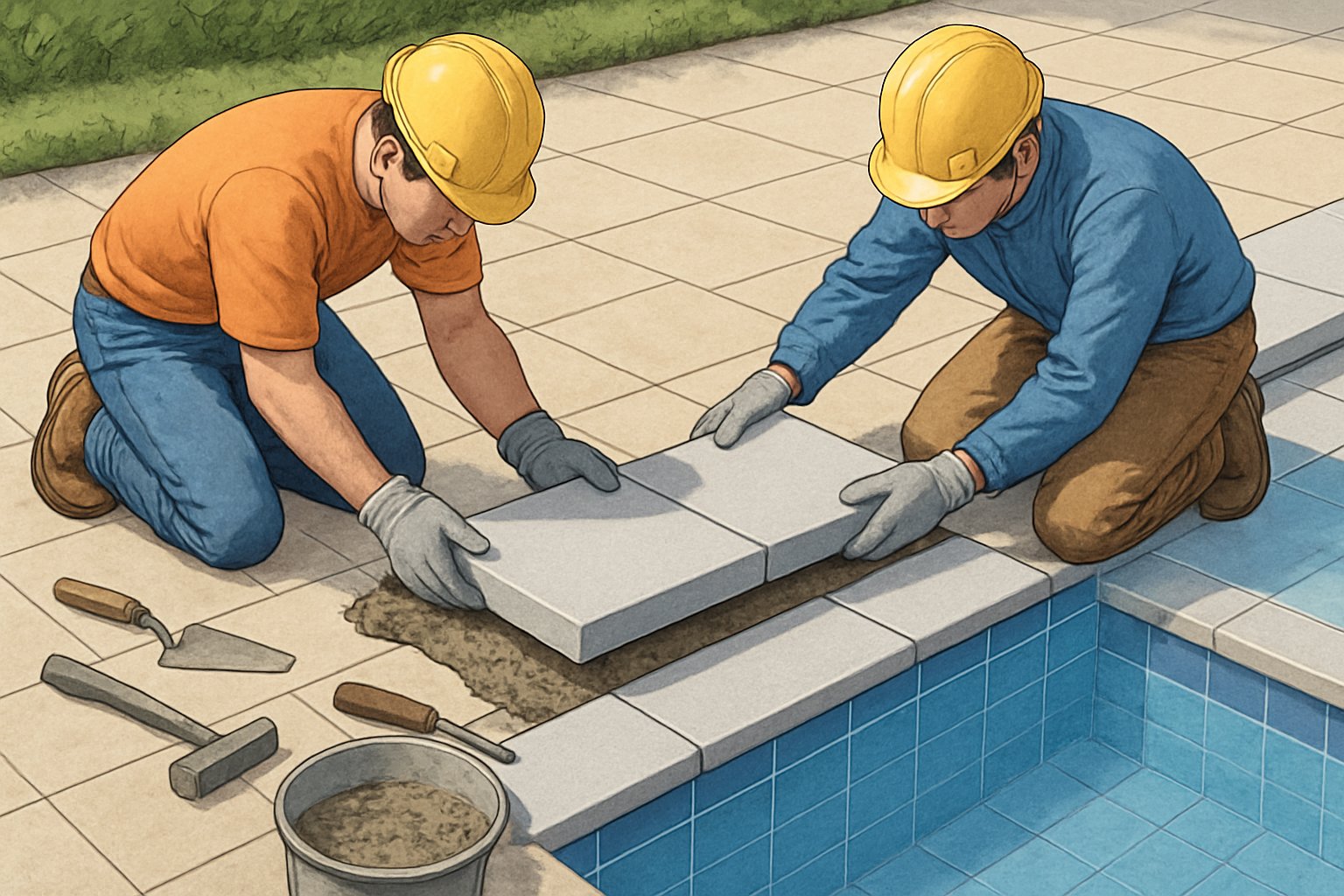
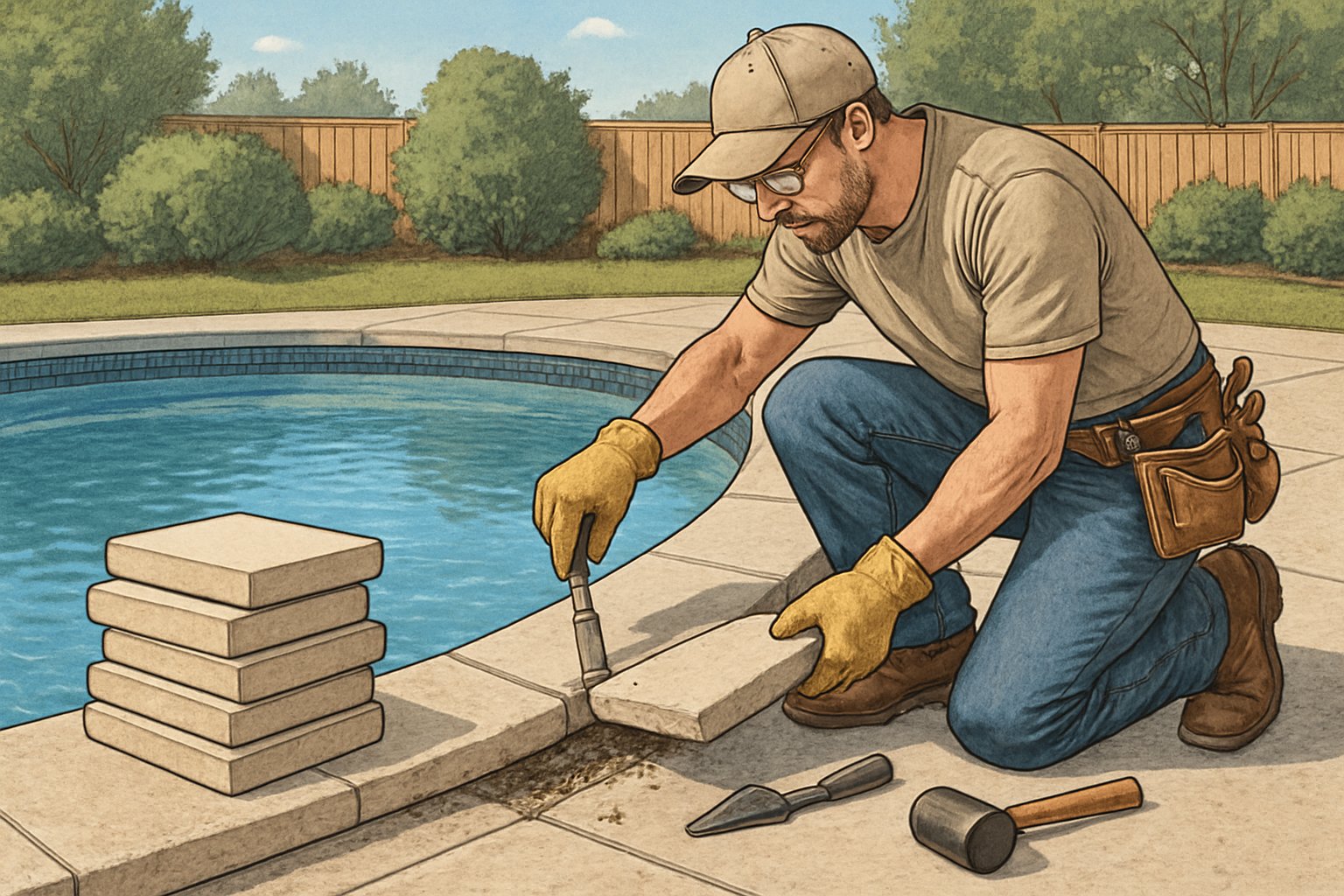
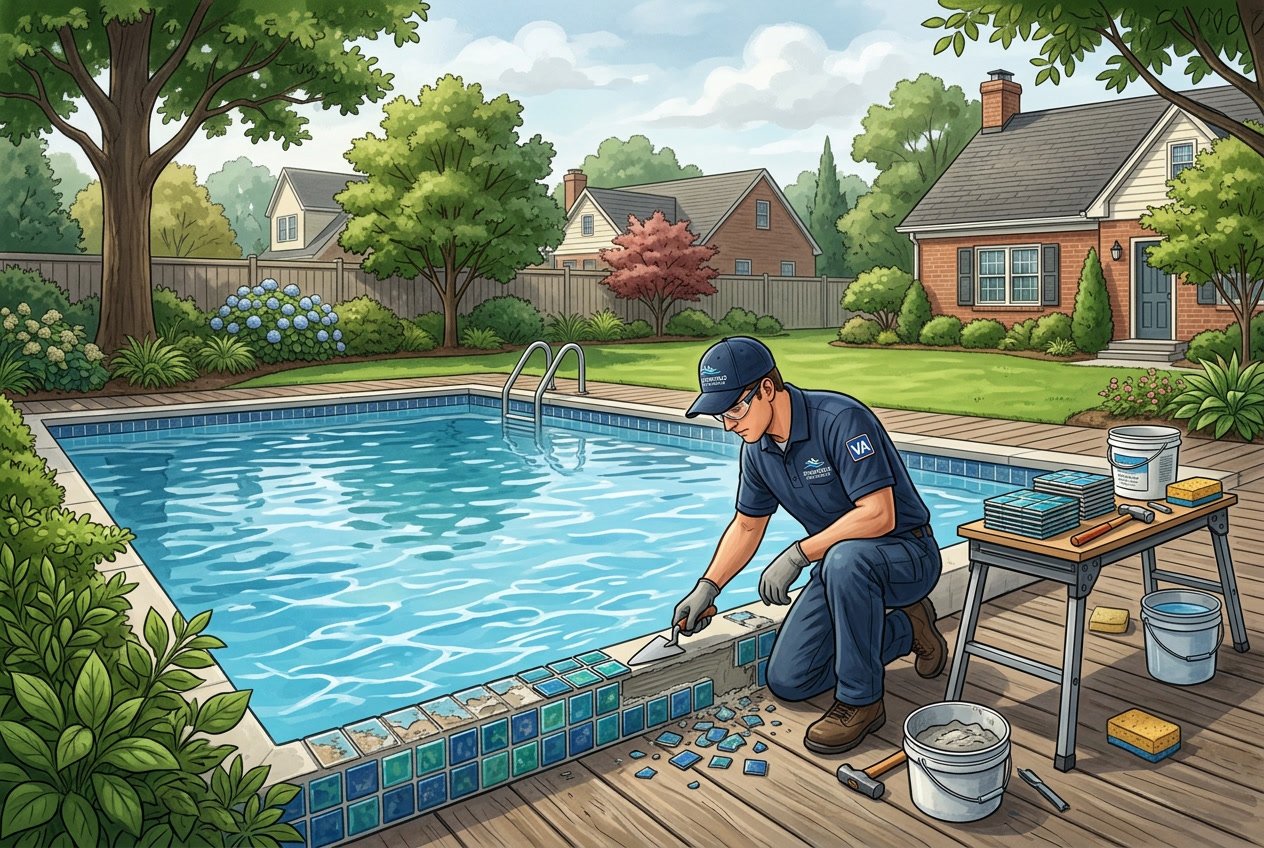
Next, we carefully pry up the old coping stones with chisels and hand tools, making sure not to damage the pool shell.
We check the shell and deck for any cracks or water damage. If we find something minor, we patch it up before moving on.
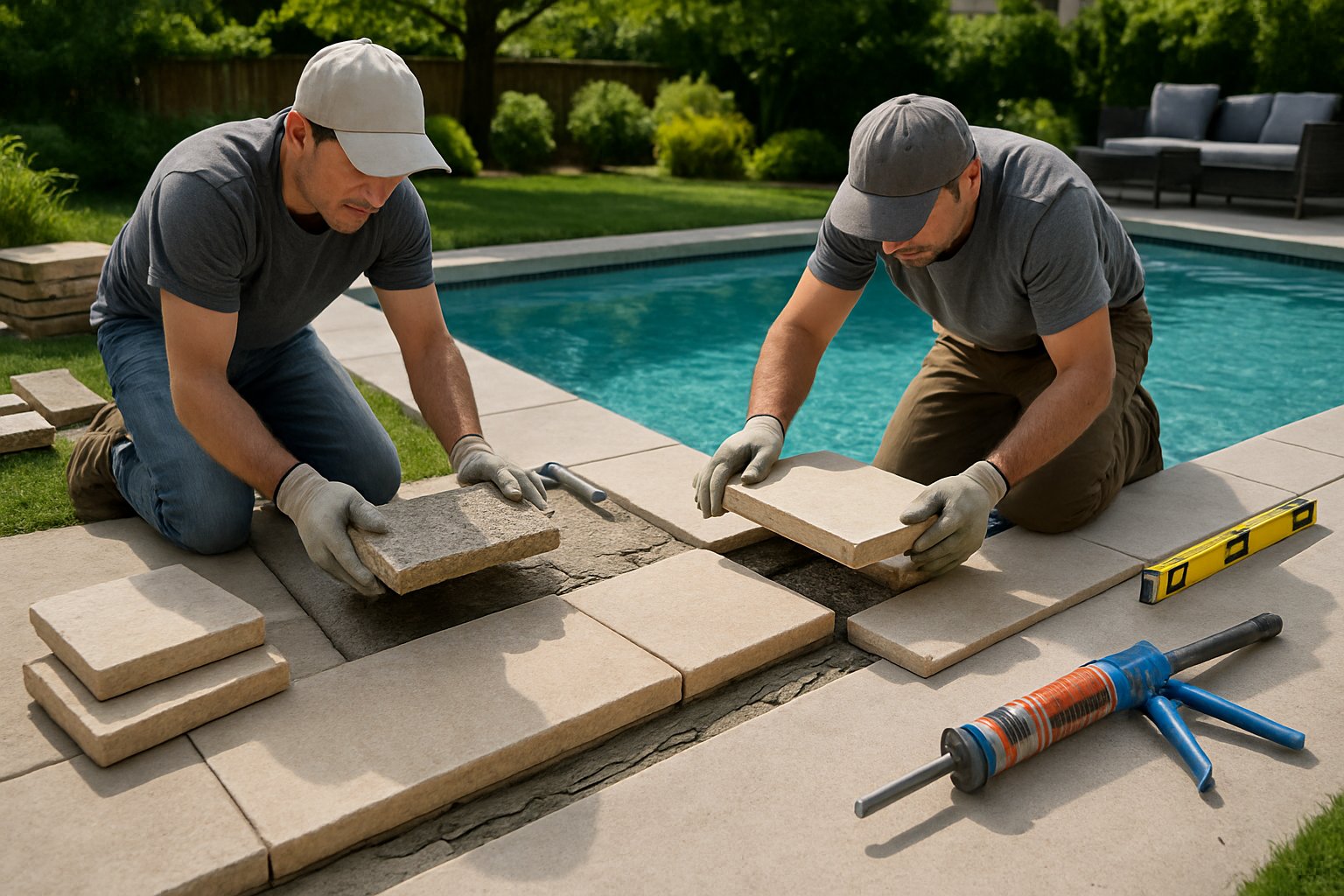
We lay down a fresh mortar bed or adhesive, then set the new stones in place. Leveling and spacing matter, so we use spacers or string lines to get it right.
Once it’s all set, we wipe off any extra mortar right away.
The new coping needs about 24-48 hours to cure. After that, we seal the joints to keep water out.
We handle every step, so you get a sturdy, clean finish without the headaches.
Regional Considerations for Virginia, Maryland, and DC
Here in the Mid-Atlantic, freeze-thaw cycles can really mess with your pool coping. Cracks get worse in winter, so regular checks are a must.
High humidity and chlorine speed up wear and tear. Natural stone should resist moisture and stains, while bricks need good drainage or they’ll soak up water.
When you’re picking sealants or planning maintenance, it helps to know the local weather. We’ve worked all over Virginia, Maryland, and DC, so we know what holds up best here.
Professional Pool Coping Services and Long-Term Maintenance
Replacing coping stones isn’t just about swapping out old for new. It takes skill and a clear plan to keep your inground pool looking good and holding up over time.
Once you’ve got new coping, a little maintenance goes a long way.
Advantages of Hiring Pool Services for Coping Replacement
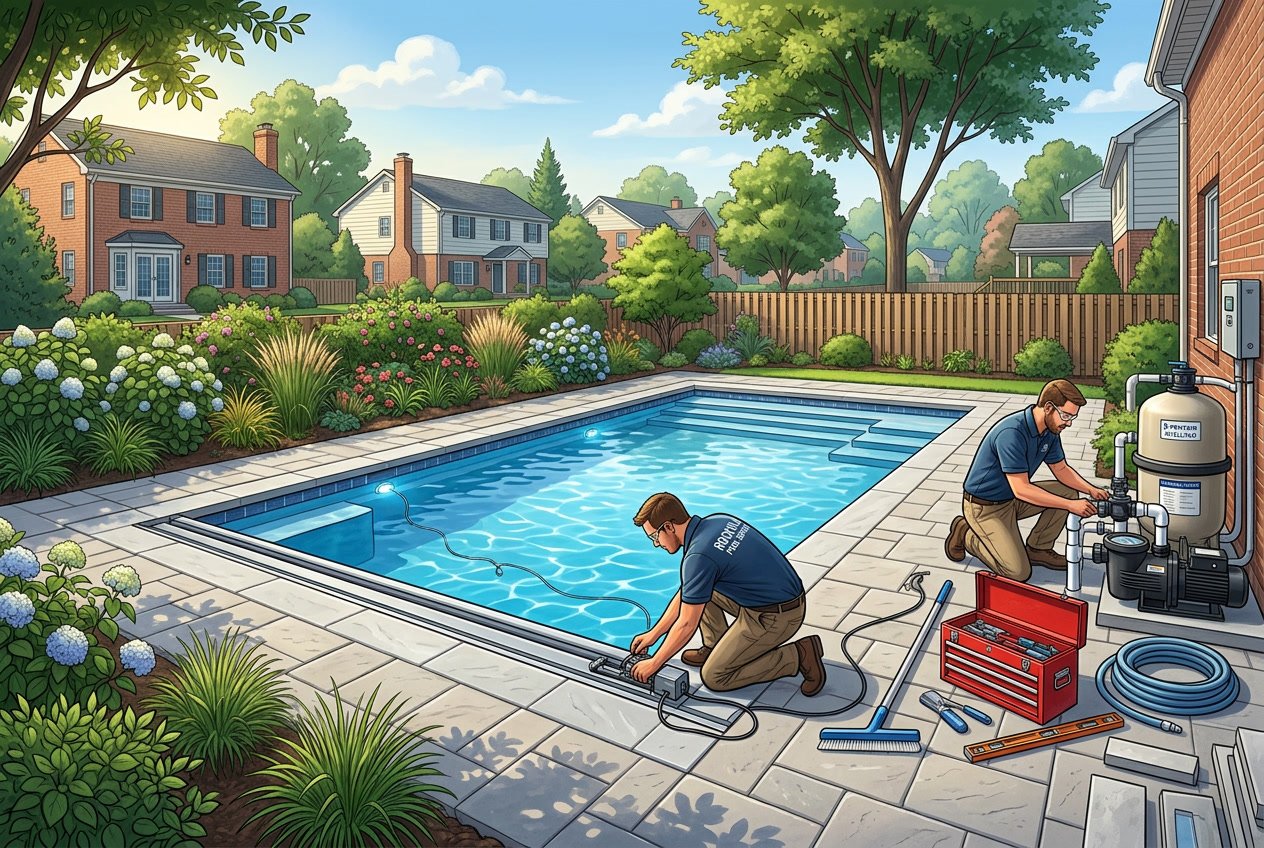
When you hire us, you get a team that knows how to do the job safely and right. We use the proper tools and materials to avoid damaging your pool shell.
Matching new coping to your pool’s look? We’ve got you. We check for hidden problems, like cracks or weak spots, before we start.
Our experience keeps things moving and helps you avoid costly mistakes. We always clean up and haul away the old materials, so there’s no mess left behind.
Cost Factors and Value of Pool Coping Replacement
Pricing depends on the stone, your pool’s size, and the shape things are in now. Travertine and granite look fantastic and last, but they’re pricier. Cheaper options might not hold up as long.
Labor costs depend on how tricky the job is and how much prep work we need to do.
Going with pros like us adds value. We help your pool last longer and avoid bigger repairs. Quality coping cuts down on leaks and erosion.
We always aim to balance cost and quality—nobody wants to overpay for something that doesn’t last.
Best Practices for Ongoing Pool Coping Maintenance
Once your coping is in, regular upkeep keeps it looking sharp.
We suggest cleaning off dirt and algae with non-abrasive cleaners. Check for chips, cracks, or loose stones at least once a year.
Fixing little issues early stops them from turning into big problems. Sealing every few years adds a layer of protection from water and fading.
We can set up a maintenance plan that fits your pool and your schedule.
Frequently Asked Questions
If you’re wondering about materials, the steps, or what it’ll cost, you’re not alone. We get a lot of questions about how climate affects coping, whether you have to drain the pool, and what to look for in a good service.
What are the advantages of different stone types for pool coping?
Travertine and limestone? They’re tough and look amazing. Travertine stays cool, and it’s not slippery. Granite’s strong but comes with a higher price.
Concrete is budget-friendly and customizable with color or patterns.
Brick gives you a timeless look but takes more care in cold climates. Pavers let you get creative—plus, you can replace just one if it gets damaged.
How does the pool coping replacement process work?
First, we gently remove the old, busted coping stones without harming the pool shell.
We clean and check the area for cracks or hidden damage. Then we set the new coping on mortar or adhesive, making sure everything’s level.
Last step: seal it up and let it cure for solid durability.
What should I look for in a pool coping replacement service?
Go for experience. You want a team that knows coping materials and how to install them right.
Check that they use the proper tools and won’t mess up your pool structure. A good company spots hidden issues and gives you advice on keeping things in shape.
We at Dolphin Pool Services cover every detail, so your pool stays safe and looks great.
What is the average cost for replacing pool coping?
Price depends on what you pick and how big your pool is. Concrete usually runs $5 to $15 per linear foot.
Travertine or granite? That can be $20 to $40 per linear foot, depending on the grade.
Labor and the job’s complexity matter, so it’s smart to get a few quotes.
How can pool coping be replaced without removing water from the pool?
You don’t always have to drain the pool. We can carefully take out the old coping and put in the new while the pool stays full.
It just takes experience and the right tools. We make sure everything’s secure and sealed before calling the job done.
Are there any considerations for pool coping replacement in specific climates?
If you live somewhere cold, those freeze-thaw cycles can really do a number on coping. Cracks and shifting? Yeah, we’ve seen it plenty of times.
We always pick materials that stand up to freezing and make sure drainage is solid. You don’t want water hanging around when it gets icy.
Hotter climates bring their own challenges. Stones can fade or get slick if they’re not up for the sun and heat.
We recommend regular sealing—honestly, it’s a lifesaver for coping stones no matter where you are. At Dolphin Pool Services, we always adjust our approach based on your local weather. It’s not one-size-fits-all, and we actually think that’s a good thing.
Get your pool in perfect shape today!
Ensure your pool stays in peak condition with the expertise of our professional, certified operators. We provide top-quality service to keep your pool clean, safe, and well-maintained year-round. Contact us today through our online form to schedule best pool services!