Pool Caulking/Re-Caulking in Chantilly, VA: Expert Local Insights
Marko M
8th March 2026
You count on the caulk between your pool deck and coping to keep water out, prevent slipping, and avoid those frustrating repairs that can sneak up on you. We always suggest re-caulking as soon as you spot cracks, gaps, or stiff caulk. Replacing old material right away helps prevent deck sinking, freeze damage, and keeps your pool safe and watertight.
We know Chantilly’s weather and quirks, and we use solid materials and techniques that work here.
When you trust us at Dolphin Pool Services, you save time, avoid repeat headaches, and protect your pool investment.
Key Takeaways
Re-caulking fixes visible cracks and stops water damage.
Professional service gives you a durable, weatherproof seal.
Timely repair helps you dodge big repair bills down the road.
Essential Guide to Pool Caulking and Re-Caulking
Good caulking keeps water out, protects the deck and coping, and makes your pool safer.
We focus on clear signs, the right products, and a professional process to keep your Chantilly pool in great shape.
Why Pool Caulking Matters for Longevity and Safety
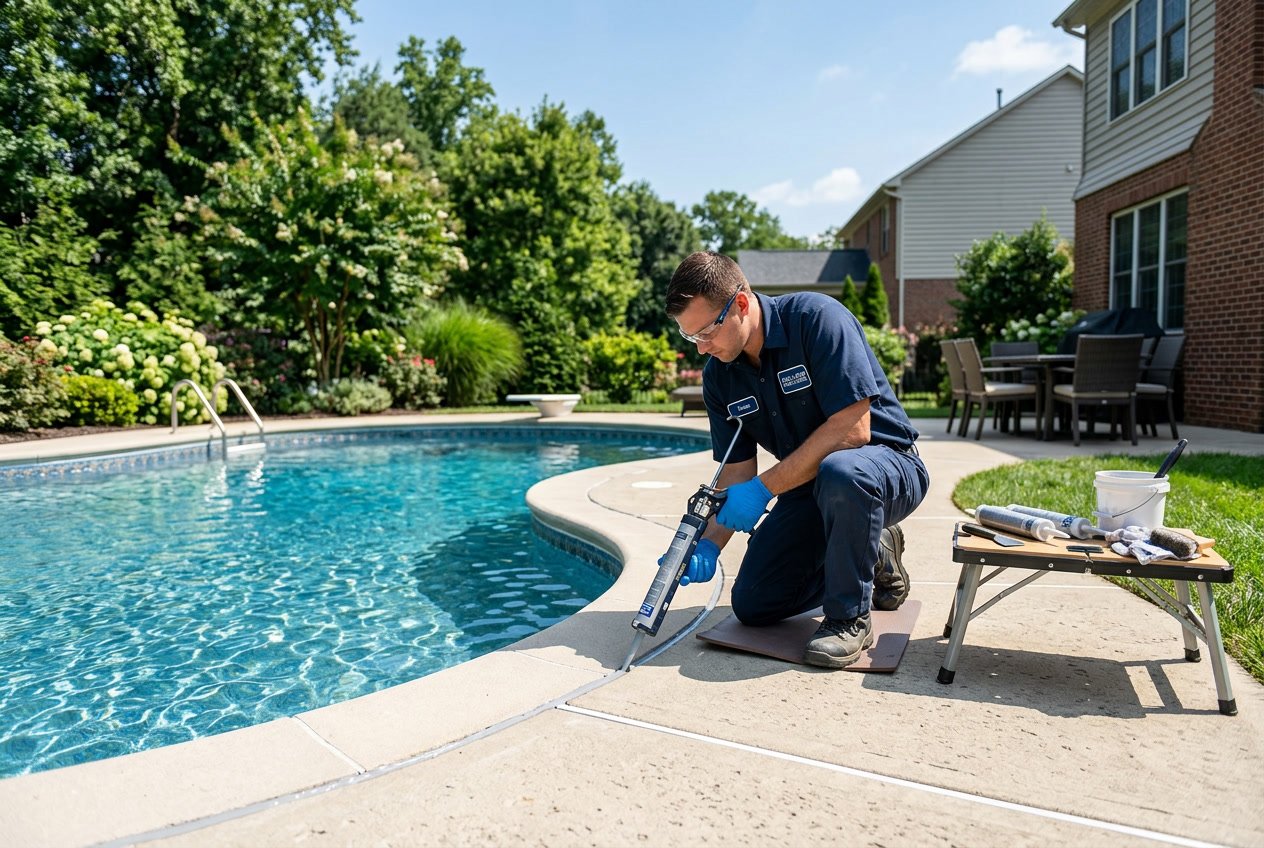
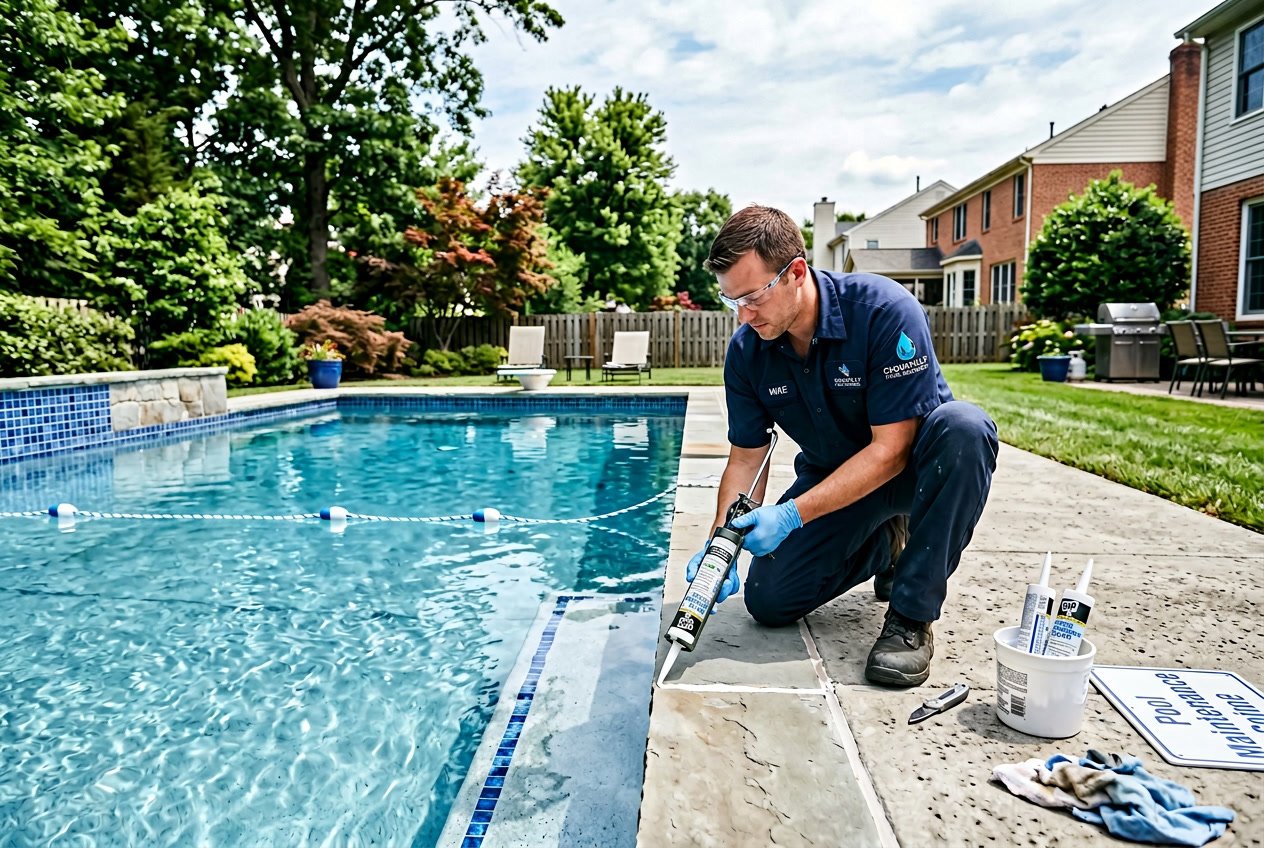
Caulking seals the expansion joint between the coping and deck.
If water sneaks in, it can freeze, erode the base, and loosen tiles or coping.
That sort of damage can turn into expensive repairs during pool maintenance.
A solid seal also blocks sand and debris, which can cause cracking if it gets packed in.
We check the perimeter every year, especially after rough weather in Virginia.
Staying on top of this keeps small problems from turning into big ones.
We recommend hiring a licensed pool contractor for full replacements.
We use backer rod, approved pool-grade sealants, and set the joint depth right to make sure the seal lasts.
Warning Signs Your Pool Needs Re-Caulking
Keep an eye out for cracks, gaps, or caulk pulling away from the concrete or coping.
If the caulk feels brittle, shows holes, or starts to cup, it’s lost its stretch and needs to go.
Watch for water slipping under the coping, missing grout, or deck slabs that move.
Virginia’s freeze/thaw cycles can turn small issues into big ones fast.
When you see a lot of these problems, we usually recommend removing and replacing all the old caulk.
We can check it out and let you know if a full replacement or a smaller repair makes sense.
Selecting the Right Caulking Materials and Techniques
We always pick pool-grade, UV- and chemical-resistant sealants made for pools.
Polyurethane and hybrid mastics rated for pools hold up well.
We avoid basic silicone that isn’t made for pool joints.
We use closed-cell foam backer rods to set the right joint depth—usually about half the joint’s width.
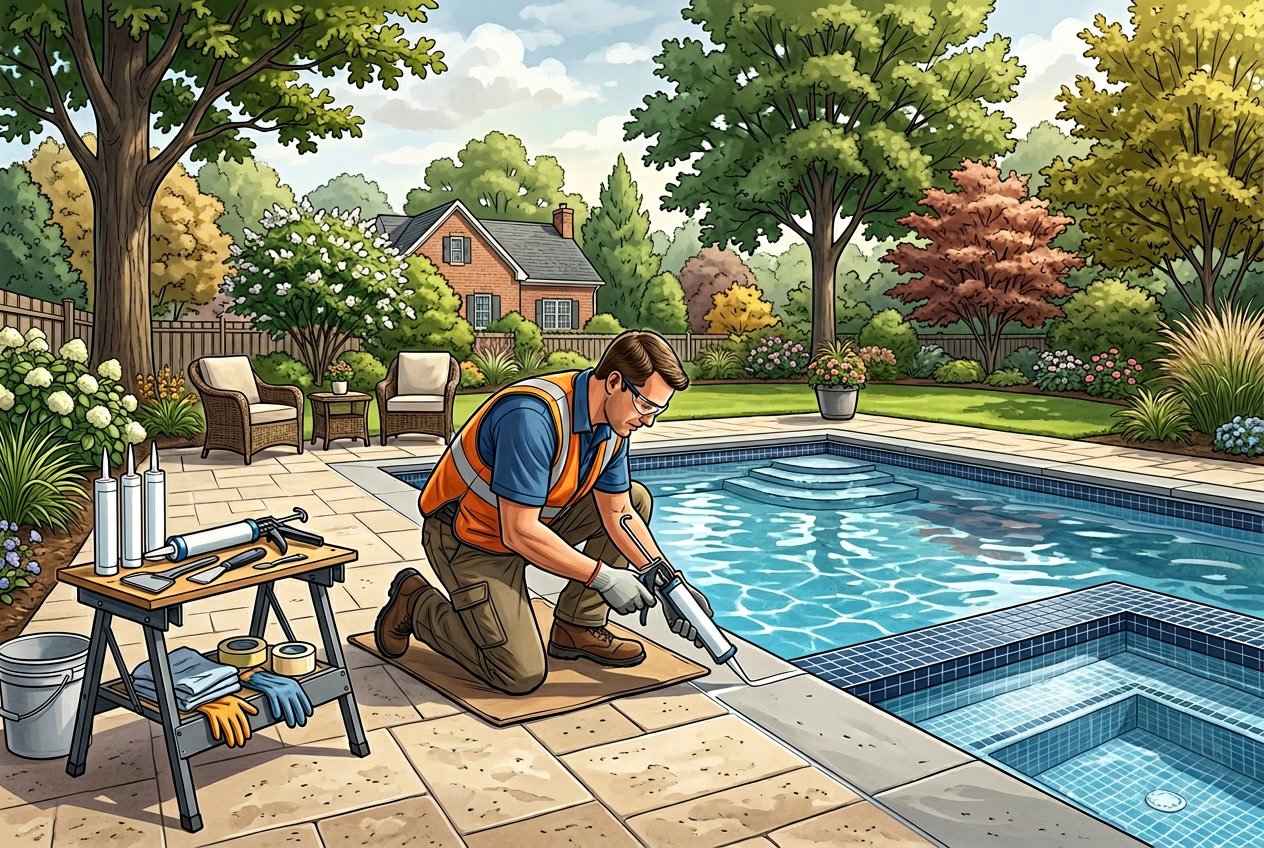
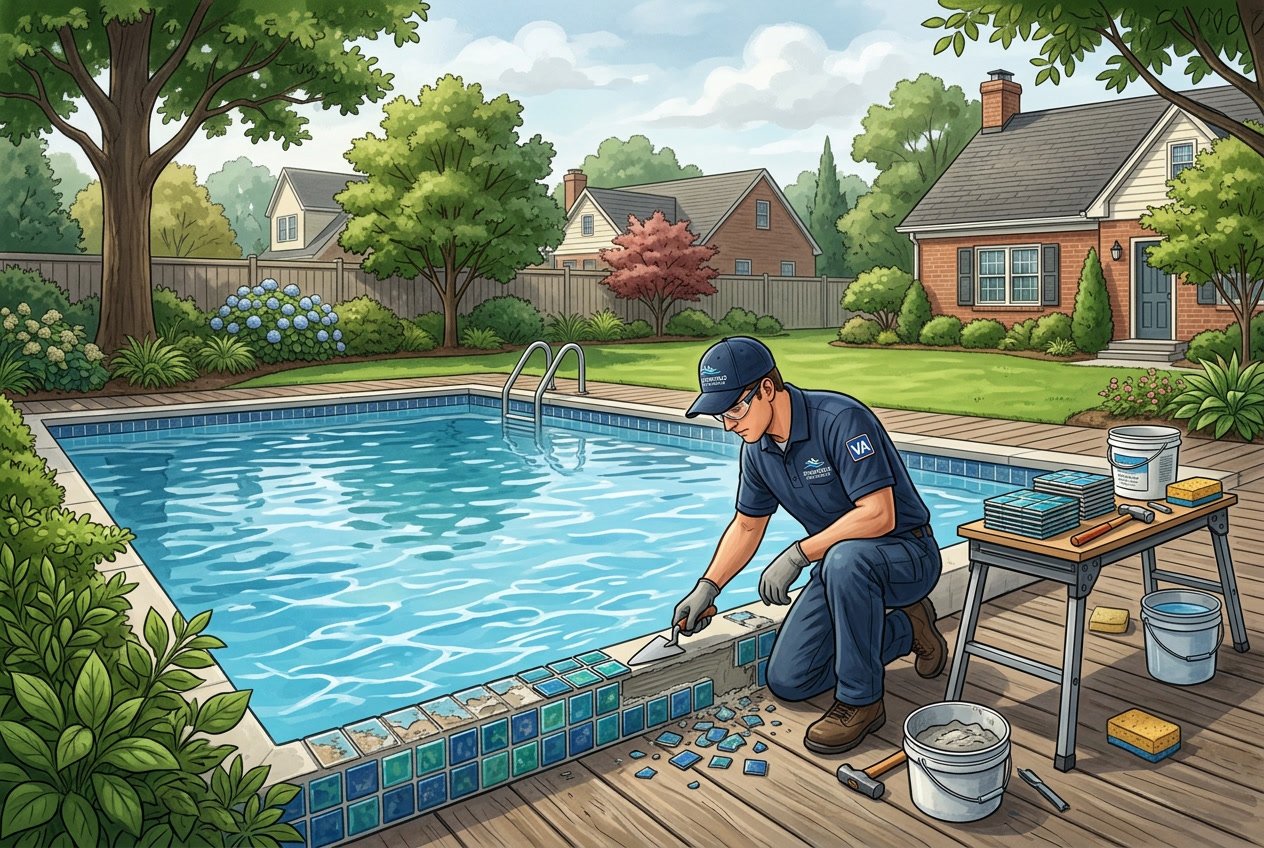
We remove old caulk and backer rod, clean and dry the groove, and put in a new backer rod.
If the manufacturer says to use primer, we’ll do that too.
We tool the sealant for a smooth finish and let it cure fully before refilling or heavy use.
For the best results in Chantilly, let us at Dolphin Pool Services handle the inspection, materials, and installation.
Professional Pool Caulking Services in Chantilly, VA
We fix leaks, protect your pool deck and tile, and make sure your pool’s ready for the season.
Our caulking work fits right in with your regular pool maintenance, renovations, and repair needs across Virginia, Maryland, and DC.
Finding a Qualified Pool Contractor
We know Chantilly and Northern Virginia inside out.
Our team is licensed, insured, and based locally.
We provide references from recent caulking jobs on residential inground pools.
We use urethane, non-sag sealants and always install backer rod when needed.
We remove old material by hand and tool the new joints for a clean finish.
We give you clear, written estimates and stand behind our work.
Comparing DIY vs. Professional Caulking
DIY might sound tempting for tiny joints if you’re handy, but it’s easy to miss the mark.
If you don’t prep right, use the wrong sealant, or skip the backer rod, leaks and deck damage are almost guaranteed.
We’ve fixed plenty of DIY jobs that ended up costing more in the long run.
Our team knows how to spot joint issues, use the right products, and prep the area correctly.
We remove the old caulk, dry the joint, and install backer rod and non-sag urethane for lasting results.
Hiring us means less risk and better protection for your pool, tile, and decking.
When it comes to inground pools or complicated joints, it’s usually best to let our pros handle it.
Integrating Caulking with Broader Pool Maintenance
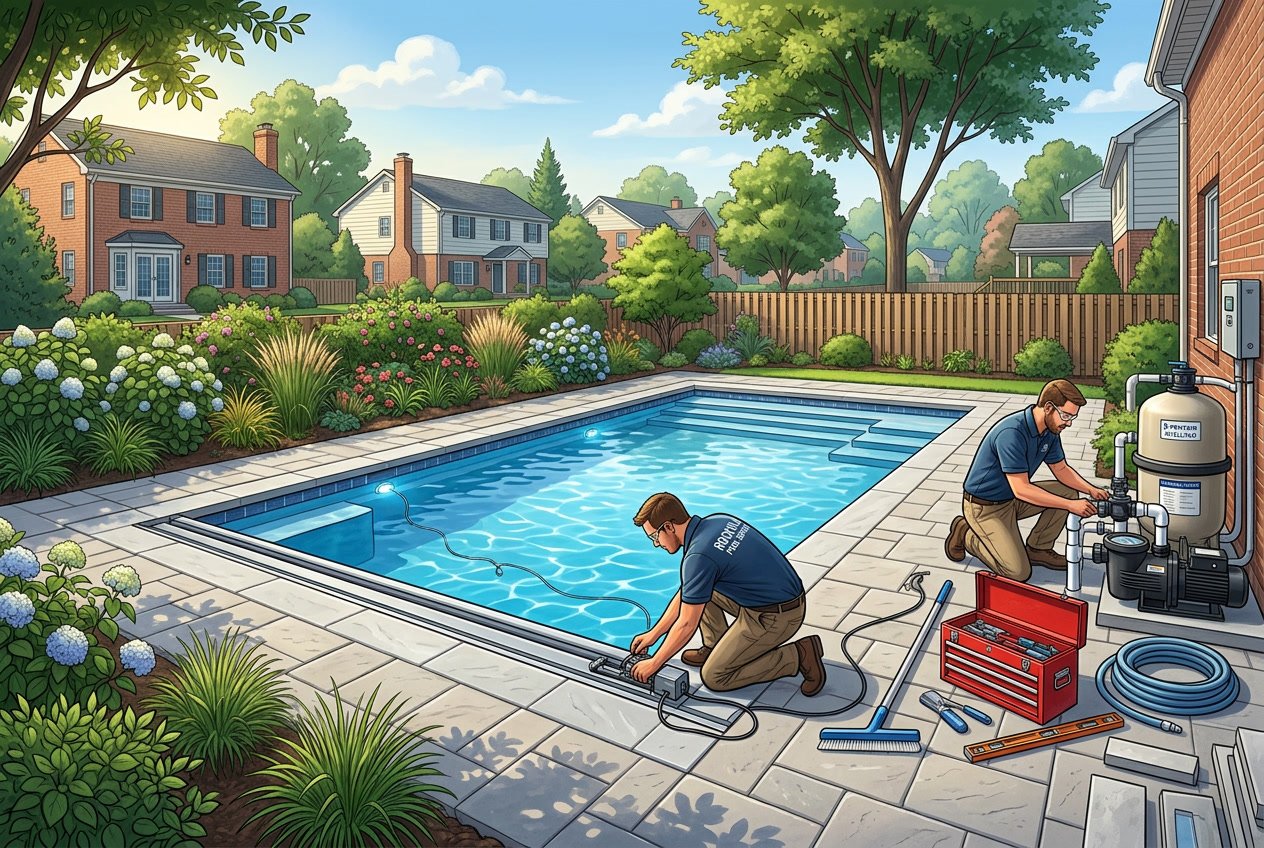
We often schedule caulking with annual pool openings, equipment checks, or renovations.
It’s easier to handle everything at once and avoid doing the same work twice.
Caulking goes hand-in-hand with tile repair, deck sealing, and pump or plumbing checks.
By coordinating these tasks, we help stop water from sneaking under your decking or into the pool structure.
We include caulking checks in our routine maintenance plans.
During spring openings or winterizations, we inspect expansion joints and suggest replacement every 2–4 years if needed.
When you work with Dolphin Pool Services, we document caulk condition, recommend the right materials, and coordinate repairs with other pool services.
That way, your pool stays safe and works the way it should.
Frequently Asked Questions
We get a lot of questions about timing, materials, warning signs, and local options.
We always recommend letting a reputable pro like Dolphin Pool Services handle inspection and replacement for the best long-term results.
What is the typical cost range for pool caulking services in the Chantilly area?
Pricing depends on the length, condition, and how easy it is to reach the joint.
We provide written estimates after checking things out in person so you know exactly what to expect.
How often should pool caulking be replaced to maintain its effectiveness?
Most pool caulk lasts a few years, but it depends on sun, chemicals, and how much the joint moves.
We check joints every season and recommend replacement when you notice flexibility loss, gaps, or separation.
Are there any recommended companies for pool caulking and re-caulking near Chantilly, Virginia?
If you want reliable, local pool specialists with strong references and proper warranties, you’ve found us.
Dolphin Pool Services offers professional inspection, complete removal when needed, correct joint sizing, and manufacturer-recommended materials.
What are the common signs that indicate a pool needs re-caulking?
Look for cracks, gaps, or caulk pulling away from concrete or coping.
If the caulk’s hard, brittle, or shrinking—or if you see water getting under the deck—it’s time for a repair.
Tiles or coping loosening near the edge, or movement you can feel, mean the joint seal probably failed.
We can fix that before it gets worse.
What materials are commonly used in pool caulking, and are there newer, more durable options available?
We use polyurethane and silicone-based mastics made for pools.
Polyurethane sticks well and flexes, while some hybrid mastics resist UV and chemicals even better.
We stick to products rated for UV, pool chemicals, and joint movement and follow the manufacturer’s prep steps.
That’s how we make sure your caulking lasts as long as possible.
How long does the pool caulking process take, and what factors could affect the timeframe?
We usually finish small repairs in just a few hours. If your residential inground pool needs a full caulk replacement, we generally need anywhere from one to three days.
Sometimes, it takes longer if we have to remove all the old caulk. Drying time, humidity, and the weather—especially temperature—can slow things down too.
We always make sure to schedule our work so the caulk cures properly before your pool sees water again. At Dolphin Pool Services, we stick to the recommended cure times for each product so you get results that last.
Get your pool in perfect shape today!
Ensure your pool stays in peak condition with the expertise of our professional, certified operators. We provide top-quality service to keep your pool clean, safe, and well-maintained year-round. Contact us today through our online form to schedule best pool services!