Pool Caulking/Re-Caulking in Reston, VA: Services & Maintenance
Marko M
10th March 2026
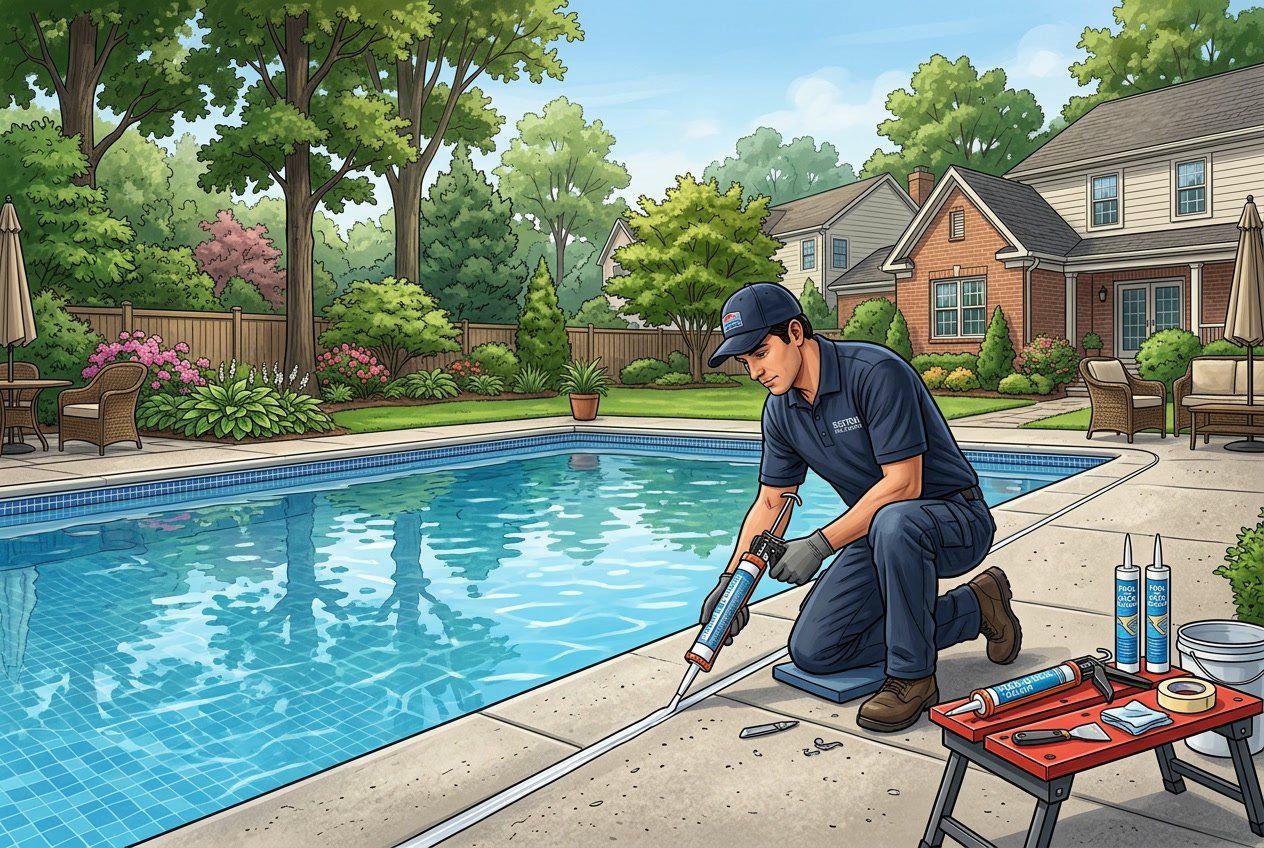
You want your pool to stay safe, look sharp, and avoid costly damage. We always recommend hiring a professional caulking service in Reston, VA to inspect and re-caulk joints when you notice cracks, peeling, or gaps. Proper caulking keeps water out and helps prevent structural headaches down the line.
We’ll walk you through the warning signs, the re-caulking process, and why choosing us at Dolphin Pool Services really matters. Our team brings the skills and right tools to every job, so your pool stays protected and ready for fun.
Key Takeaways
Bring in a professional when you spot damage.
Good re-caulking stops water damage and helps your pool last longer.
Trust a local company like us for reliable results.
Pool Caulking and Re-Caulking Essentials in Reston, VA
Proper caulking seals joints, stops leaks, and keeps your tile and coping steady. We focus on timely inspections, choosing the right materials, and making sure our licensed team does the work right.
Why Pool Caulking Is Crucial
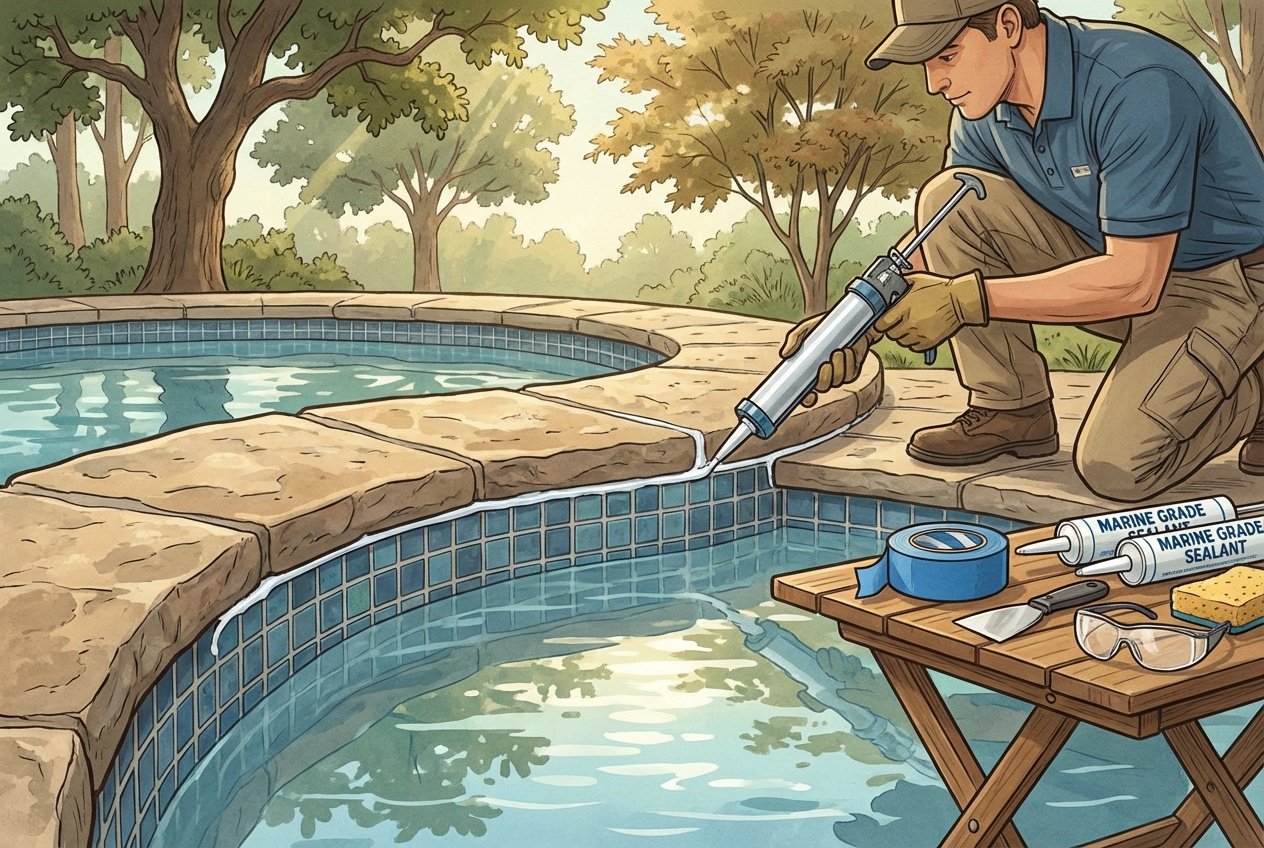
Pool caulking closes up those little gaps where water, dirt, and chemicals sneak in. If you don’t have a good seal at the coping, tile edges, or expansion joints, water can eat away at the base and loosen up tiles. Good caulk smooths those edges, helps prevent tripping, and just makes the pool look better—especially during a renovation or regular maintenance.
We use only industry-grade polyurethane or silicone sealants that stand up to UV, chlorine, and all those wet and dry cycles. Our team applies the right prep, primer if needed, and tools everything for a strong, long-lasting bond. In Reston’s climate, that skill and material choice really matter.
Signs You Need Pool Re-Caulking
Check for cracks, gaps, or missing caulk around the coping, tile lines, and any concrete joints. If you notice water tracking behind tiles, you might see mold, discoloration, or even a soft feel under the tile.
Loose or hollow-sounding tile is another sign to watch for. Faded, brittle, or flaking caulk means it’s time for a fix. If you spot algae or debris building up along seams, the seal probably failed. When we inspect, we test seams and probe trouble spots—if the caulk doesn’t flex or seal, we’ll recommend re-caulking.
Impacts of Neglected or Damaged Caulk
If you let caulk go bad, water can seep into the shell and cause freeze-thaw damage in winter. That’s how you lose tiles and end up needing repairs to the base or coping.
Damaged caulk means more time and money spent on maintenance. Leaks can raise chemical use and energy bills. We suggest timely re-caulking to limit repairs, keep things safe, and protect your investment.
Professional Pool Caulking Services and Ongoing Maintenance
We focus on long-lasting seals, the right materials, and regular checks to protect your deck, tile, and pool shell. Our team handles full caulk replacement, color matching, and always follows best practices for Reston and the surrounding area.
What to Expect From Expert Pool Caulking
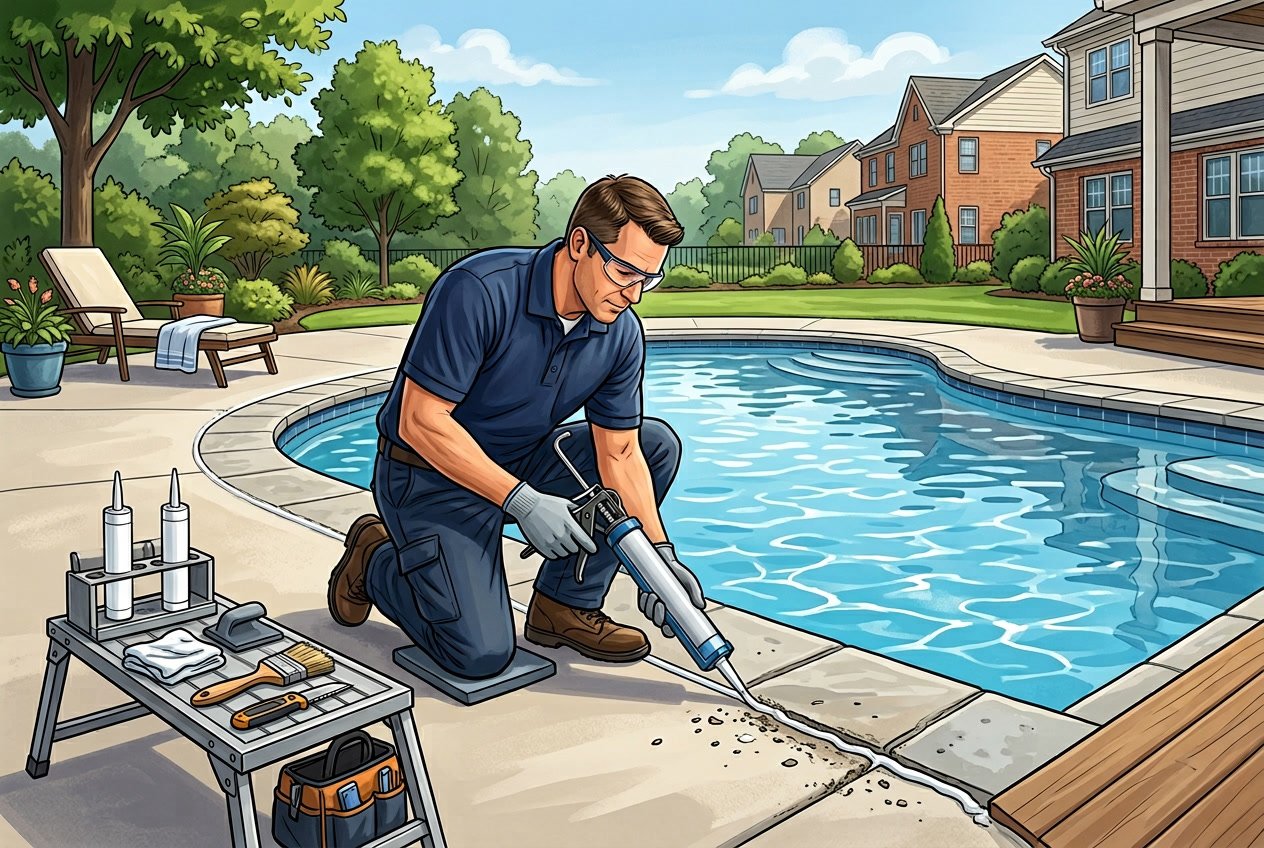
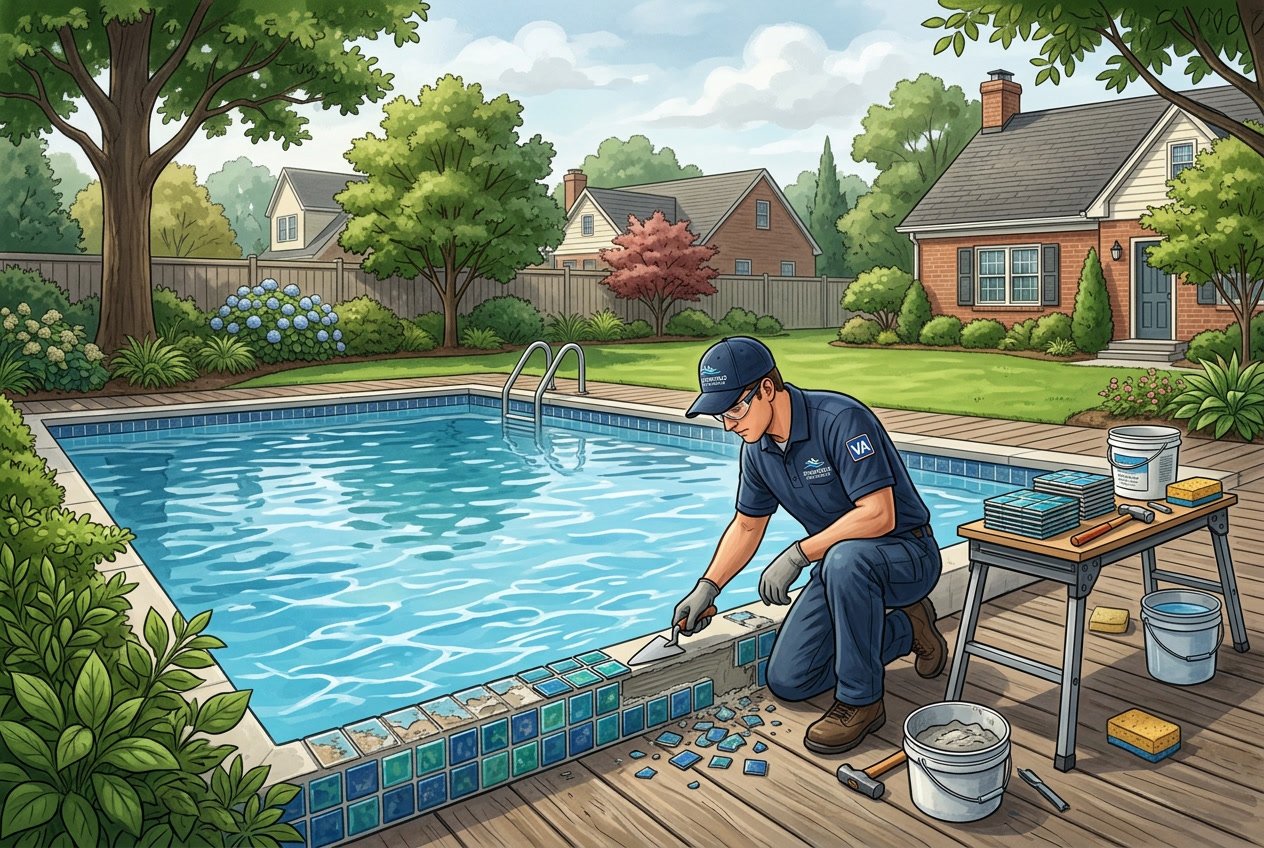
When we service your pool, we start with a thorough inspection of joints, coping seams, and the waterline. We’ll lower the water if needed, remove old caulk, and clean everything for a strong new bond.
We use the right tools and cleaners to get rid of debris and any white buildup. Our technicians check for hidden damage and let you know about any repairs before we seal things up.
Once it’s prepped, we apply a flexible, pool-grade mastic that stands up to UV, chlorine, and freeze-thaw. We use foam rod where needed, tool the bead for a flush finish, and match the color to your tile or coping.
We’ll leave you with a written care plan—cure times, when to refill, and what signs to watch for. We recommend checking caulk at pool opening and closing so you can catch problems early.
Choosing the Right Caulking Materials
We pick materials rated for immersion and tough seasonal weather in Virginia, Maryland, and DC. Polyether or polyurethane mastics work best for pool joints—they hold up to chlorine, salt, and sun.
Silicone sometimes struggles with coping joints since it doesn’t always stick well. Mastic with good stretch and adhesion keeps cracks from forming during freeze-thaw and heavy use.
We match the product to the joint width and movement. Some joints need a backer rod to control depth and avoid sticking to three sides. We keep popular colors in stock and offer color-matching for a neat finish.
Frequently Asked Questions
We’ve got answers on choosing a contractor, when to replace caulk, local rules, what happens if you skip maintenance, and whether you can DIY. Here’s what you should know.
What should I consider when choosing a pool caulking contractor in Reston, VA?
Find someone with experience in inground pools who uses pool-grade mastic for Virginia weather. Ask for proof of license, insurance, and check local references.
We at Dolphin Pool Services send certified technicians, provide written estimates, and back our work with a warranty.
How often should pool caulking be replaced to maintain its effectiveness?
Check caulking at least once a year, especially after winter or big storms. Replacement usually falls between 5 and 10 years, depending on material and sun exposure.
If you see dry, cracked, or pulling caulk, plan to replace it sooner. We’ll give you a clear timeline after we inspect your pool.
Are there any local regulations in Reston, VA regarding pool caulking?
Reston follows Fairfax County’s building and safety rules for repairs and water containment. Permits aren’t usually needed for caulking alone, but bigger repairs might require one.
Check with Fairfax County or your HOA before starting major work. We handle permit research for you and make sure our work meets all local rules.
What are the potential consequences of neglecting pool caulking maintenance?
Water can get between the coping and deck, causing soil washout, deck sinking, or freeze damage. Small leaks can turn into expensive structural repairs.
Neglect can also damage the pool’s finish and lighting. Regular caulking helps you avoid these headaches and saves money.
Can I re-caulk my own pool, and what materials will I need?
You can handle small gaps yourself if you have steady hands and the right tools. You’ll need pool-grade mastic, a scraper, solvent for old caulk, a caulking gun, and safety gear.
Larger jobs need draining, careful prep, and some skill to get it watertight. Honestly, we recommend hiring a pro for most re-caulking to make sure it lasts.
What are the signs that my pool requires immediate caulking attention?
Start by checking for cracks you can see, missing mastic, or gaps where the coping meets the deck.
If you spot water seeping out at the deck’s edge, or if the deck slabs look uneven or seem to be sinking, those are big red flags.
If you notice any of these issues, go ahead and turn off any electrical pool equipment nearby.
Then, give us at Dolphin Pool Services a call. We’ll come out quickly, inspect your pool, and handle repairs to prevent further headaches.
Get your pool in perfect shape today!
Ensure your pool stays in peak condition with the expertise of our professional, certified operators. We provide top-quality service to keep your pool clean, safe, and well-maintained year-round. Contact us today through our online form to schedule best pool services!