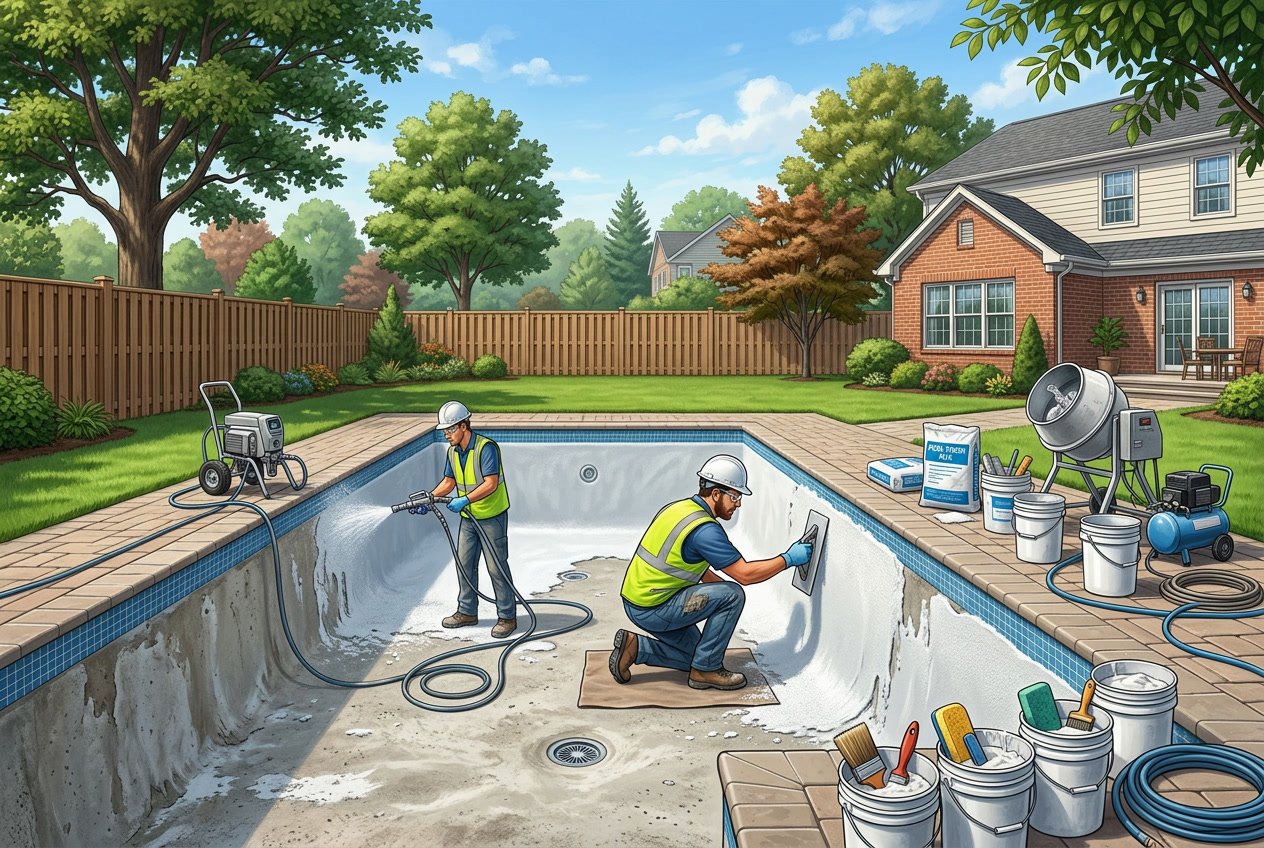
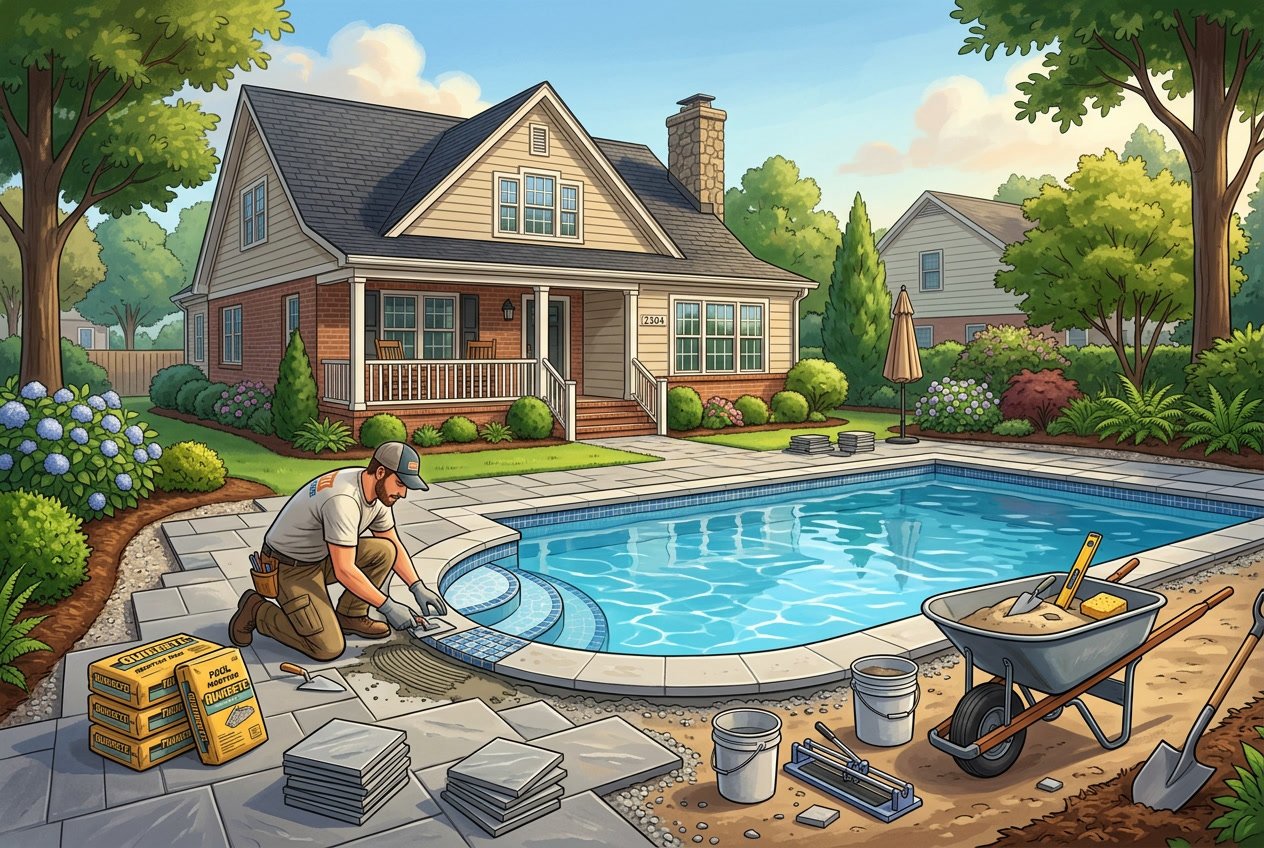
You want your pool to stay safe and last for years. The caulk around your coping and deck plays a surprisingly big role in this.
We always suggest professional re-caulking to stop water from getting in, prevent your deck from sinking, and avoid ugly freeze damage to your pool walls.
We spot worn or missing caulk fast and fix it with the right materials and skill.
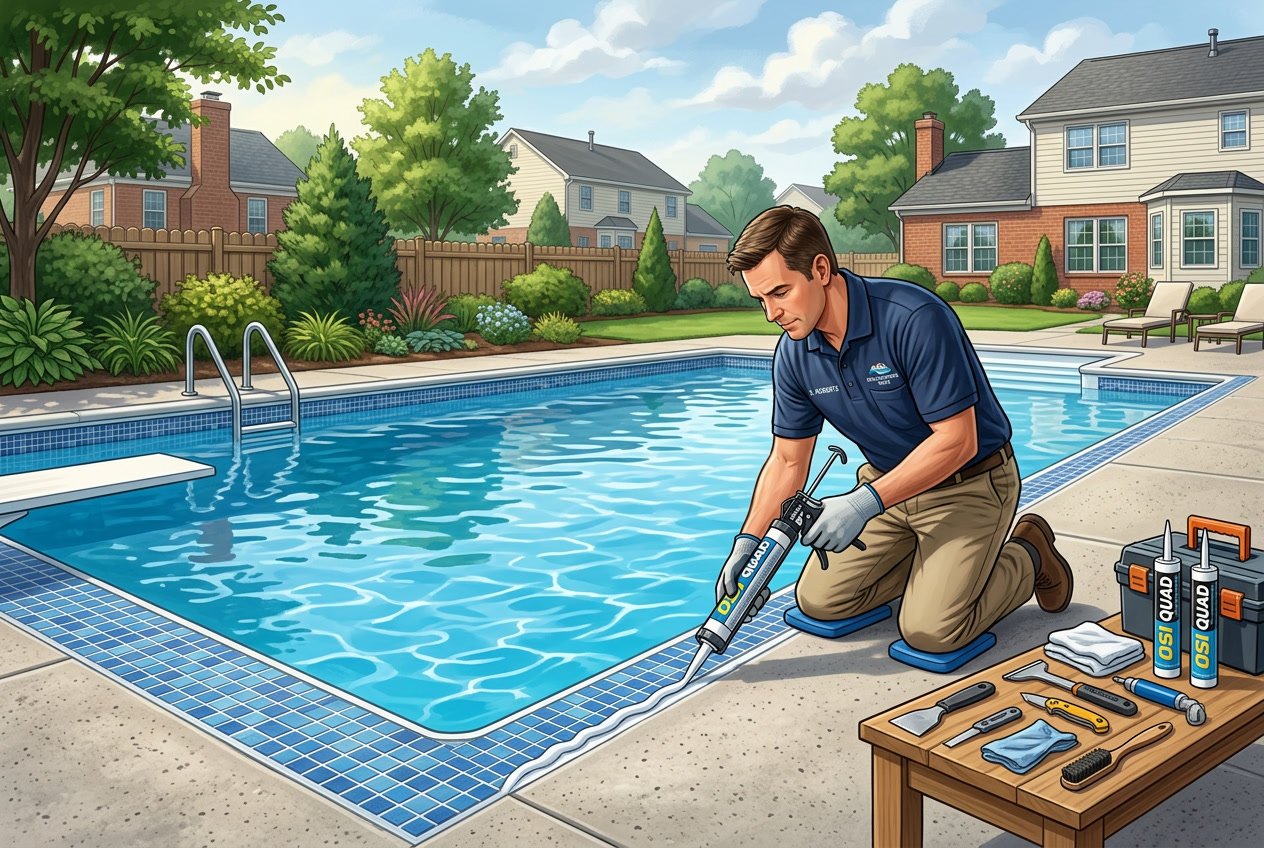
We take care of Springfield, VA pools with local know-how and attention to detail.
That way, your deck and pool wall stay protected through rainy seasons and those tough winter freezes.
When you trust us at Dolphin Pool Services, you lower your risk of surprise repairs and keep your pool ready for fun.
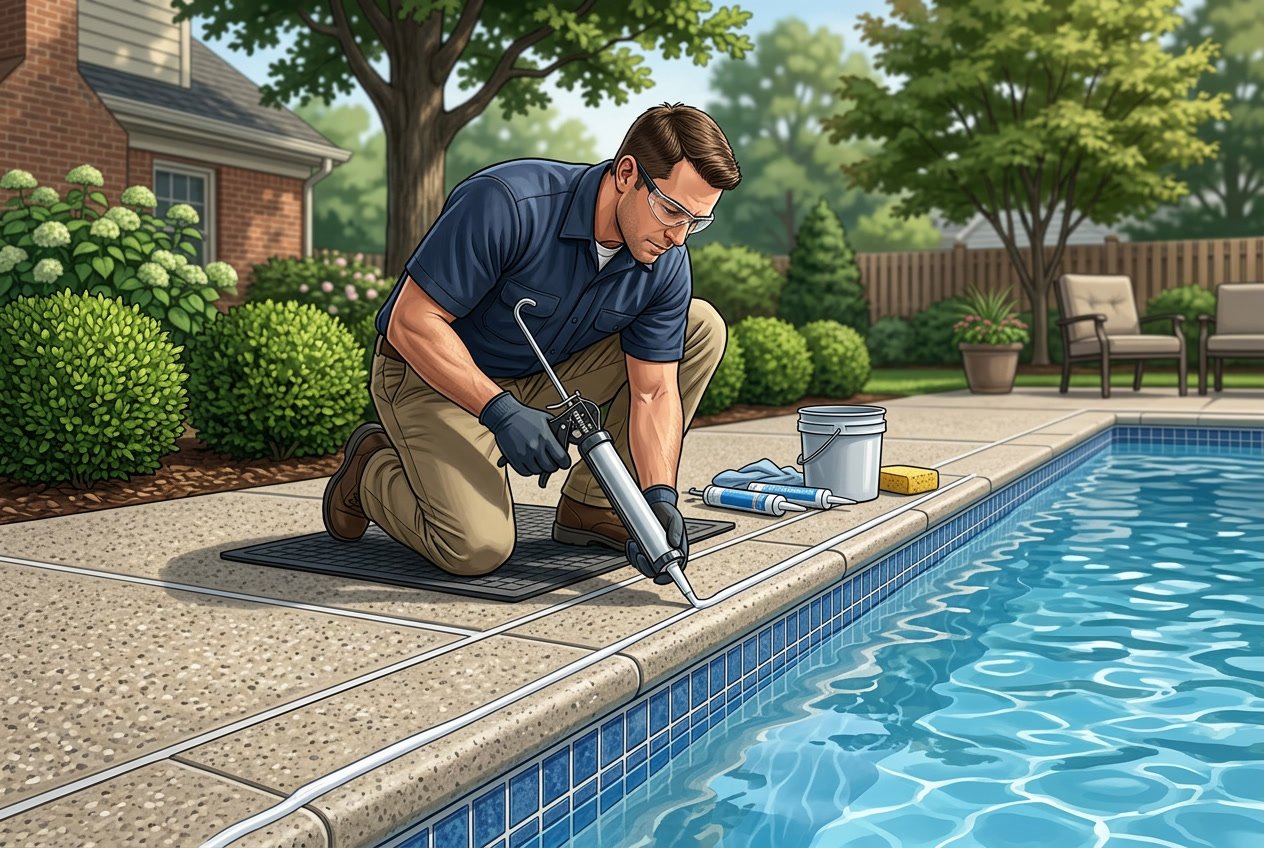
Pool edge joints keep water out, allow for movement, and protect your deck and coping from damage.
In Springfield’s changing climate, picking the right material and getting it installed properly really matters for long-term pool care.
Pool caulking—sometimes called mastic or sealant—fills the gap between your pool shell and deck.
It stretches as concrete and coping expand and contract, keeping water from sneaking under the deck and causing soil washout or voids.
Good caulk stands up to chlorine, sunlight, and the constant wet-dry cycles we see in Virginia.
If installed right, it bonds to the joint sides (not the bottom) and uses a backer rod for the right depth and flexibility.
We always recommend professional installation.
When we prep the joint—removing old caulk, drying it out, and using the right product—the seal lasts and you save money on future repairs.
UV rays and pool chemicals wear down many sealants over time.
Sunlight makes the bead hard; chlorine and acid cleaners can make it crack or lose its stretch.
Movement in your pool shell and deck also stresses the caulk.
Springfield’s temperature swings cause joints to expand and contract more, which tears up weak or sloppy caulk.
Most DIY failures happen because of poor prep or using the wrong products.
Leaving old stuff in place, applying to a damp joint, or picking a sealant not made for pools leads to peeling and gaps.
We fix these problems by removing old caulk, cleaning and drying the joints, adding a backer rod for depth, and using pool-grade sealants designed for Virginia’s conditions.
Check for cracks, gaps, or caulk pulling away from your concrete or coping.
If the caulk feels hard, brittle, flakes off, or doesn’t spring back when pressed, it’s lost its flexibility.
Water pooling in the joint or erosion under your deck means the seal failed.
You might even see nearby tile or coping loosening, which often comes from water sneaking in.
If you notice small, isolated nicks, a quick repair might work.
But if there’s widespread separation or repeated issues, it’s time for a full replacement.
We inspect joints during regular pool service and can recommend repairs or full re-caulking as part of your pool care plan.
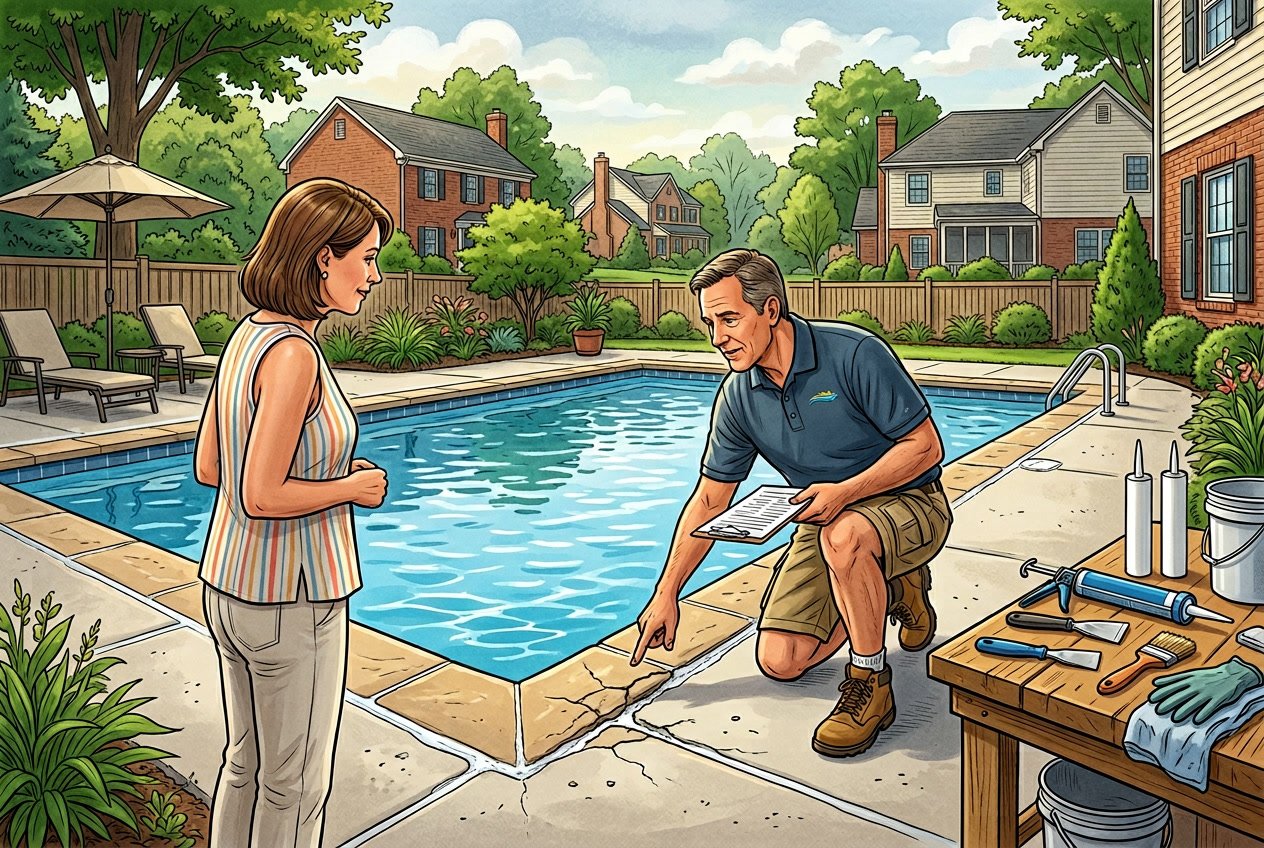
We hire experienced technicians, use the right materials, and fit caulking into your seasonal pool care.
This keeps your deck and tile stable and helps you avoid big repairs.
We believe it’s important to hire a licensed local company with real pool caulking experience—like us at Dolphin Pool Services.
We’ve got proof of work around Northern Virginia and the DC area, plus plenty of Springfield clients who trust us.
We always recommend a site inspection before quoting.
We check joint width and depth, look for deck or coping damage, and spot any signs of erosion.
We prep the joint fully—removing old caulk, cleaning the gap, and installing a backer rod if needed.
That way, you get a flexible, long-lasting seal.
We use UV- and chemical-resistant mastics that are rated for freeze/thaw cycles typical in our area.
We’re careful to match our materials to Virginia’s weather.
We inspect caulking every spring and after any tough winter or heavy storm.
Cracks, hard or brittle material, gaps over 1/8 inch, or tile pulling away at the waterline mean it’s time to reseal.
For small gaps, we can touch up with pool-grade caulk.
If there’s a big failure, we schedule a full replacement.
We keep records of your joint condition and reseal dates, so we know when you’ll need the next full job—usually every 3–5 years, depending on the product and weather.
We keep your deck clean and avoid harsh pressure washing near joints.
Chlorine and sun will wear down caulk, so we always use products rated for chemical exposure and sunlight.
Good maintenance extends the life of your seal and prevents deck or tile problems.
We include a caulking check at every pool opening and closing.
When we open your pool, we look for winter damage—ice can push water into joints and widen gaps.
Catching issues early in the spring keeps water out when you refill the pool.
We time caulking work with other services like tile repair and equipment start-up.
We always wait for new caulk to cure fully before any pressure washing.
For clients in Maryland and DC, we schedule resealing before freeze-thaw cycles or heavy summer use to make sure your seal lasts.
We get a lot of questions about hiring help, what results to expect, signs you need re-caulking, aftercare, and how often you’ll need to replace caulk here in Springfield, VA.
Look for licensed local contractors with real pool experience and good reviews from Springfield customers.
Ask for proof of insurance, references, and photos of past caulking work.
We suggest choosing a specialist like us at Dolphin Pool Services—we know local weather, code issues, and stand by our work.
Clients usually notice cleaner, more even joints and fewer deck leaks after we re-caulk.
They often mention quick fixes and tidy results since we bring the right tools and use approved sealants.
When you hire an experienced team like ours, you’ll see fewer follow-up calls and longer-lasting seals.
Check for cracks, gaps, missing mastic, or water sneaking into the joint between coping and deck.
Watch for tile loosening near the joint or visible foam backer rod showing through old sealant.
If the caulk is brittle, pulled away, or over five years old, it’s time for a replacement.
Keep the area clear of heavy foot traffic and let the sealant cure for the manufacturer’s recommended time, usually about 24 hours.
Don’t power wash the new caulk for at least a week and keep sharp objects away from the coping.
Schedule a yearly inspection and clean debris from the joint to help your sealant last.
Make sure the contractor uses pool-grade sealants and compatible backer rods.
Ask about the warranty, cure times, and how they’ll protect your deck during the job.
Check that the crew follows temperature guidelines for application (usually 50–80°F) and that they test the joint after curing.
Pool caulking usually lasts somewhere between 5 and 10 years. Sun exposure, freeze-thaw cycles, and how much you use your pool can really affect that timeline.
Here in Springfield, those big swings in temperature tend to shorten the lifespan, especially in areas that get a lot of sun.
At Dolphin Pool Services, we suggest you check your pool caulking every year. If you spot any cracks, gaps, or signs of water sneaking in, it’s time to replace it.