Pool Coping Stone Replacement in Haymarket, VA: Complete Guide
Marko M
19th March 2026
You want your pool coping stone replaced right the first time, and we at Dolphin Pool Services make that process straightforward and dependable here in Haymarket, VA.
We check for cracked, loose, or crumbling coping, recommend the best material and edge profile for your pool, and take care of the entire replacement so your pool looks sharp and stays safe.
Trusting our professional team helps you avoid leaks, uneven edges, and those big repair headaches later.
We know how local weather—especially those freeze-thaw cycles—can mess with pools in Northern Virginia.
Our crew brings real experience and skill to every job, so you get results that last and a project that actually finishes on time.
Key Takeaways
We check your coping damage and give you a clear plan.
We use proven materials and skilled installation to head off future problems.
We’re a trusted, local pool company, and we stand by our work.
Pool Coping Stone Replacement Process in Haymarket, VA
Let’s talk about what pool coping actually does, how to spot real damage, and the steps we take to replace coping safely.
We’ll keep it simple—materials, timing for Virginia weather, and when you really need to call us in.
What Is Pool Coping and Its Importance
Pool coping is that cap or edge between the pool shell and the deck.
It protects the bond beam and keeps water from sneaking behind the pool shell, which stops structural damage and soil washout.
Good coping gives swimmers a smooth, safe edge and helps drain water away from the deck.
Here in Virginia, with all the temperature swings, you need tough materials and good drainage.
Natural stone like travertine or granite, or precast concrete, all work well if we install them the right way.
We always anchor coping correctly, use the right mortar or adhesive, and seal every joint to extend the life of your pool.
Signs Your Pool Coping Needs Replacement
Step on the coping and feel for loose or wobbly stones.
If you see cracks wider than a hairline, missing pieces, or grout that crumbles with just a little pressure, it’s time.
Other warning signs: water pooling at the edge, stubborn stains or chemical damage, and movement after winter’s freeze-thaw cycles.
If the bond beam shows spalling or you spot hairline cracks near the coping, those are red flags.
We always tell Haymarket homeowners to check coping each spring.
If several stones have issues, it’s better to replace them now than patch again and again.
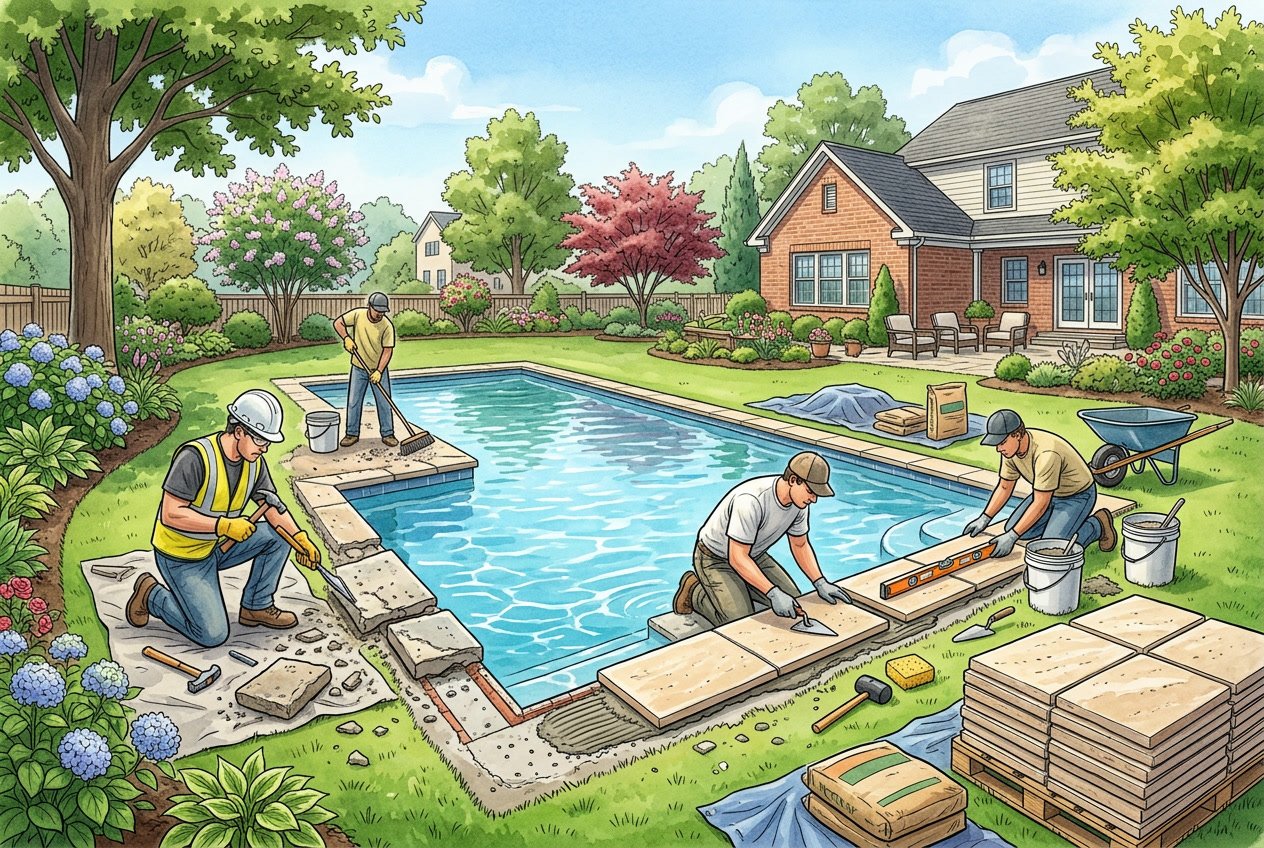
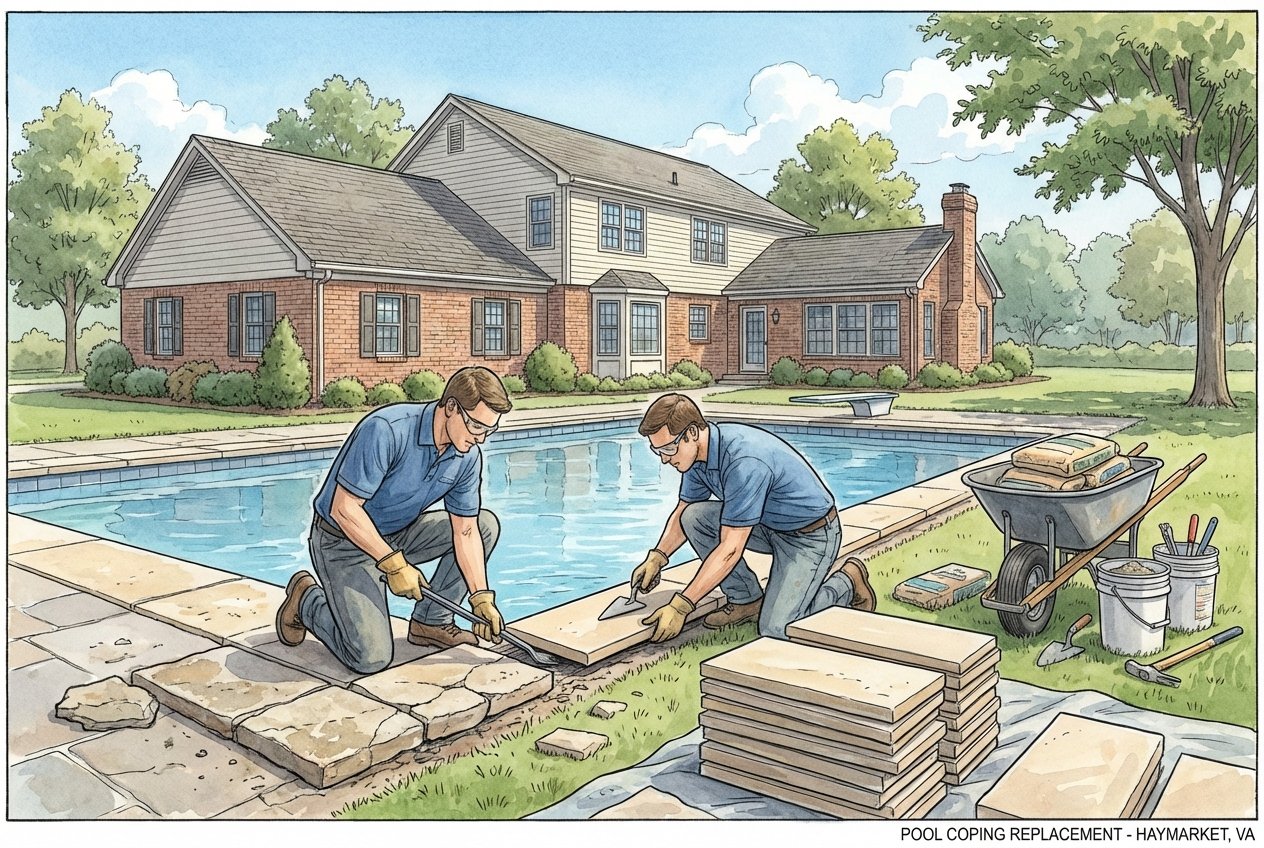
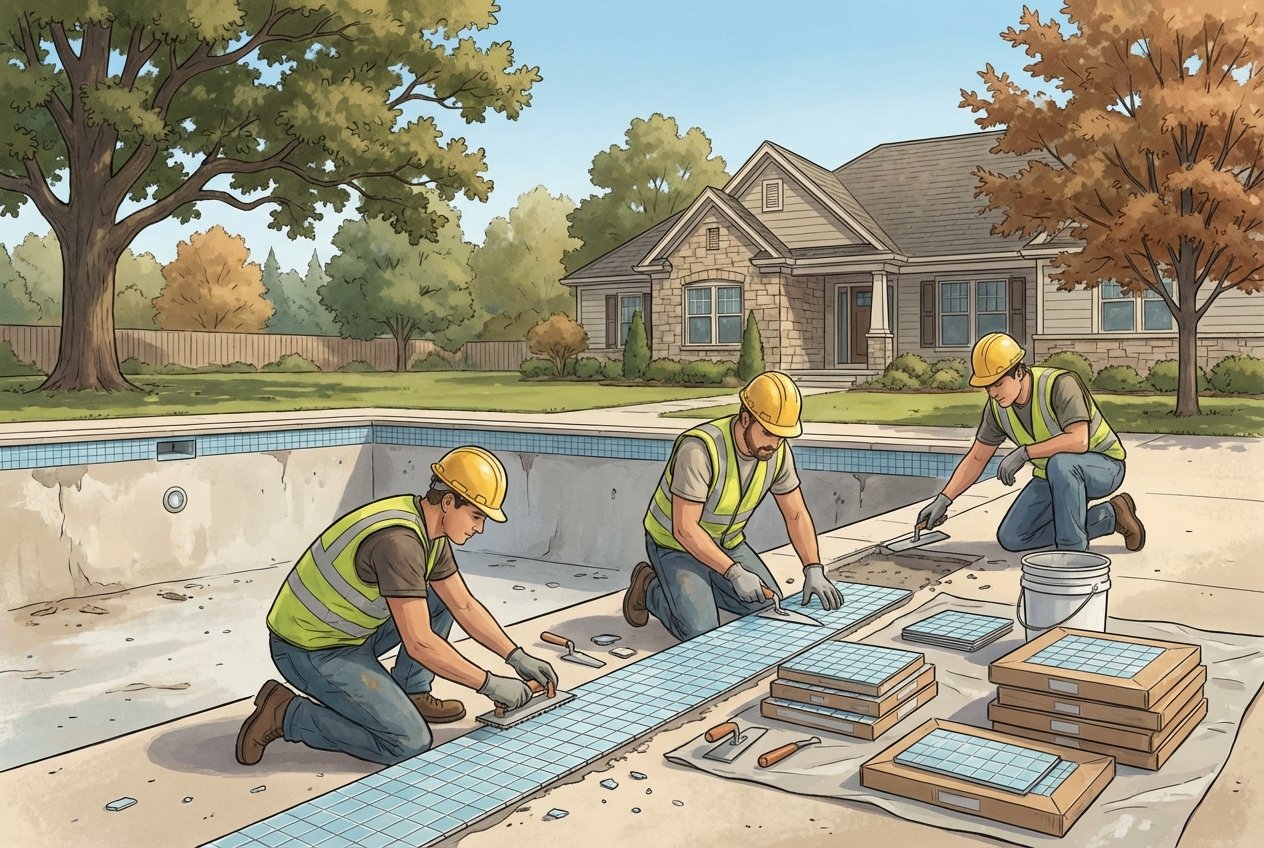
Step-by-Step Pool Coping Replacement Procedure
We handle all these steps to meet Virginia codes and local needs.
You can count on Dolphin Pool Services for a reliable, long-lasting result every time.
Choosing a Pool Coping Stone Replacement Service
We focus on hiring skilled team members, picking tough materials and profiles, and keeping the coping sealed and inspected.
Local weather and code requirements shape our choices, always.
Selecting Experienced Pool Contractors in Haymarket
We know Haymarket and nearby areas inside and out, and we’re licensed and insured in Virginia.
We can show you before-and-after photos and provide references from recent coping jobs if you want.
We lay out a written scope, timeline, and warranty.
Dolphin Pool Services always gives itemized estimates, checks the bond beam and pool shell, and our crews know their stuff when it comes to pool openings and seasonal care.
We handle permits if needed and check for drainage or structural issues before we install anything new.
You want a contractor who stands behind both materials and workmanship—we do.
Pool Coping Material Options and Profiles
We look at durability, slip resistance, and how hot the material gets in the sun.
Popular picks: precast concrete, travertine, limestone, granite, and brick pavers.
Travertine’s cool and slip-resistant. Granite’s super tough. Concrete is versatile and can look like stone.
Edge profiles matter too.
Bullnose is rounded and safe, cantilevered gives a clean overhang, and square edges work with pavers.
We can match your deck color and check if your coping will join an existing bond beam or need repairs.
We’ll show you samples on-site and see how each material holds up to pool chemicals.
We always seal natural stone and use the right adhesives for wet areas.
Maintenance Tips After Coping Replacement
We suggest monthly checks for loose stones, cracked grout, or water pooling.
Clean coping weekly with a soft brush and mild soap—don’t use harsh acids or high-pressure washers.
Seal natural stone every 1–3 years, and concrete every 3–4 years.
Keep it simple: inspect, clean, reseal, and fix small cracks quickly.
When you open your pool for the season, make sure coping joints are dry and solid before refilling.
If you spot bigger issues or leaks, give us a call.
Dolphin Pool Services offers maintenance plans that include sealing, winter prep, and repairs as part of your pool opening.
Regional Considerations for Pool Owners
Haymarket gets hot summers and the occasional freeze, so you need materials that handle both.
Travertine holds up in the heat but needs sealing for winter.
If you’re in northern parts of the DMV or Maryland, pay special attention to drainage behind coping so you don’t get freeze damage.
Local rules or HOAs might set limits on color or material.
We’ll handle permits and make sure everything meets Prince William County or town codes.
If you have properties across VA, DC, or Maryland, we can help you standardize coping choices for easier maintenance.
We know Haymarket and the DMV region well.
Dolphin Pool Services understands local quirks, offers pool maintenance and opening services, and knows what works for long-term coping performance here.
Frequently Asked Questions
We hear a lot of the same questions about cracked or loose coping, material choices, and when to call in a pro.
Here are some quick answers for pool owners in Haymarket.
What are the signs that indicate the need for replacing pool coping stones?
Cracks that let water seep behind the coping are a big warning.
You might notice grout or mortar falling out, or water pooling on the deck.
If coping stones rock, tilt, or separate, the bond has failed.
Loose stones can trip you up and let water damage the pool shell.
Spalling, deep pitting, or big chips mean the stone’s breaking down.
If stains or algae won’t clean off, it’s probably time to replace.
How often should pool coping stones be replaced to ensure pool safety and aesthetics?
Most coping stones last 10–25 years, depending on the material and how well we installed them.
Porcelain and top-quality natural stone last longer; concrete or lower-grade stuff wears out faster.
Check coping every year and after tough winters or storms.
Replace sooner if you see loose stones, big cracks, or water getting behind the coping.
What materials are recommended for pool coping stone replacement in a changing climate?
Travertine and granite handle freeze-thaw cycles and stay cool underfoot, so they work well here.
Porcelain resists stains and moisture, so it’s solid for wet climates.
Concrete coping can be a good choice if we seal it right and install it over a stable base.
We stick with durable, low-absorption materials and make sure drainage is set up to handle local weather.
Can I replace pool coping stones myself, or should I hire a professional contractor?
If you’re handy, you might handle a small repair.
But full replacement means removing old coping, fixing the bond beam, and resetting stones to the perfect grade and slope.
We really recommend hiring a licensed pool contractor like us, Dolphin Pool Services, for full replacement.
Proper installation now saves you leaks and bigger headaches later.
What is the typical cost range for pool coping stone replacement projects?
Costs vary by material, pool size, and site prep.
You’ll see a wide range per linear foot for materials and labor.
For a typical backyard pool, full replacement usually runs from the lower hundreds to several thousand dollars.
Get a few written estimates, and work with a reputable local company—Dolphin Pool Services gives clear quotes and references.
How long does the pool coping stone replacement process usually take?
If you just need a small section repaired, we can usually handle that in a day or two. That includes time for the mortar to cure.
For a full coping replacement on a typical residential inground pool, we usually spend about 3–7 days on the job. The exact timing depends on your pool’s size and how complex the layout is.
We always factor in extra time for demolition, any needed structural repairs, and careful stone setting. Our team schedules each step to keep things running smoothly and to make sure everything cures properly, so your pool looks great and lasts.
Get your pool in perfect shape today!
Ensure your pool stays in peak condition with the expertise of our professional, certified operators. We provide top-quality service to keep your pool clean, safe, and well-maintained year-round. Contact us today through our online form to schedule best pool services!