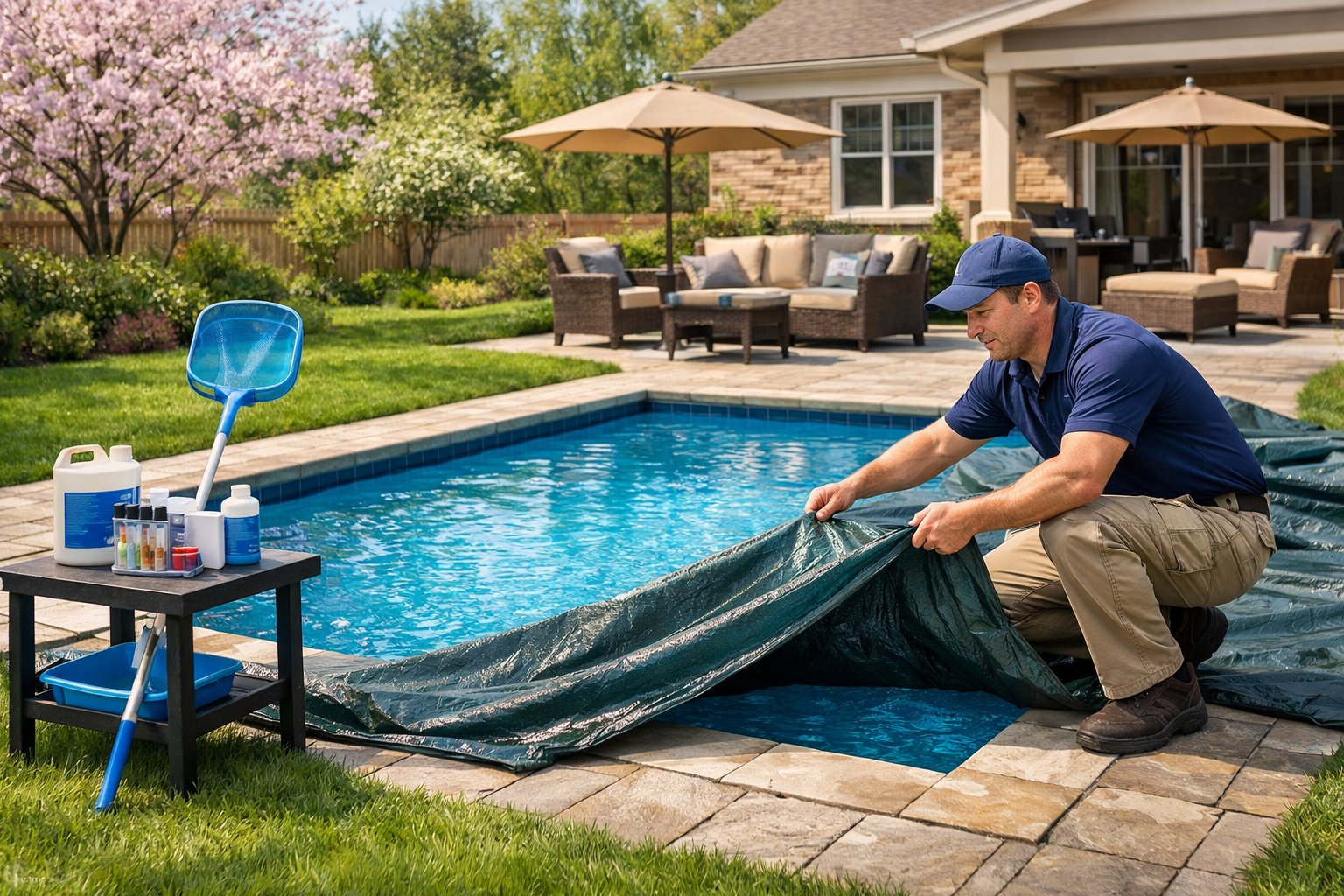
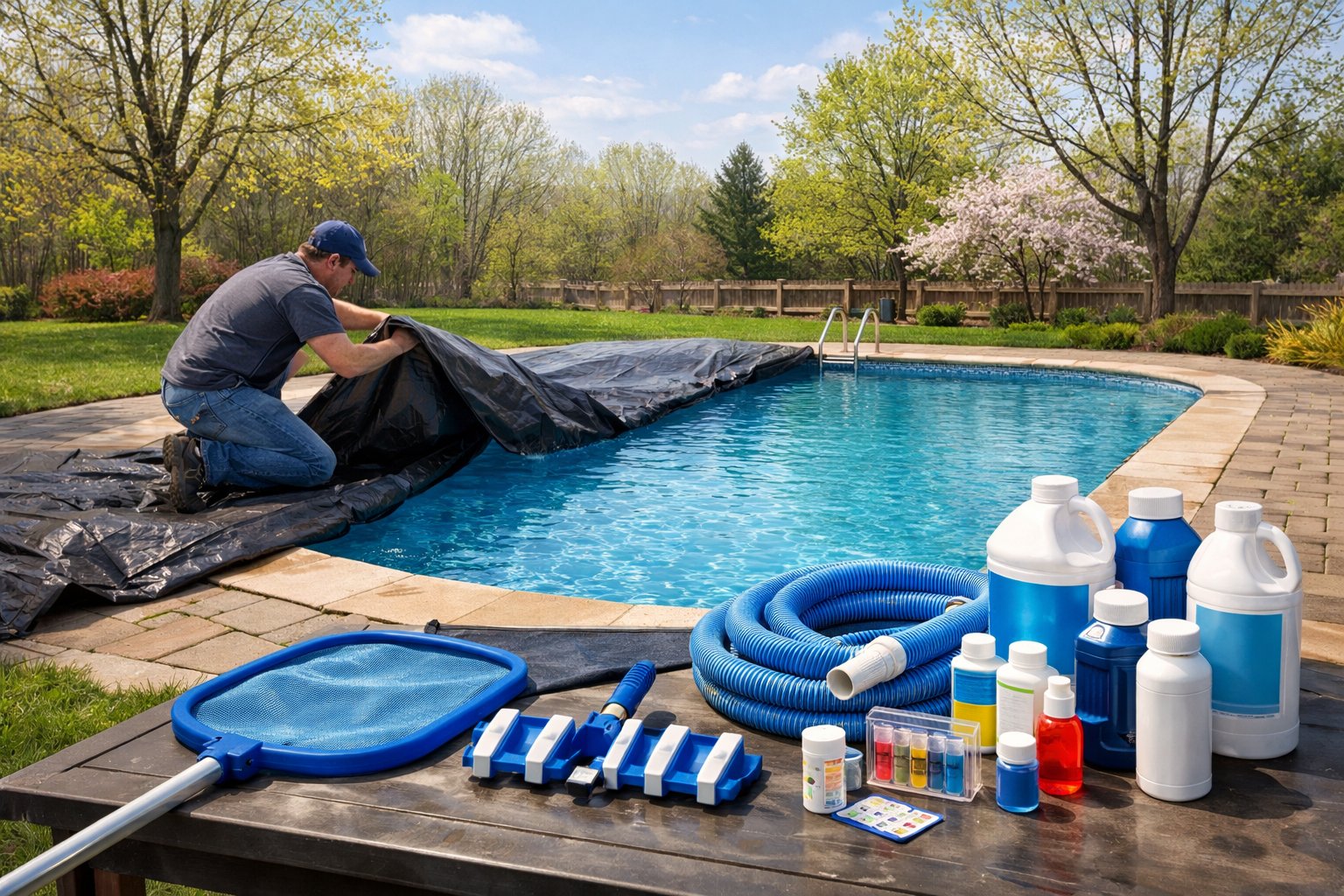
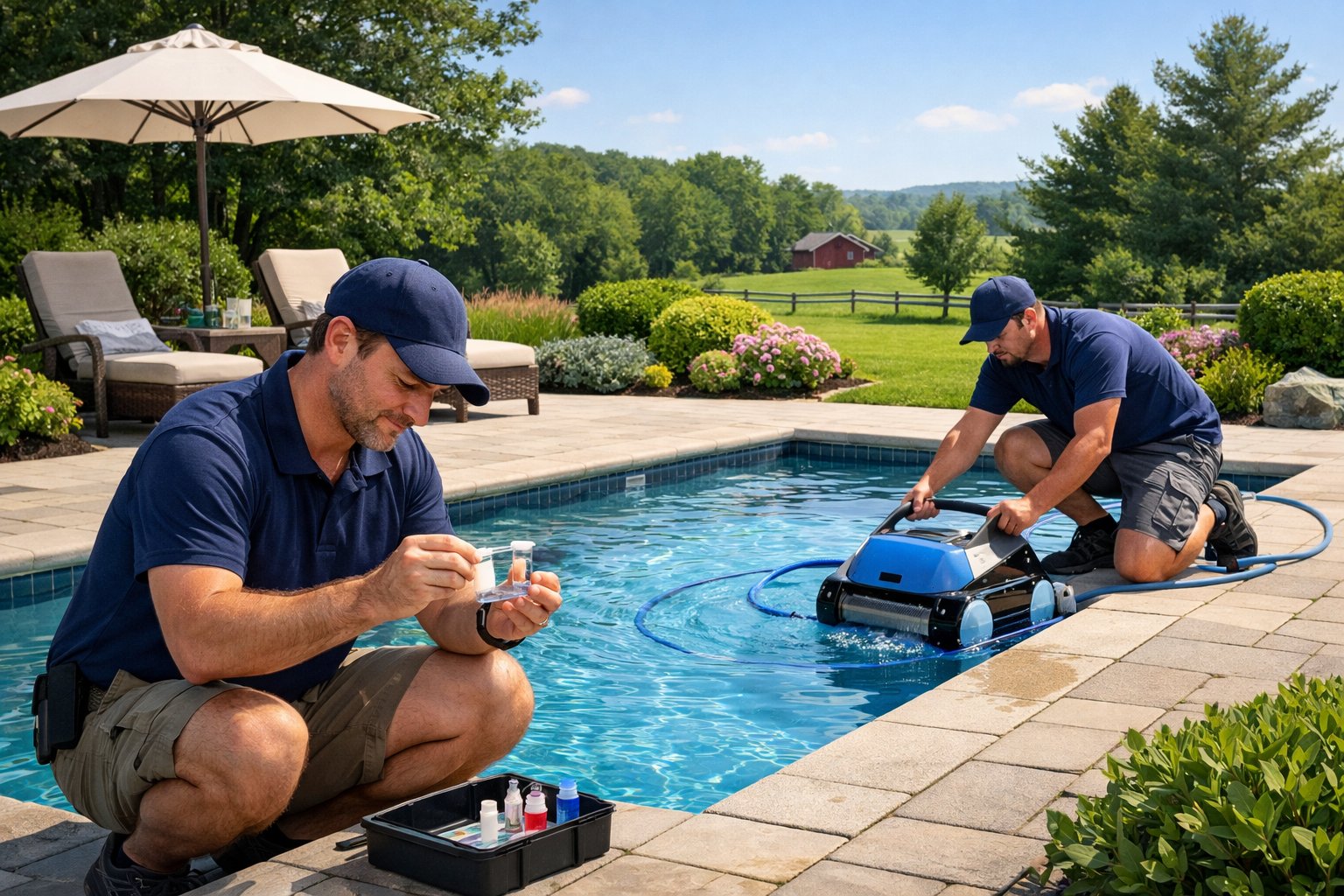
Maybe you’ve noticed your pool losing water, or your pump just won’t stop running. We help you find leaks quickly in Vienna, VA, so you won’t waste water or end up with expensive repairs. We always recommend hiring a trusted local pro like us at Dolphin Pool Services to locate and fix leaks fast and accurately.

We break down the most common causes of leaks, the ways we find them, and what repairs usually involve. You’ll know what to expect, and we’ll guide you through getting your pool back in shape—no sneaky fees, just honest service.
We find leaks fast, protect your pool equipment, and stop you from losing water. Our services cover everything—plumbing, pool shell, and equipment leaks—with clear pricing and local support.
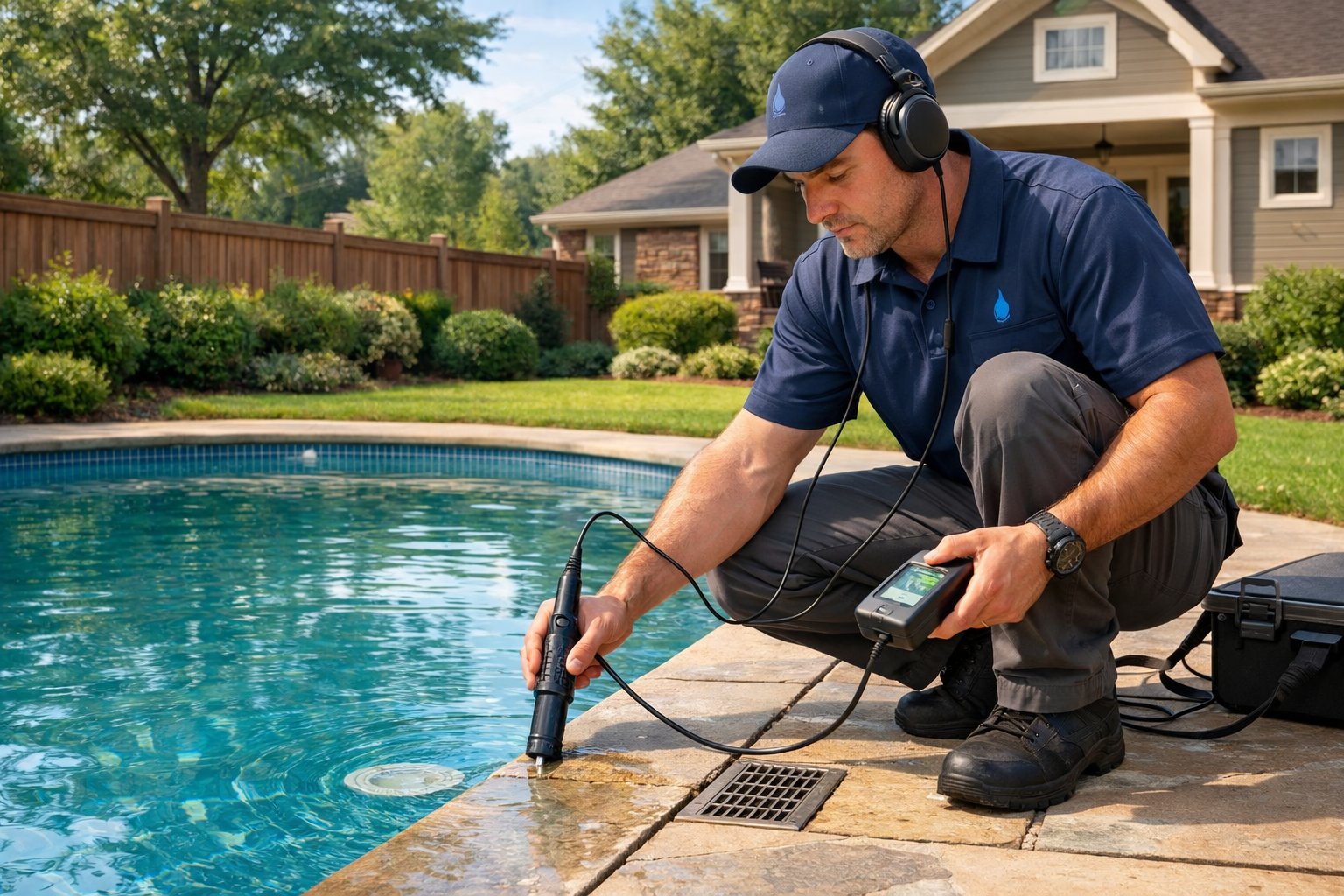
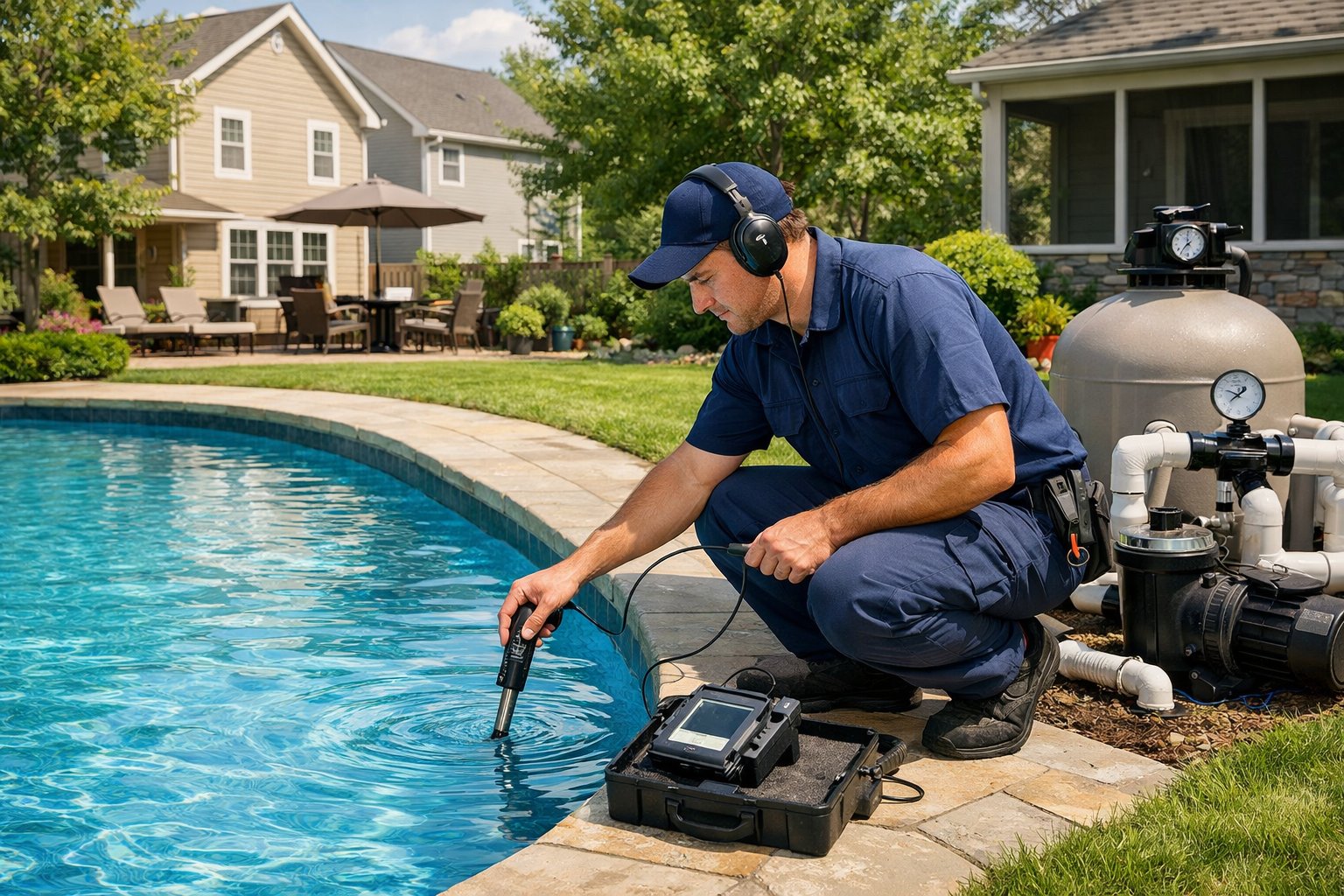
We work as licensed and insured professionals with years of local experience. At Dolphin Pool Services, our certified technicians use pressure testing, electronic listening, and dye testing. These tools let us track down leaks in pipes, skimmers, returns, and liners without tearing up your deck.
We provide written estimates, references, and keep up with all the proper liability coverage. We follow Fairfax County and Virginia code if a repair needs excavation or permits. If a job gets complicated, we coordinate with contractors in Maryland and DC if your pool is close to those borders.
We serve Vienna, the rest of Fairfax County, and nearby Northern Virginia towns. Our team also helps clients across the DC metro area and can work with trusted partners in Maryland for cross-state projects.
We schedule on-site inspections within days for most residential pools. If you’re losing a lot of water, we’ll prioritize your call. We make travel and service-area boundaries clear on our estimates, so you always know if permits or extra contractor fees might apply.
We start with a visual inspection and a water loss test to see how many gallons you’re losing each day. Then we check the circulation system, using pressure testing on plumbing lines and electronic listening for buried pipes.
If we need to, we use fluorescent dye tracing around fittings, lights, and returns to spot where the water escapes. Once we find the leak, we offer repair options and give you a written quote.
Repairs might involve fixing pipes, replacing a skimmer, or patching the pool shell. We use the best materials, follow code, and protect your equipment for long-lasting results.

We see the same leak problems pop up again and again, and we know how to find and fix them. We always recommend acting quickly and getting a proper diagnosis—waiting only makes things worse.
Keep an eye out for steady water loss—if your pool drops more than ½ inch per day, that’s a red flag. Mark the water level and check it after 24 hours; a big drop usually means a pipe issue, while a slow, steady loss could point to a liner or tile problem.
Look for wet spots or erosion near the equipment pad, standing water under the deck, or higher electric bills from pumps running overtime. If your water turns cloudy, you see air in the pump basket, or you lose suction at the skimmer, you might have a plumbing or pump leak. For vinyl liners, wrinkles, soft spots, or bubbling often mean there’s a puncture.
We suggest you take photos and try a simple bucket test before calling us. That helps confirm if you’re dealing with a leak instead of just normal evaporation.
We use a step-by-step approach. First, we do visual and dye tests. If the leak hides, we move to electronic tools. Dye testing around fittings, lights, and seams shows us where water pulls through cracks. This quick test usually narrows things down right away.
For plumbing issues under the surface, we use pressure testing and acoustic listening equipment. That lets us find leaks in suction and return lines without unnecessary digging. Pressure gauges help us isolate which section of pipe has failed. Sometimes, we use infrared or thermal imaging to spot leaks under decks or in the pool shell by finding ground temperature changes.
We also use camera inspections inside lines when needed. Combining these tools helps us keep downtime short and gives you a clear repair plan.
The repair depends on the leak and your pool’s material. For vinyl liner punctures, we use manufacturer-grade patch kits or replace the liner if there are big tears or bad seams. Small holes can get a peel-and-stick patch, but a pro repair lasts much longer.
If we find cracks in concrete or gunite, we use epoxy injections or special underwater mortars. We trust two-part epoxies or structural putties for bigger cracks—they bond underwater and don’t shrink. For plumbing leaks, we isolate the bad line and either swap out the damaged section or use solvent-weld fittings and clamps for a permanent fix.
If a quick plumbing seal works for a small leak, we might use a circulating sealant, but only if it’s right for the job. We suggest scheduling repairs during a renovation or pool opening, so we can test, fix, and balance your water all at once.
Regular maintenance can stop leaks before they start. Each season, we inspect fittings, lights, and equipment, tighten connections, and check skimmer and return seals. Keeping a maintenance log helps us spot wear before it turns into a bigger problem.
At pool opening, we pressure-test lines, remove winter covers, and inspect liners to cut down on summer emergencies. During renovations, we check bonding, gunite strength, and plumbing. When you hire Dolphin Pool Services, you get thorough inspections and repairs that follow code and best practices.
We answer the most common questions about pool leaks, how we find them, and what repairs involve. We want you to feel confident choosing Dolphin Pool Services for honest, lasting repairs.
Check your water level for steady drops beyond what you’d expect from evaporation. Try the bucket test over 24–48 hours to see if water loss is really happening.
Look for cracks in the shell, loose tile, or gaps at lights and fittings. Wet spots, sinkholes, or high water bills around the pool area are all warning signs.
We use dye testing around fittings, skimmers, returns, lights, and cracks to spot leaks quickly. That helps us find the obvious ones fast.
We also pressure-test plumbing lines to catch hidden pipe leaks. If needed, we use electronic leak detection and video inspection.
We are Dolphin Pool Services, and we stand by our certified technicians, clear estimates, and solid repair records. We encourage you to check reviews and ask for references and written guarantees.
Pick a company with a track record in leak detection and a real local presence.
Sonar and acoustic tools can help with underground plumbing or hidden voids, but they work best alongside other tests.
We combine acoustic tools, electronic leak detectors, and dye testing to make sure we find the problem before cutting into anything.
We kick things off with a visual inspection and water-loss measurements. Then we use dye, pressure, or electronic tests to zero in on the leak.
Once we know the source, we give you repair options and costs. Repairs might include plumbing fixes, patching cracks in the shell, replacing fittings, or relining. We always retest to make sure the leak’s gone.
Have you noticed your pool losing water even when the weather’s normal? Maybe your water bill suddenly jumps, or you spot odd wet patches or dirt around the pool. These things sometimes mean there’s a leak hiding somewhere.
Sometimes, the equipment starts cycling in strange ways, or you find yourself topping off the pool more often just to keep the water level steady. If you see unexplained wet soil, sinking ground, or unexpected algae near your pool equipment or the pool structure, you should reach out.
At Dolphin Pool Services, we show up quickly, figure out what’s really going on, and give you a clear repair plan—so you know your pool’s in good hands.