Pool Perimeter Caulking & Sealing DC Expert Solutions for Lasting Waterproofing
Marko M
9th October 2025
Keeping the pool perimeter properly caulked and sealed is essential to protecting your investment and maintaining a safe, clean swimming area. The caulking between the pool coping and the deck prevents water from seeping into gaps, stopping damage and costly repairs. Without this crucial barrier, water can cause cracks, erosion, and other problems that affect both the pool and surrounding surfaces.
We understand the unique needs of pools in the DC area and recommend using a trusted, professional service for all caulking and sealing work. Our team at Dolphin Pool Services specializes in careful, thorough sealing that lasts and keeps pools looking great. Proper maintenance of the pool perimeter ensures years of worry-free enjoyment.
Key Takeways
Pool perimeter caulking protects against water damage and surface erosion.
Professional sealing services offer long-lasting, reliable results.
Proper maintenance helps extend the life and appearance of your pool.
Understanding Pool Perimeter Caulking & Sealing in DC
Proper caulking and sealing around your pool’s perimeter protect the structure from water damage and prevent costly repairs. In the DC area, where weather swings between hot summers and freezing winters, maintaining these seals is essential for long-lasting inground pools.
Importance of Pool Perimeter Caulking
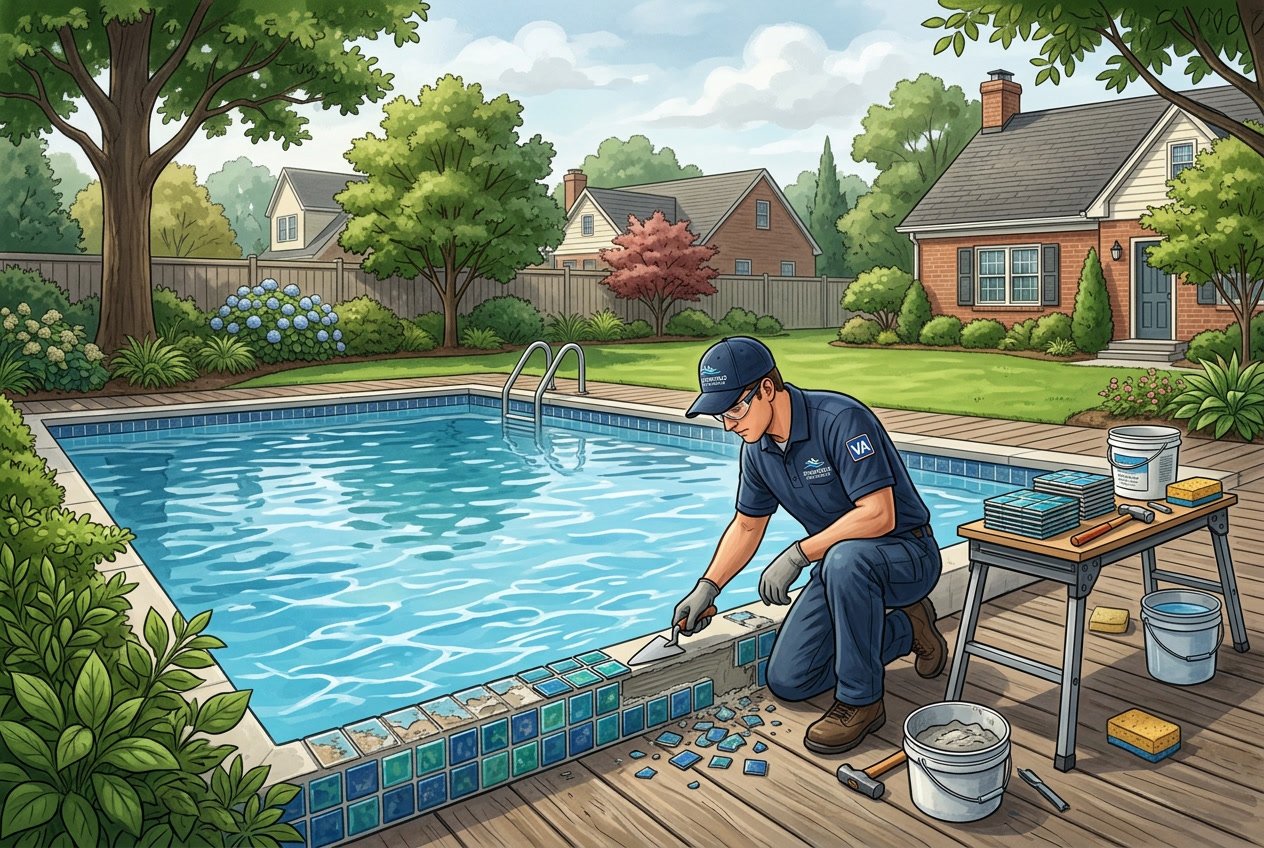
Pool perimeter caulking seals the narrow gap between the pool coping and deck. This joint moves naturally due to temperature changes. If unsealed or damaged, water can enter and cause erosion beneath the deck or cracks in the shell.
Without effective sealing, water intrusion can lead to structural damage like deck sinking or freeze damage during cold months. Regular pool maintenance includes checking and replacing caulking to avoid these issues. We recommend trusting professional pool services like Dolphin Pool Services to handle this task. Our experience ensures the right materials and proper application for your inground pool in DC or Virginia.
Common Materials and Techniques
The most reliable caulking for pool perimeters is a flexible, waterproof sealant often called high-grade mastic or silicone-based caulk. These materials flex with the pool’s natural expansion and contraction caused by heat and cold.
The process usually starts by removing old caulk and cleaning the joint completely. Professionals often insert a foam backer rod in the gap before applying new caulk to ensure a firm seal.
A smooth finish is important to prevent gaps where water can seep in. We use proven application techniques to extend the life of your pool caulking and protect your investment better than DIY methods.
Signs Your Pool Needs Caulking & Sealing
Look for cracks, gaps, or missing caulk between the coping and deck. Water pooling near the joint or visible erosion under the deck is a warning sign.
If you notice shifting or sinking spots in your pool deck, the perimeter seal may have failed. Damage often worsens with seasonal changes, especially as freezing water expands and cracks the structure.
Regular inspections, especially before fall and winter, help catch problems early. We recommend scheduling professional inspections and repairs with Dolphin Pool Services. Staying ahead of these issues extends your inground pool’s life and maintains safety.
Professional Caulking & Sealing Services in the DC Area
Proper pool perimeter caulking and sealing protect your inground pool from water damage and structural issues. The right approach accounts for local climate and requires a team with experience in pool services around DC and Virginia.
Choosing a Qualified Pool Service Provider
We strongly recommend using a professional pool service for caulking and sealing. Expertise in handling expansion joints and waterproofing ensures a flexible, watertight seal. Poor caulking can lead to cracks in your pool deck or damage to tiles and concrete.
Look for companies with strong reputations and proven experience in inground pools. Verify they use high-grade mastic designed to withstand changing seasons common in this region. A reputable provider like us, Dolphin Pool Services, delivers thorough inspections and lasting results. This avoids costly repairs later.
Clear communication and attention to detail are also key. We ensure every project is done precisely, no shortcuts or low-quality materials. Choosing the right contractor means your pool stays protected year-round.
Regional Considerations for DC & Virginia Pools
The DC and Northern Virginia area experiences hot summers, cold winters, and wide temperature swings. These conditions cause pool materials to expand and contract, stressing the expansion joints between the pool shell and deck.
Using a flexible, weather-resistant caulking material is essential. It must hold up against freezing temperatures in winter and intense heat in summer without cracking or peeling.
Our pool services include applying high-grade mastic specifically suited for this climate. This prevents water intrusion that can damage concrete, coping, and tile.
We customize each sealing job based on the pool’s age, exposure, and local weather patterns. This tailored approach helps maintain the waterproof barrier and extend the life of inground pools in the DMV area.
Frequently Asked Questions
Proper sealant selection, timely replacement, and correct installation are key to maintaining pool perimeter caulking. Costs vary based on pool size and professional service rates. Weather affects the sealant’s flexibility and lifespan, making routine inspections necessary.
What type of sealant is recommended for use around swimming pools?
We recommend using waterproof, flexible sealants like pool mastic or specialized flex caulk. These materials handle temperature changes and movement between the pool coping and deck without cracking or peeling.
How often should pool perimeter caulking be replaced?
Pool caulking generally needs replacing every 3 to 5 years. However, visible cracks, peeling, or water leaks require immediate attention. Regular checks help prevent water damage.
What are the steps for repairing caulking around a pool?
First, remove the old sealant completely. Clean and dry the joint. Then, apply a new flexible sealant evenly at a 45° angle along the gap. Allow proper curing time before exposing it to water.
What are the cost considerations for professional pool caulking and sealing?
Professional caulking typically costs $5 to $8 per linear foot. For an average pool perimeter of 90 to 100 feet, total costs range from $900 to $1,500. Choosing an experienced company like us ensures quality work and long-lasting results.
How does weather impact the integrity of pool perimeter caulking?
Hot temperatures cause expansion, while cold temperatures cause contraction of pool materials. Flexible caulking must accommodate these changes to avoid cracking. Prolonged sun exposure or freezing can deteriorate old or poor-quality sealants.
What are the best practices for installing sealant in pool expansion joints?
Ensure the joint is clean and level before applying the sealant. Use a continuous bead of flexible caulk, moving the applicator steadily at about a 45° angle. Avoid using mortar or topical sealers that do not flex with the pool’s movement.
Get your pool in perfect shape today!
Ensure your pool stays in peak condition with the expertise of our professional, certified operators. We provide top-quality service to keep your pool clean, safe, and well-maintained year-round. Contact us today through our online form to schedule best pool services!