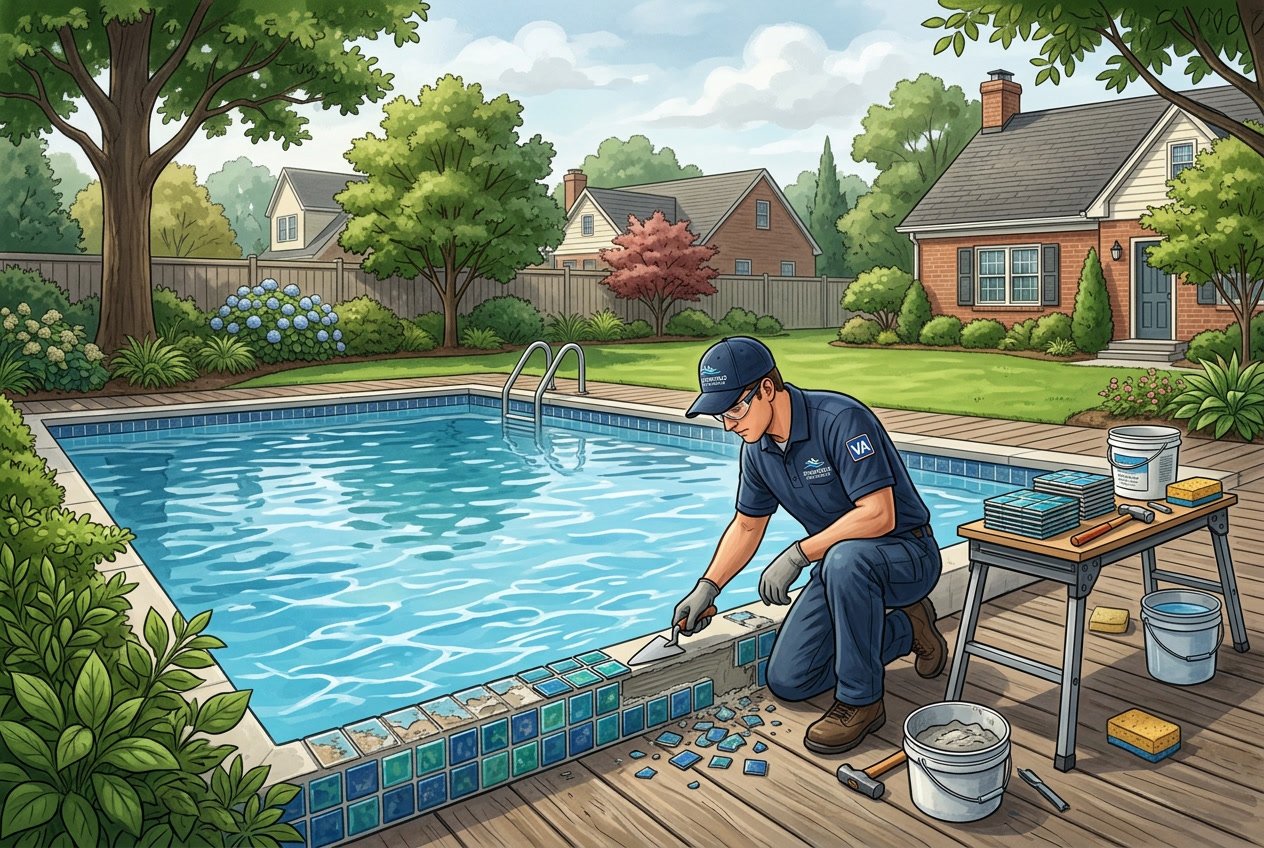
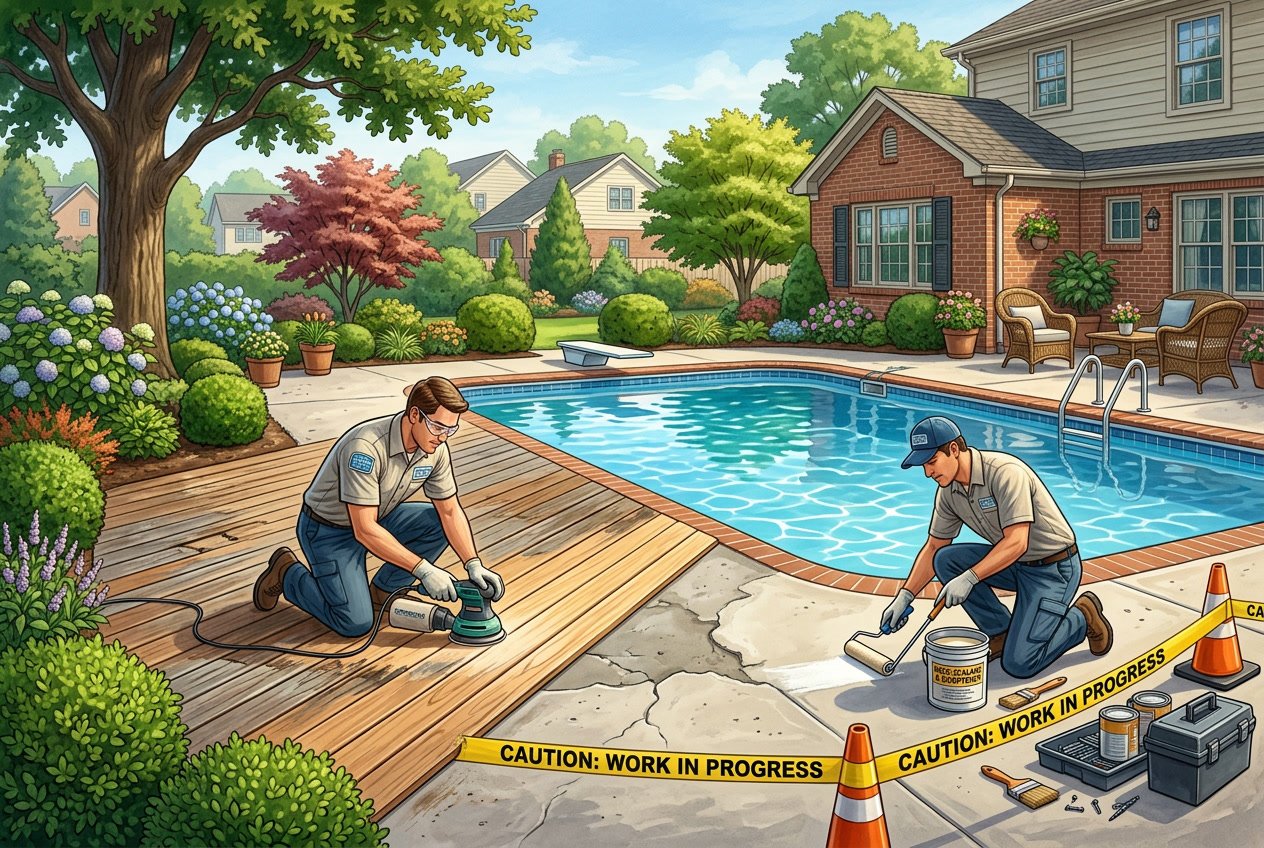
Pool Resurfacing/Replastering in Chantilly, VA: Local Solutions and Expert Tips
Marko M
7th March 2026
If your pool looks dull, chipped, or rough, you can bring it back to life with professional resurfacing or replastering right here in Chantilly, VA. We at Dolphin Pool Services take pride in handling the job with care so you can avoid headaches, wasted time, and costly mistakes. With us, you’ll get a finish that actually lasts in our local climate.
We’ll walk you through what resurfacing involves, how long it usually takes, and how to pick the best finish for your family. We’ll also share a few tips to help keep your new surface looking great for years.
Key Takeaways
Trust a local expert like us for code-compliant, long-lasting results.
Get familiar with main finish options, timelines, and what to expect.
Take care of your new surface so it lasts as long as possible.
Essential Guide to Pool Resurfacing and Replastering in Chantilly, VA
We’ll show you when to act, which materials stand up best in Northern Virginia, and how to spot the signs that your pool needs some love. Let us help you protect your investment.
When and Why to Resurface or Replaster Your Pool
We recommend replastering when you see chipping, pitting, or stubborn stains that just won’t budge with normal cleaning. In Chantilly, freeze-thaw cycles and mineral-heavy water can wear out plaster in as little as 7–10 years.
Replastering brings back a smooth, safe surface—usually the best bet if the pool shell is still in good shape.
If your pool has deep cracks, structural issues, or you want a finish that’ll last even longer, resurfacing with pebble or quartz is a smart move. These finishes can go 15–20 years and stand up better to stains.
We always check the shell’s condition before giving you a clear estimate. That way, you get exactly what you need.
Choosing the Right Resurfacing Materials
Plaster, whether white or colored, gives that classic pool look and costs less up front. The tradeoff? It usually needs more maintenance, especially with hard water.
Quartz and pebble aggregate finishes add color, durability, and a natural texture underfoot. These options resist stains and work well for active families.
Tile creates a stylish, tough edge but takes more time to install. We look at your pool’s size, how often you use it, and local water chemistry before making a suggestion.
We’re happy to walk you through the pros and cons of each finish so you can pick what works for your lifestyle.
Recognizing Signs Your Pool Needs Attention
You might notice plaster flaking, rough spots, or big stains that just won’t come out. These are all signs it’s time to replaster.
If you see water loss, cracks in the shell, or constant algae despite good water chemistry, you might need resurfacing or even structural repairs.
Rough surfaces that scratch skin or damage swimsuits, weird water chemistry swings, or filter clogs that keep coming back all point to bigger issues.
When these problems pop up, reach out to us at Dolphin Pool Services. We’ll do a thorough inspection and lay out your options.
Pool Resurfacing Process, Regional Considerations, and Ongoing Care
We’ll break down how we handle replastering, what Chantilly’s weather means for your pool, and the steps you’ll want to follow after resurfacing.
Overview of the Pool Replastering Process
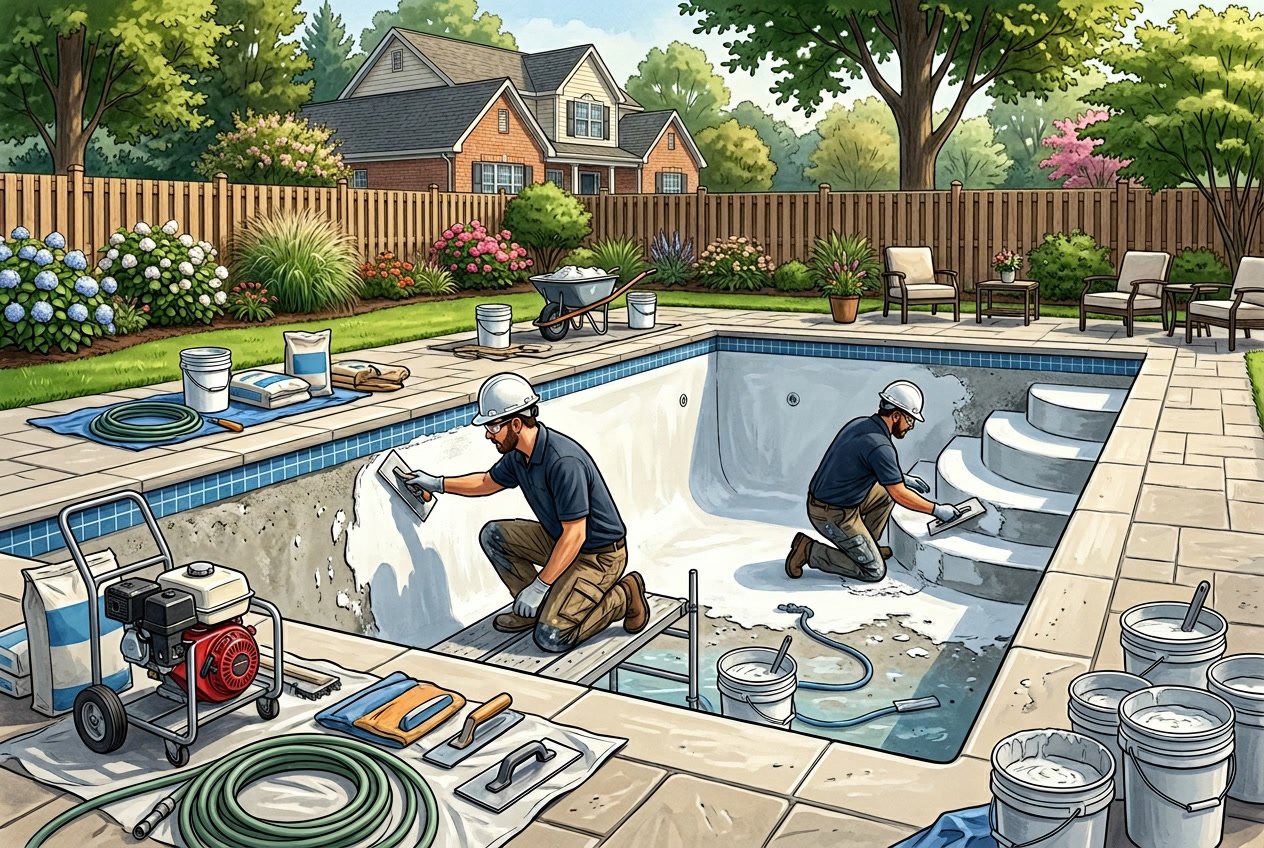
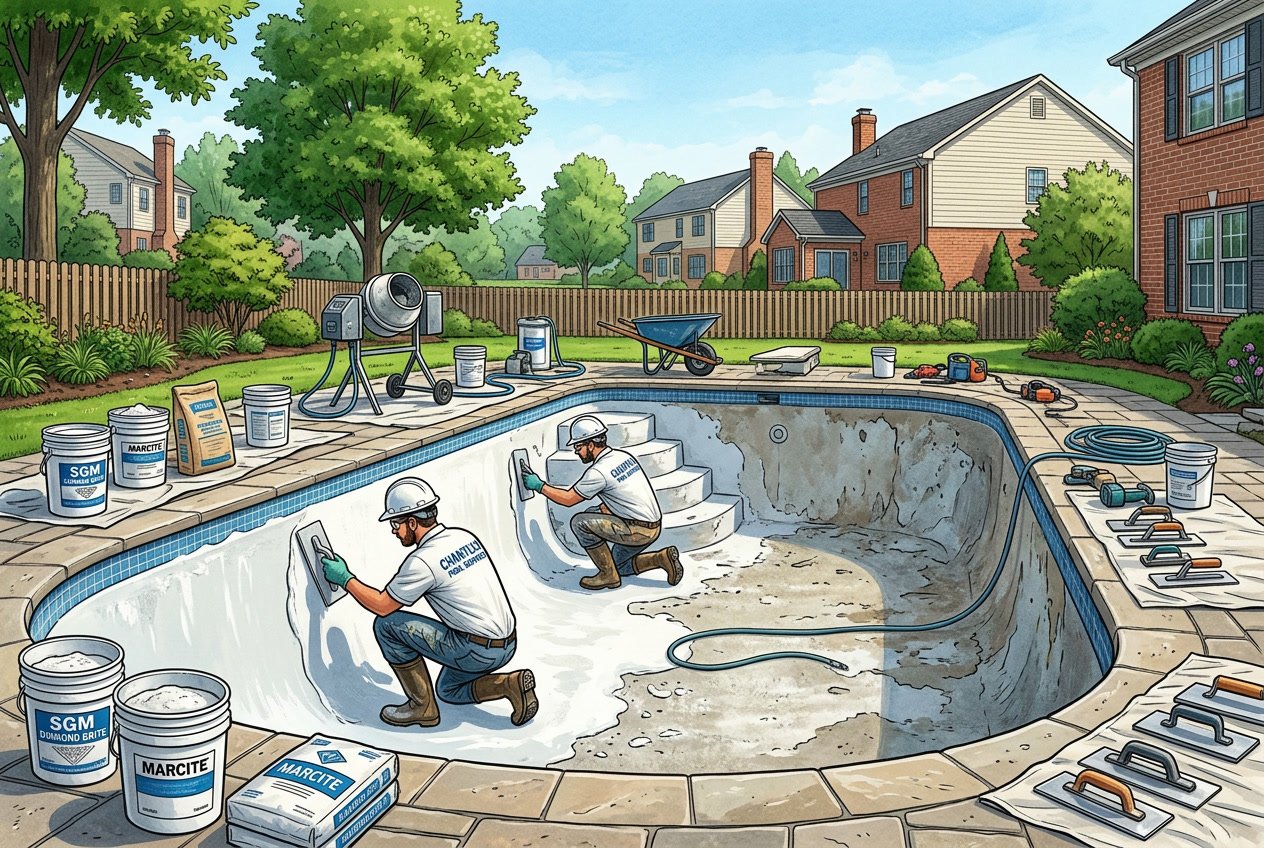
We start by draining the pool and making sure landscaping and equipment stay protected. Then, we remove the old finish—either by chipping or light blasting—so the new material bonds well.
Before applying the new finish, we repair cracks, check tile and coping, and inspect plumbing and lights.
We apply your chosen finish—plaster, pebble, or quartz—with attention to detail and even thickness.
Curing matters a lot. We control how fast the pool refills and keep the water chemistry on point to avoid problems like etching or scaling.
Most projects take 5–10 days, but weather or extra repairs might stretch that out a bit. We always recommend trusting a pro like Dolphin Pool Services to get it right and avoid costly mistakes.
Chantilly and Northern Virginia Environmental Factors
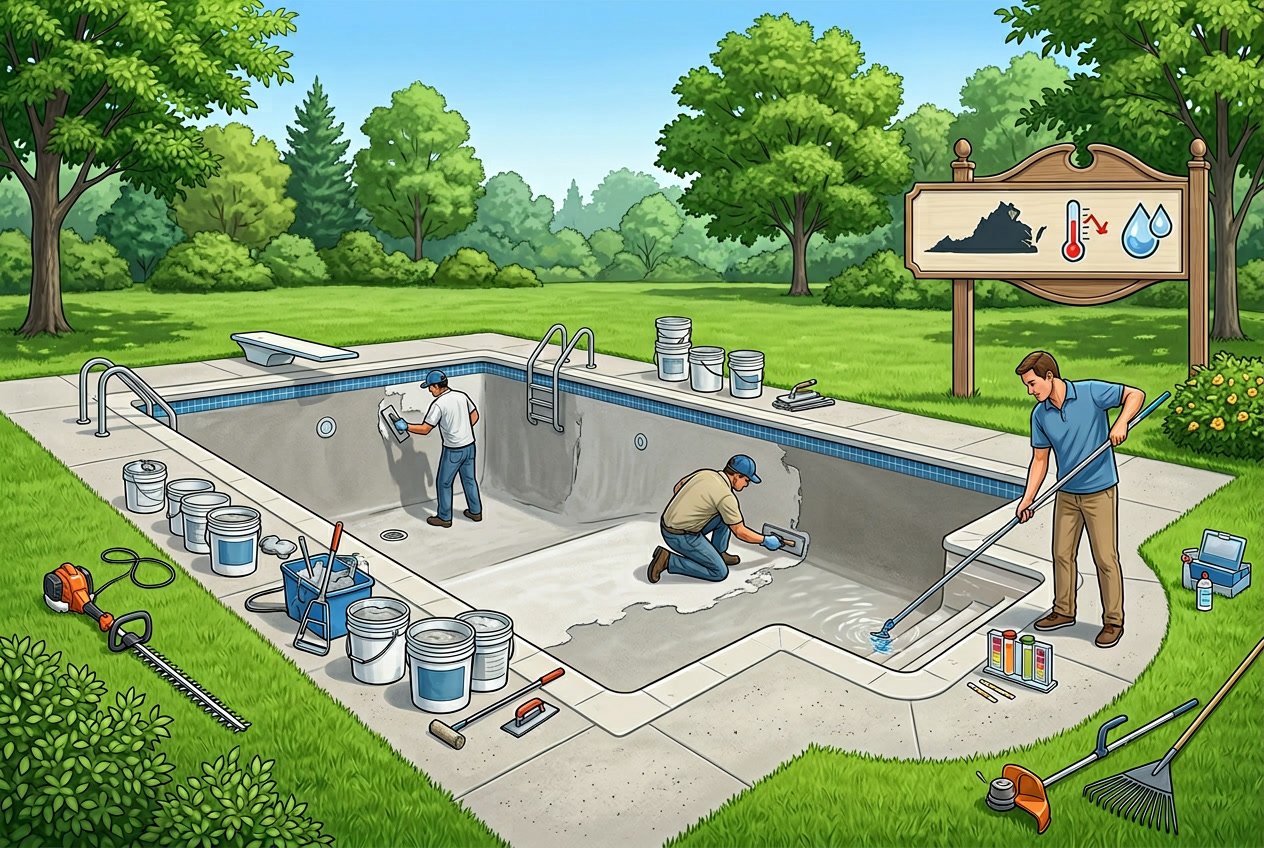
Chantilly summers get hot, and winters can be brutal. That means finish choice and timing matter.
Hot weather speeds up curing, but if we’re not careful, it can also cause cracks. Cold winters make small cracks worse, so we suggest replastering before fall to dodge freeze damage.
Our water here has more minerals than you’ll find in a lot of places. We always test for calcium and alkalinity before picking your finish.
We also work with local regulations and HOA rules. If you want the best shot at smooth curing, aim for resurfacing between late spring and early fall.
Tips for Post-Resurfacing Maintenance and Protection
After we finish, check your water daily for the first two weeks. Then, test pH, alkalinity, and calcium hardness twice a week.
Keep pH between 7.2 and 7.6 and make sure calcium is right for your finish. We fill the pool slowly and add chlorine when it’s safe.
Brush the new surface a couple of times a week at first to clear away plaster dust. Hold off on heavy pool use until the finish has fully cured.
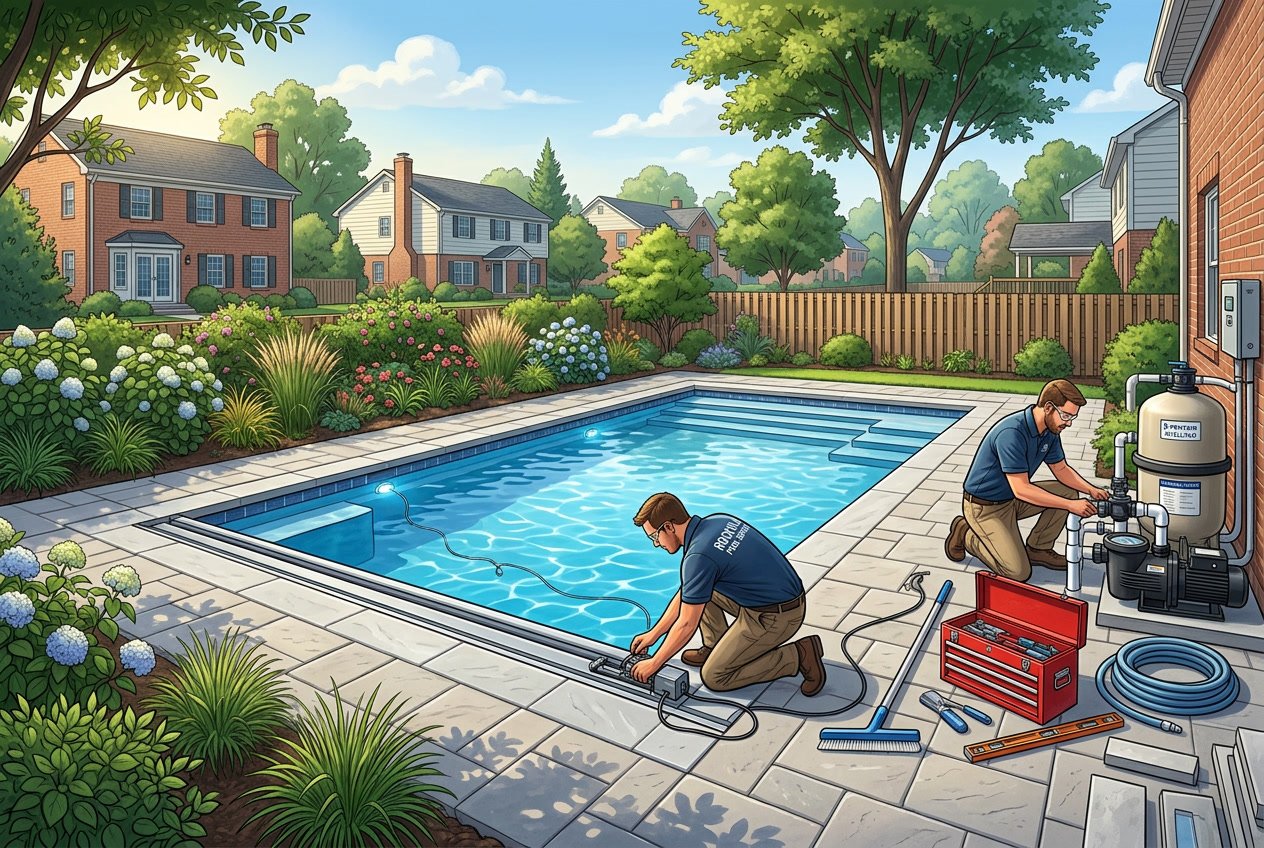
Each spring, let us handle your pool opening and equipment checks. Regular service by Dolphin Pool Services keeps your pool looking great and helps you avoid big repairs down the line.
Frequently Asked Questions
We get a lot of questions about costs, materials, timing, the process, eco-friendly options, and what to expect from warranties. Here’s what you need to know about pool resurfacing in Chantilly, straight from us at Dolphin Pool Services.
What factors affect the cost of pool resurfacing in the Chantilly area?
Pool size and shape drive most of the cost. If your pool has curves, steps, or covers a lot of ground, it’ll take more time and materials.
Material choice matters too. Plaster, pebble, quartz, vinyl liners, and tile all have their own price range and install time.
If we need to fix cracks, plumbing, or remove tough old finishes, that adds to the job. Local permit fees and busy seasons can also play a part.
What are the latest trends in pool surface materials for durability and longevity?
Aggregate finishes like pebble and quartz are popular for a reason—they last and don’t stain easily.
Fiberglass gelcoat and quality vinyl liners offer low-maintenance options. Gelcoat holds up well when installed right, and today’s vinyl liners come in thicker, better-looking patterns.
Tile accents and porcelain bottoms are showing up more in high-end projects. They look great and last, but they do cost more to install.
How often should a pool be resurfaced to maintain its condition in Virginia’s climate?
Concrete and plaster pools usually need resurfacing every 8 to 15 years. Water chemistry, usage, and regular care make a big difference.
Aggregate finishes can last 12 to 20 years if you keep up with maintenance. Fiberglass gelcoat and good vinyl liners sometimes go 10 to 25 years.
We look for rough patches, discoloration, cracks, flaking, or leaks to help you decide when it’s time.
What steps are involved in the pool resurfacing process by professional contractors?
We kick things off with a full inspection to catch any structural issues or leaks. Then, we drain the pool and prep the surface—sometimes grinding or sandblasting, depending on what’s needed.
After repairs, we install your chosen finish using proper methods. Once we refill and balance the water, we check everything and give you maintenance tips.
We always follow up to make sure you’re happy and your pool is performing as it should.
Are there eco-friendly options for pool resurfacing available in Chantilly, VA?
Absolutely. Low-VOC coatings and water-based primers help cut down on fumes.
We can use recycled or natural aggregates to lower the project’s footprint. Some finishes even help reduce water loss and chemical use.
Ask us about materials and methods that help the environment while keeping your pool beautiful.
What warranties or guarantees should I expect from pool resurfacing companies in Chantilly?
When you resurface your pool with us at Dolphin Pool Services, you can count on a solid workmanship warranty. We stand behind our installation, covering defects for a period that usually ranges from 1 to 5 years.
Manufacturers typically back their materials—like liners, tiles, or gelcoat—with their own warranties. It’s smart to ask for all the warranty details in writing and double-check what might void your coverage.
We always provide you with clear, written warranty terms. After the job’s done, we’re here if you need support—no headaches, just help from our team.
Get your pool in perfect shape today!
Ensure your pool stays in peak condition with the expertise of our professional, certified operators. We provide top-quality service to keep your pool clean, safe, and well-maintained year-round. Contact us today through our online form to schedule best pool services!