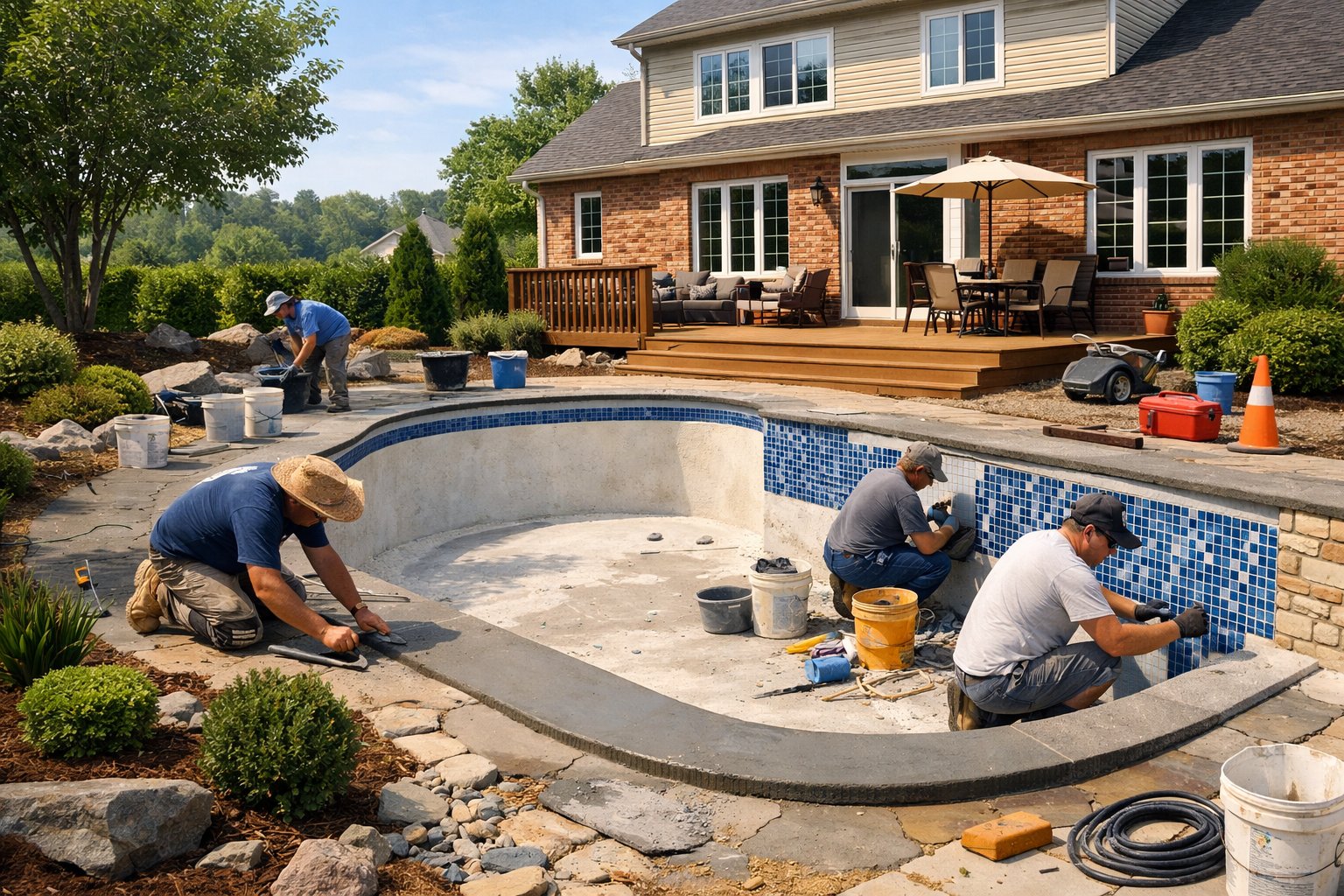
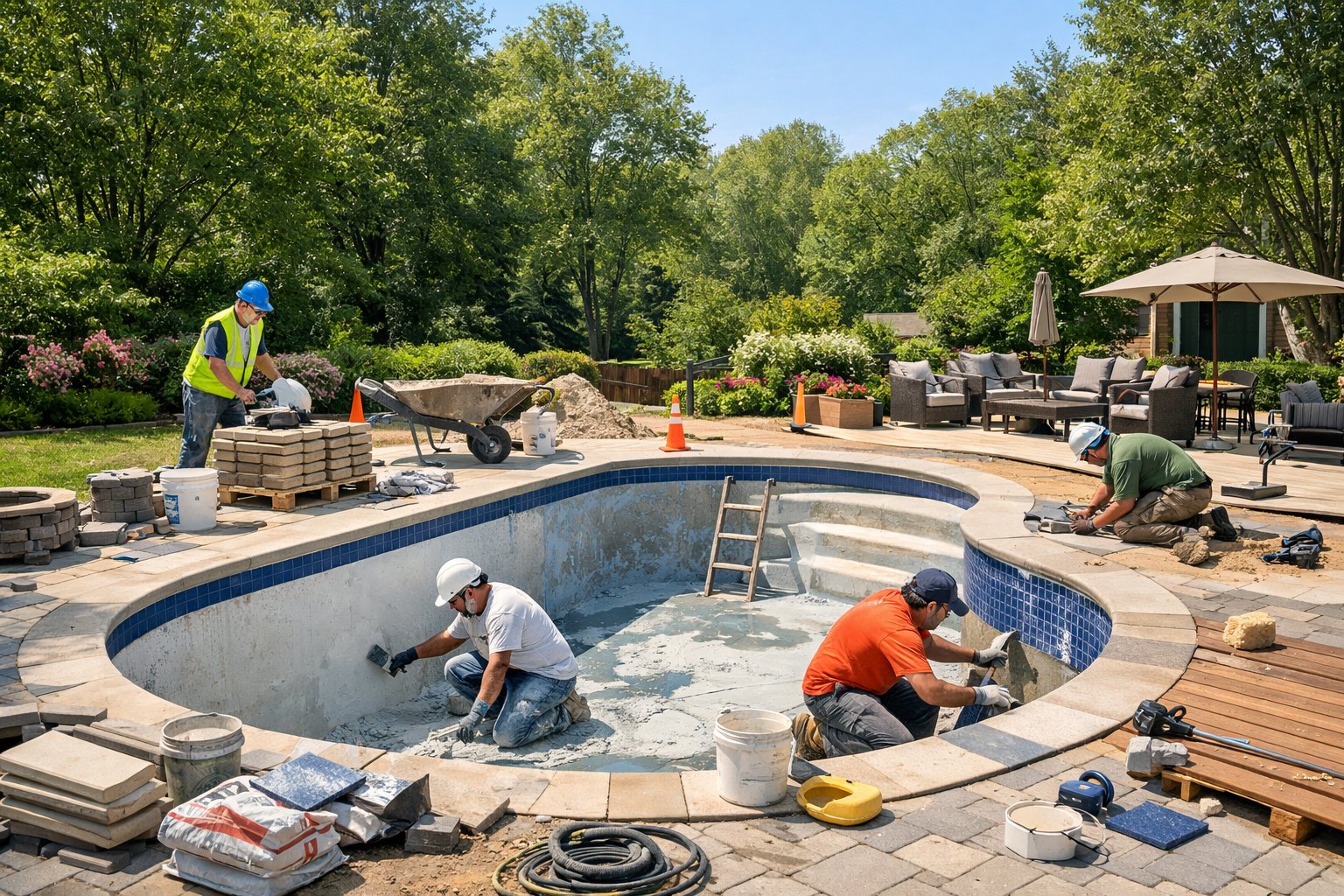
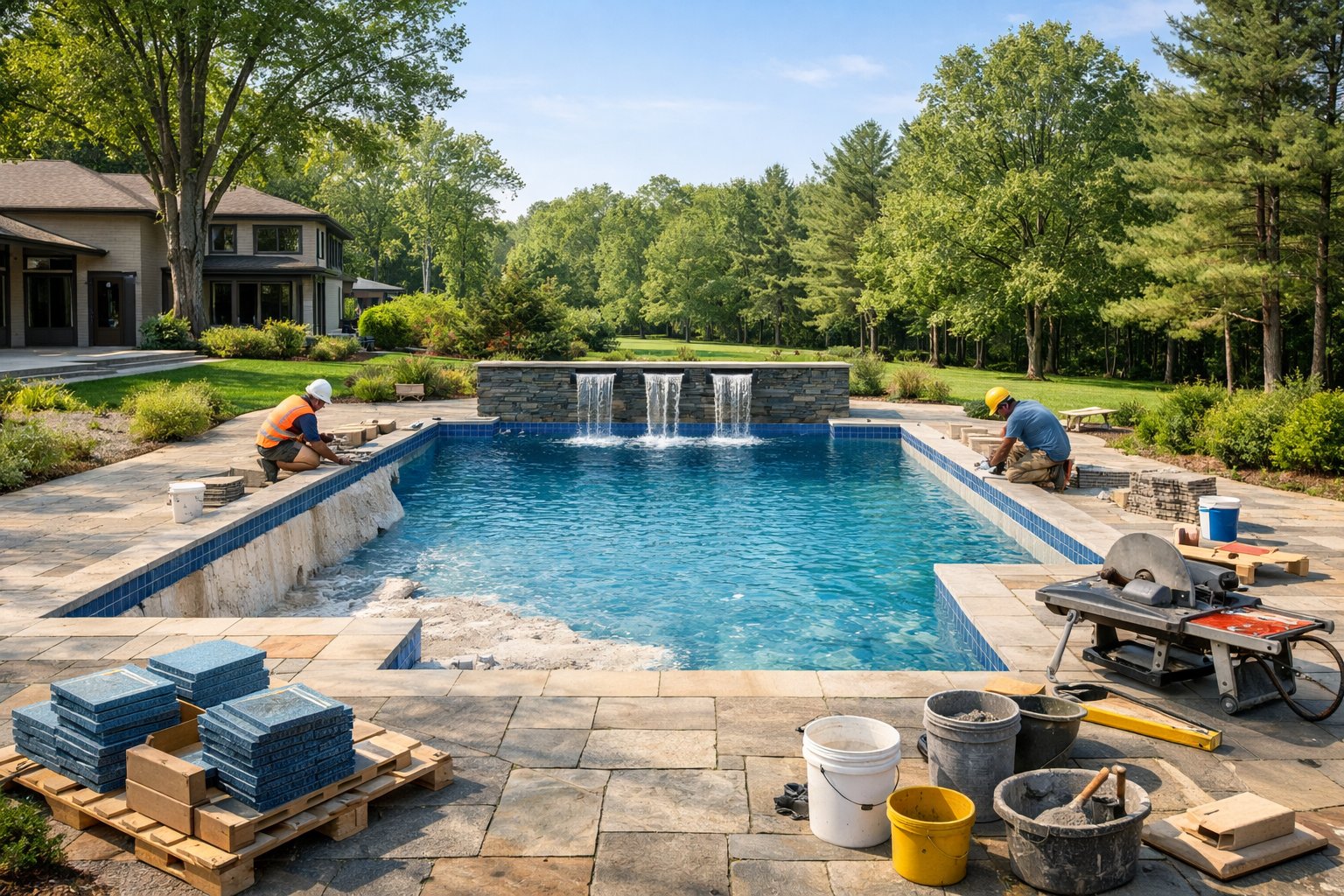
Is your pool in Virginia Beach starting to feel rough, look discolored, or show cracks? Those are signs it’s time for resurfacing or replastering. Fixing up your pool’s surface brings back its smoothness, boosts safety, and honestly, just makes it look way better.
Virginia Beach pool resurfacing and replastering brings new life to your pool, fighting off damage from our local weather and the wear of everyday use. Choosing experienced, professional help really matters if you want the job done right and your pool looking sharp for years.

At Dolphin Pool Services, we get the unique headaches that pools in coastal Virginia face—salt air, wild temperature swings, you name it. We focus on clear communication, reliable scheduling, and only use quality materials built for this climate.
This approach doesn’t just fix what’s wrong now. It helps keep your pool healthy, enjoyable, and looking good, season after season.
We take care with every step, from figuring out what your pool needs to finishing with a clean, durable surface. When you trust us, you get lasting results and real support to help you keep your pool in great shape.

Keeping your pool’s surface smooth and strong is a must for safety and fun. The coastal climate in Virginia Beach can wear down pool finishes faster, so you need to pay attention and act before things get worse.
We’ll give you straight talk about resurfacing vs. replastering, when you need each, and how to spot problems early. Doing things right means hiring skilled pros, not just anyone with a truck and a bucket.
Pool resurfacing means updating your pool’s interior by adding new materials—plaster, tile, or even high-tech finishes. It can involve repairs, upgrades, or coatings that make your pool last longer and look better.
Replastering is a specific kind of resurfacing. We remove the old plaster and lay down a fresh, smooth layer. Plaster protects the pool and feels good underfoot. Over time, it wears out, so replastering brings back comfort and safety.
When you work with us at Dolphin Pool Services, we help you pick the right materials for your pool and local water. That’s especially important here in coastal Virginia.
Think about resurfacing or replastering if your pool shows damage, stains, or just looks tired. Pools in Virginia Beach deal with salt air, strong sun, and tough water chemistry, all of which can wear out plaster fast.
If you see cracks, rough patches, or faded color, don’t wait. Fixing these issues sooner keeps things from getting worse. Regular maintenance helps you catch problems early, so you can plan ahead.
We always recommend working with professionals who know local rules and use the right materials for Virginia’s climate.
Here are the big warning signs:
If you ignore these, bigger problems (and bills) are on the way. Our team at Dolphin Pool Services checks pools thoroughly and gives you honest advice on how to get things back to normal.
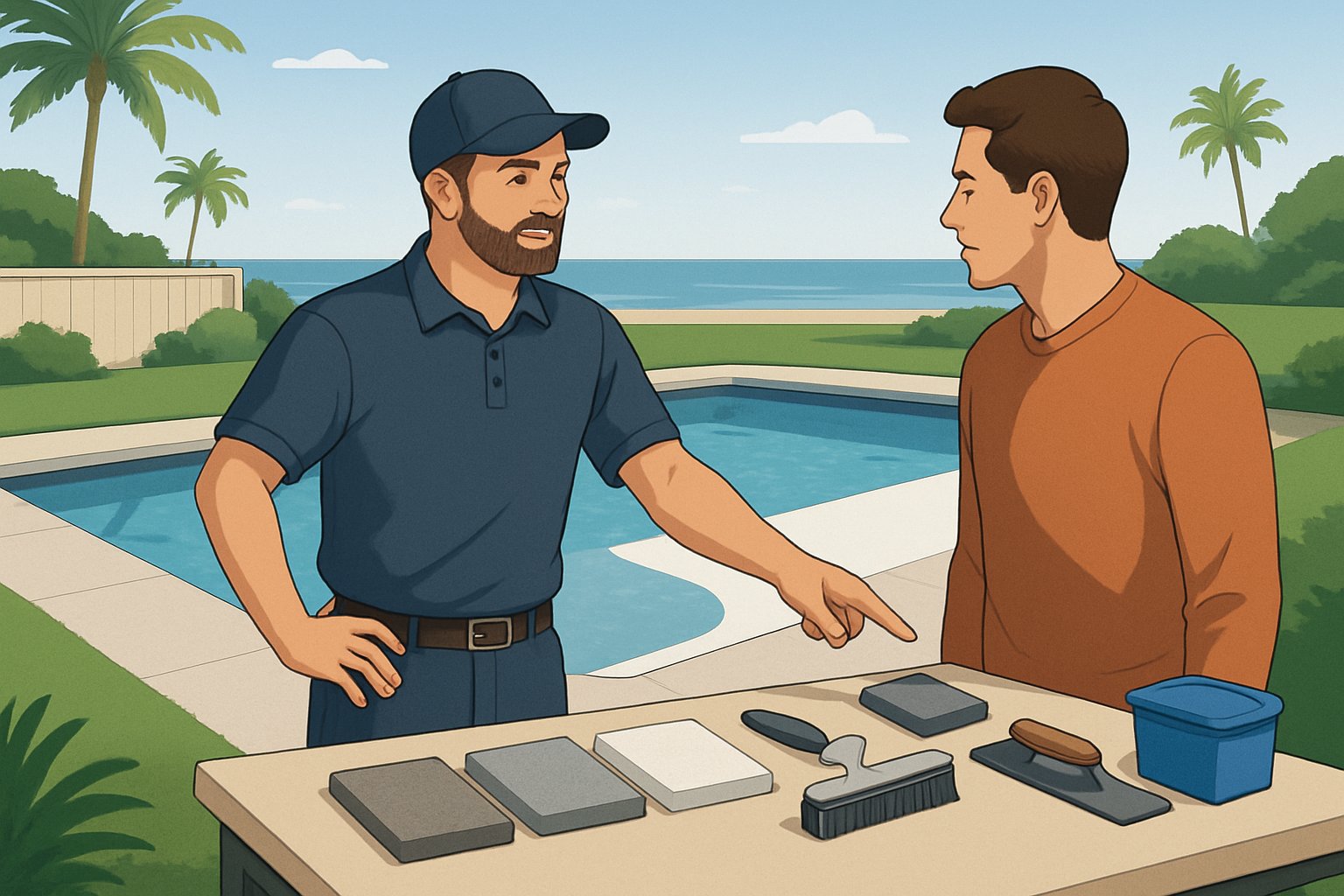
Picking the right materials and services makes a huge difference for your pool’s resurfacing or replastering. Good care after the job keeps your pool looking great and working well for a long time.
We focus on tough finishes, reliable work, and solid maintenance. That’s just how we do things.
We’ll help you choose materials based on what lasts, what fits your budget, and what looks good. The usual choices are plaster, quartz, and pebble finishes.
The right choice depends on your budget, how you use your pool, and your style. We’re always here to give honest advice and match you with the best option.
When you go with Dolphin Pool Services, you get the job done right. We know the local conditions in Virginia Beach, Maryland, and DC, and we understand how they affect pool surfaces.
We avoid common mistakes like uneven finishes or bad material choices. Our team uses top-quality products and follows a step-by-step process to protect your pool shell and extend the life of your surface.
We also stick around after the job’s done. Good installation means fewer repairs later and better safety now. Trusting us saves you time, stress, and money in the long run.
Keeping your resurfaced pool in good shape is pretty simple, but you do have to stay on it. Clean regularly, balance your chemicals, and watch for any signs of wear.
Quartz and pebble surfaces are easier to care for since they resist stains and chemicals better than plaster. Still, every pool needs routine attention.
We recommend seasonal inspections and sticking to the right water treatments. Regular maintenance keeps your pool looking fresh and stops big problems before they start.
When you work with us, you get advice that fits your pool—not just generic tips.
Resurfacing or replastering your pool comes with a timeline, costs that depend on several things, and a few local rules. Taking care of your pool after the work protects your investment. Picking the right company makes everything smoother, and noticing when your pool needs help saves you headaches later.
Most jobs take about one to two weeks. It depends on your pool’s size, the weather, and how much fixing up is needed.
Costs change based on pool size, the finish you pick, and any repairs needed before we start. Salt air and humidity here can also affect what materials will work best and how much they cost.
Simple resurfacing or replastering usually doesn’t need a permit. If you’re making big repairs or structural changes, you might need one. We’ll help you figure out what’s required and handle any paperwork.
Regular cleaning is important. Keep an eye on chemical levels and avoid harsh products to protect your new surface. We show you how to care for your pool so the finish lasts.
Find a company that’s professional, experienced, and upfront. We keep you updated, show up on time, and our team respects your space. When you go with Dolphin Pool Services, you get results you can trust.
If you notice rough patches, cracks, or strange stains on your pool’s surface, don’t ignore them. Maybe the water level keeps dropping more than usual? That’s often a sign the pool needs some attention.
We at Dolphin Pool Services see these issues all the time with inground pools. When the inside of your pool feels gritty or looks discolored, it’s probably time to think about resurfacing or replastering.