Silver Spring MD Pool Resurfacing/Replastering: Expert Guide & Services
Marko M
25th November 2025
Silver Spring pools need regular care to stay safe and beautiful. Over time, the plaster in your inground pool wears down, cracks, or peels, so resurfacing and replastering become pretty important to keep your pool’s structure and looks in good shape.
At Dolphin Pool Services, we’ve found that using strong materials and tried-and-true methods is the best way to bring your pool back to life for the long haul.
Resurfacing means we remove the old plaster and put down a fresh finish. That new surface protects and really brings out the beauty of your pool.
Our crew at Dolphin Pool Services handles every step with care, from prepping the pool to the skilled application itself. When you trust professionals like us, you get a smooth process and a result you can count on.
If you want your inground pool to stay in top shape, working with a reputable company makes all the difference. We focus on quality, timely service, and real customer care because we want your pool to look great and work well for years to come.
Key Takeaways
Pool resurfacing protects and extends the life of your inground pool.
Using the right prep and materials is a must for a finish that lasts.
Hiring a trusted company like us gives you professional results and peace of mind.
Silver Spring MD Pool Resurfacing and Replastering Overview
Taking care of your pool’s surface directly affects how long your pool lasts and how much you enjoy it. You’ll want to know the main differences between resurfacing and replastering, when you might need each one, and how upgrading your pool surface can boost safety and looks.
Key Differences Between Resurfacing and Replastering
Resurfacing means we apply a new coating right over your existing inground pool surface. This fixes wear, cracks, or color fading. We usually use modern materials like fiberglass or vinyl resins for a tough, smooth finish.
Replastering is a bit more involved. We remove the old plaster layer and put on fresh plaster. This method works best when the pool surface is really damaged or pitted. Plaster is common in Maryland pools, but it doesn’t last as long as some newer resurfacing options.
Both options need skilled professionals. We always recommend using a reputable company like Dolphin Pool Services. Good workmanship means your pool will last longer and avoid costly repairs.
When to Consider Pool Resurfacing or Replastering
Think about resurfacing or replastering if your pool has cracks, rough or peeling spots, discoloration, or just looks worn out. If your pool feels scratchy or just looks tired, it’s probably time for an update.
If you see minor damage or fading, resurfacing usually does the trick. It brings back smoothness and adds strength. For deeper damage or crumbling plaster, replastering is the way to go.
Regular maintenance in Maryland can help delay major repairs, but yearly inspections catch problems early. We always suggest reaching out to us for a professional assessment before things get worse.
Benefits of Upgrading Your Pool Surface
Upgrading your inground pool surface makes your pool safer by getting rid of rough, cracked spots that can cause cuts or slips. A smooth surface is just easier to clean and maintain, which saves you money and time in the long run.
Modern resurfacing materials fight off algae, stains, and chemical damage better than old-school plaster. That means you’ll use fewer chemicals and spend less time on pool chores.
A new surface also makes your pool look amazing, which bumps up your property value and just makes the backyard more fun. Whether you go with resurfacing or replastering, our pro installation at Dolphin Pool Services makes sure you get results that last.
Process, Materials, and Professional Services
We approach resurfacing and replastering with a clear plan, the right materials, and trusted professional help. Every step, from prep to finish, affects how safe your pool is and how long it’ll last.
Choosing quality surfaces and a reputable local contractor keeps your inground pool looking great for years.
Step-by-Step Pool Resurfacing and Replastering Process
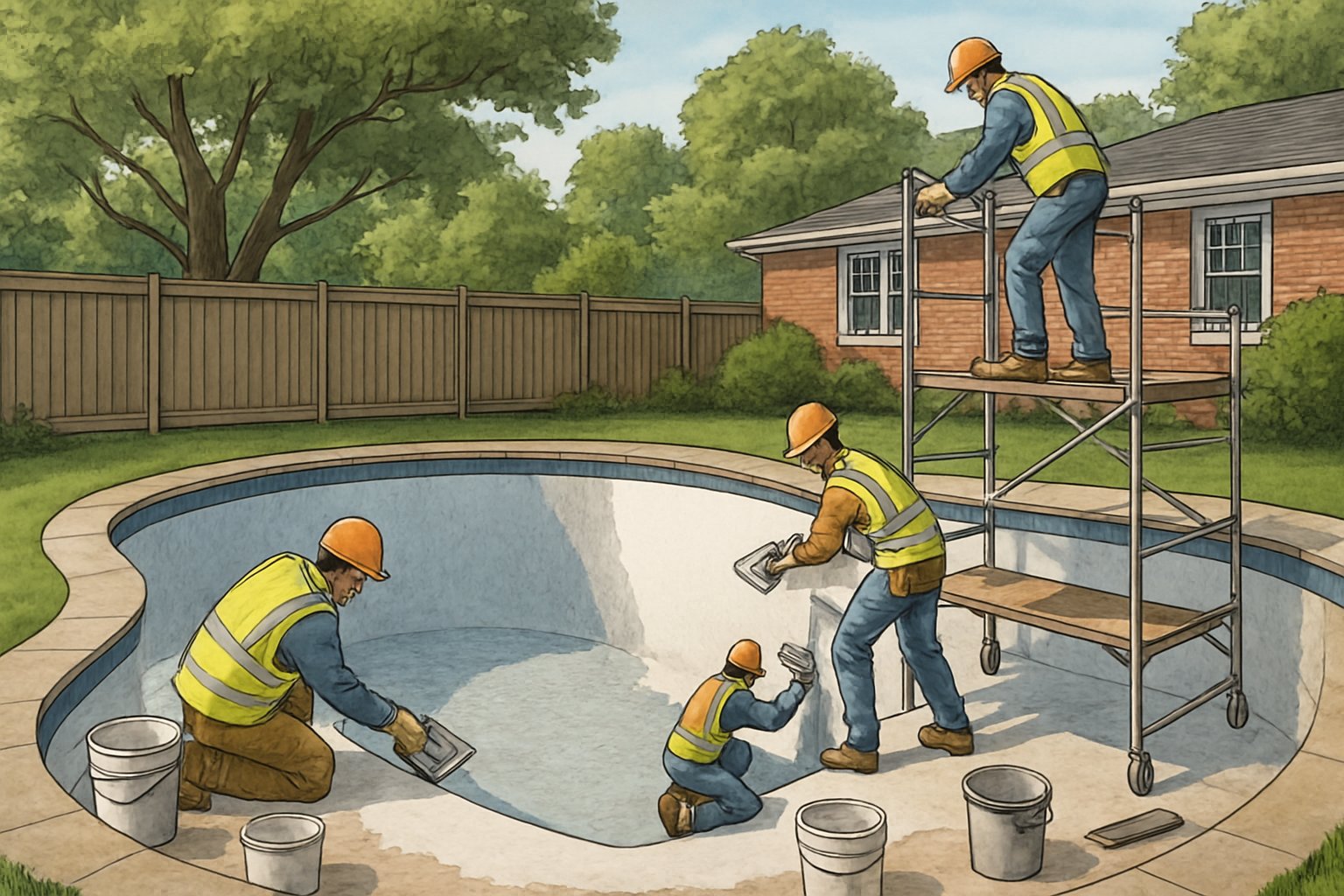
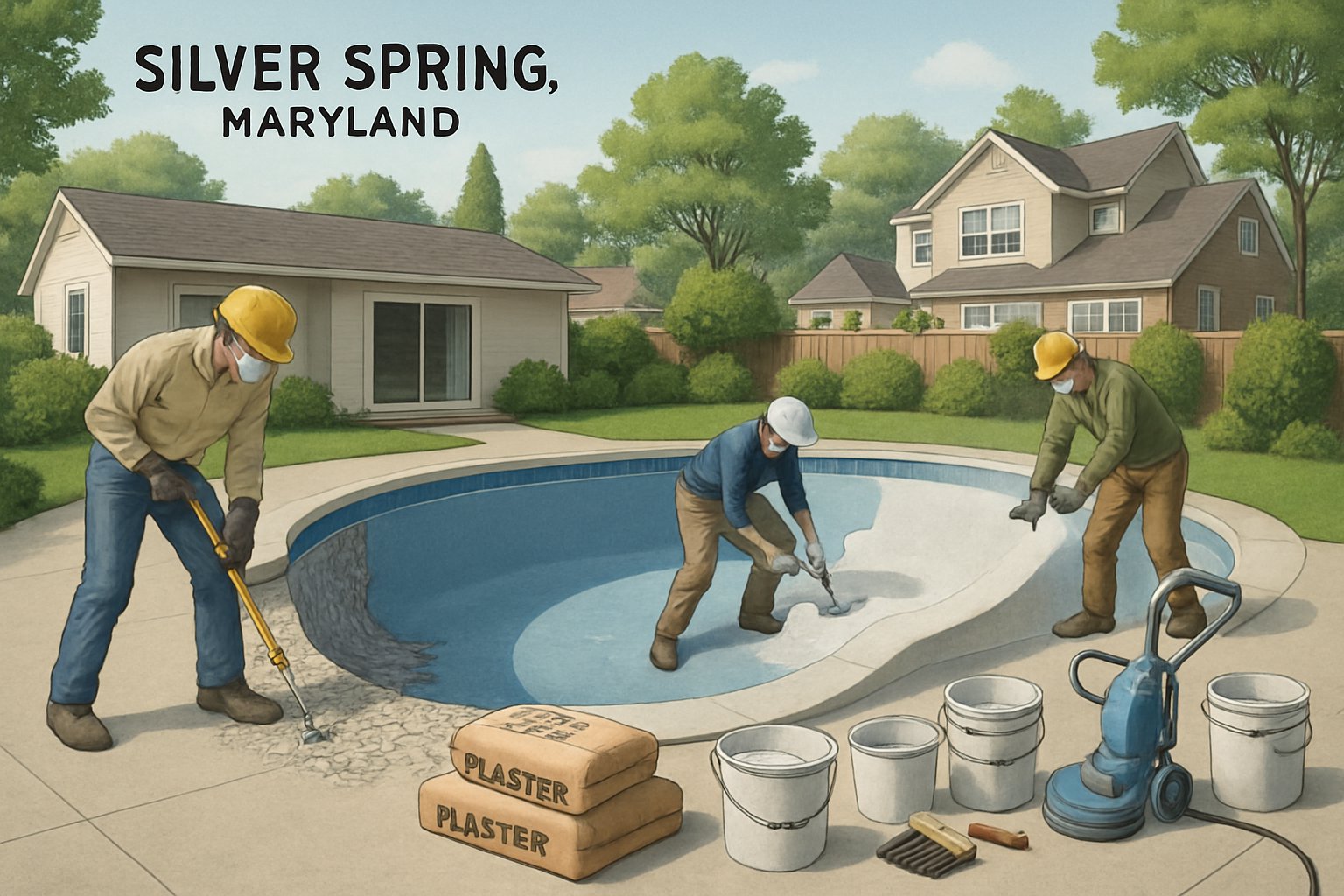
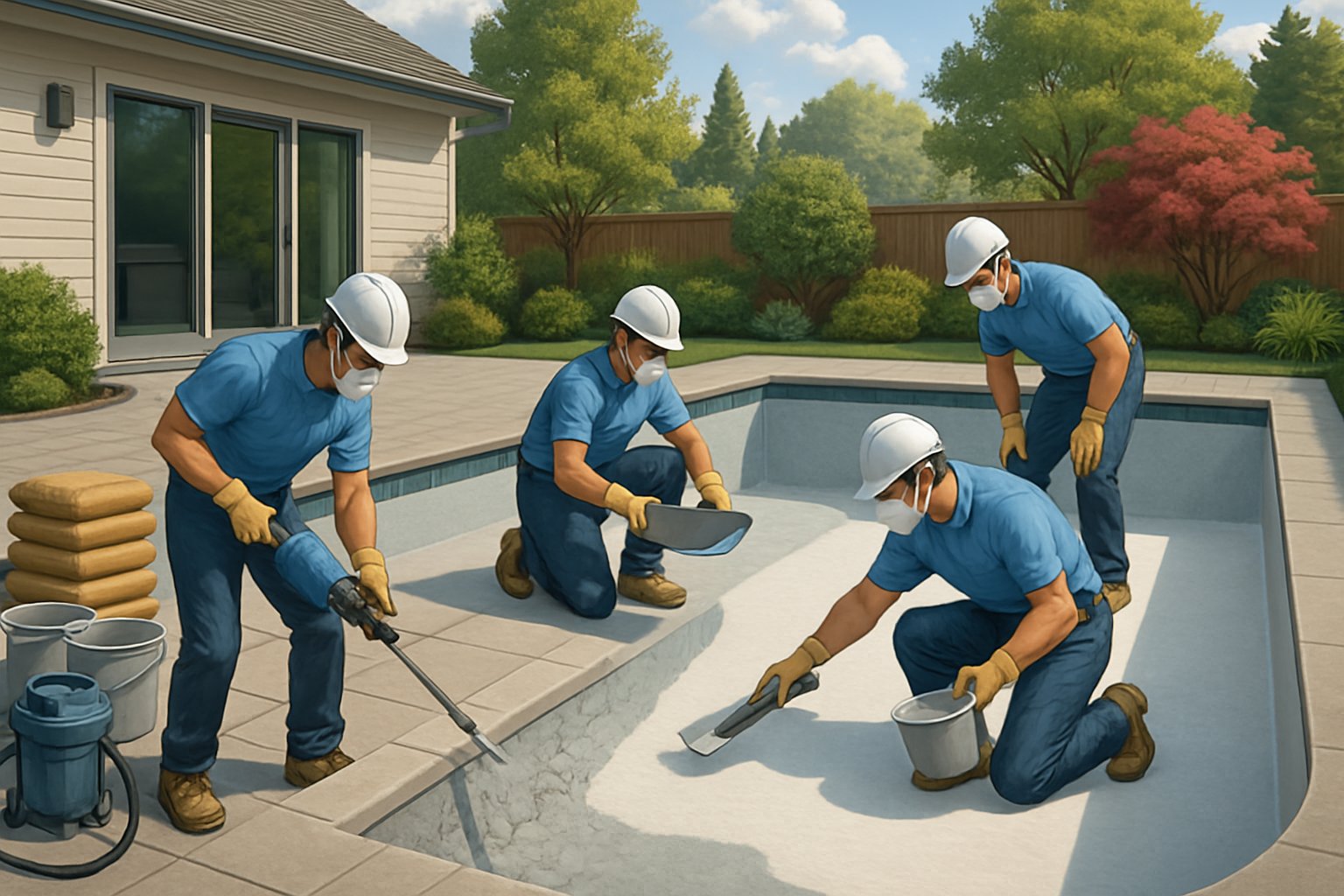
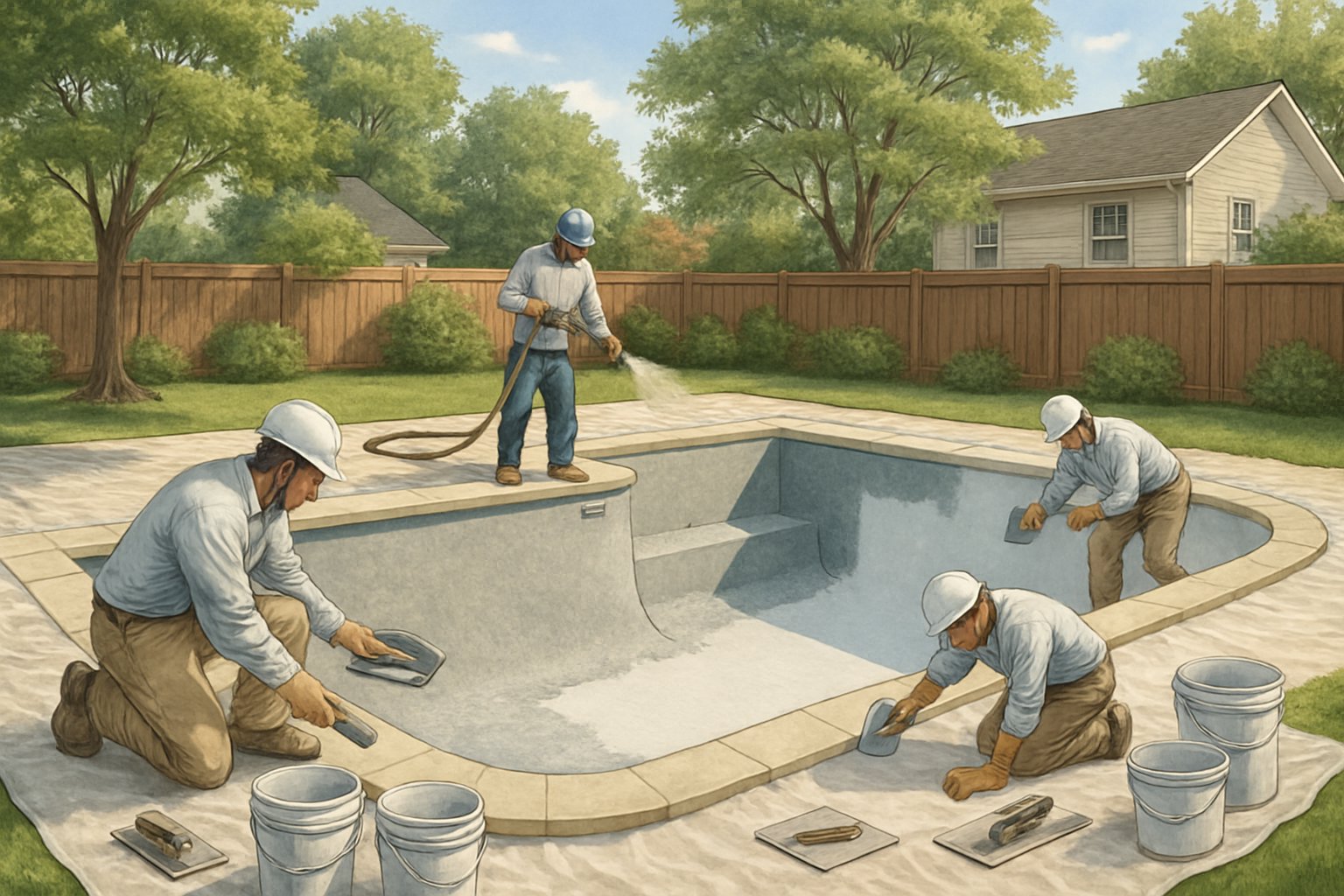
We start by draining the pool and giving the surface a good cleaning. Then, we check for cracks or damage and fix them up before sanding or shot-blasting the old surface so the new finish will really stick.
Next, we carefully apply the new finish. Usually, we use a plaster or pebble blend and spread it evenly for a smooth, waterproof layer. Once that’s done, we fill the pool and let it cure for a few days so the new surface can harden up.
This whole process takes skill and patience. We rely on our experience to give you a finish that holds up through Maryland winters, Virginia heat, and everything in between.
Popular Pool Surface Materials and Finishes
You’ve got a few solid choices for pool surfaces: plaster, pebble, and quartz finishes.
Material
Description
Durability
Appearance
Plaster
Cement-based, smooth finish
Moderate, can stain/crack
Classic, clean white or colored
Pebble
Small stones mixed into plaster
High, textured
Natural, rougher, slip-resistant
Quartz
Crushed quartz mixed with plaster
Very high, smooth surface
Bright, shimmering, stain-resistant
Picking the right finish really depends on your budget and what kind of look you want. We’ll help you choose something that balances durability and style, and fits your pool’s surroundings in Silver Spring, DC, or Virginia.
Selecting a Local Contractor in Silver Spring MD and Surrounding Regions
Choosing the right contractor matters just as much as the materials. We always suggest hiring a company with local experience, proper licensing, and solid references.
Our team at Dolphin Pool Services knows pools in Maryland, DC, and Virginia inside and out. We get local codes, weather quirks, and how to deliver on time.
Ask if your contractor offers warranties, uses top-quality products, and does final inspections. Check out reviews and past jobs. Picking a reputable company means fewer headaches and a smoother pool upgrade.
Essential Maintenance After Your Pool Makeover
After resurfacing, you’ll need to tweak your pool care routine a bit. It’s important to keep a close eye on water chemistry during curing so you don’t get etching or discoloration.
Stick to regular cleaning, balanced pH, and gentle brushing to help your new surface last. Avoid harsh chemicals and rough tools that can mess up plaster or pebble finishes.
We offer ongoing pool maintenance across Maryland, Virginia, and DC to keep your inground pool safe and looking sharp all year. Good maintenance protects your investment and keeps your resurfaced pool looking fresh.
Frequently Asked Questions
Resurfacing your pool means we clean, prep, and apply new materials to the surface. Most inground pools need resurfacing every so often to stay safe and look good. Watch for rough spots and cracks as signs it’s time. The right materials and timing make all the difference for how long your replastering lasts.
What steps are involved in the pool resurfacing process?
First, we drain the pool all the way. We clean and prep the surface—sometimes with acid washing or sandblasting. Then we put down the new plaster layer evenly. If you need tile or coping repairs, we handle those too. That way, your surface ends up smooth and strong.
How often should a pool be resurfaced or replastered?
In Silver Spring, most pools need resurfacing every 7 to 15 years. It really depends on how much you use the pool, your water chemistry, and the weather. Regular inspections help you catch issues early and avoid expensive repairs.
What are the signs that my pool needs resurfacing?
Look for rough or sharp surfaces, cracks, stains, or calcium buildup. If your pool loses water fast, that’s another red flag. When you spot these problems, it’s time to resurface before things get worse.
Can pool resurfacing address leaks?
Yes, resurfacing seals up small cracks and porous areas that might cause leaks. It brings back your pool’s integrity. If there’s a major structural leak, though, you might need extra repairs beyond just resurfacing.
What materials are best for pool replastering in the Silver Spring climate?
We usually recommend quartz and pebble finishes. They’re tough and handle the local weather better than standard plaster. Pebble finishes, in particular, stand up well to the wear and tear you get around here.
How long does it take to replaster a swimming pool?
We typically need about 7 to 10 days to replaster an inground pool from start to finish. First, we drain the pool and get the surface ready.
After that, we apply the new plaster. Then, we let it cure properly. The timeline might change a bit depending on your pool’s size and condition.
Get your pool in perfect shape today!
Ensure your pool stays in peak condition with the expertise of our professional, certified operators. We provide top-quality service to keep your pool clean, safe, and well-maintained year-round. Contact us today through our online form to schedule best pool services!