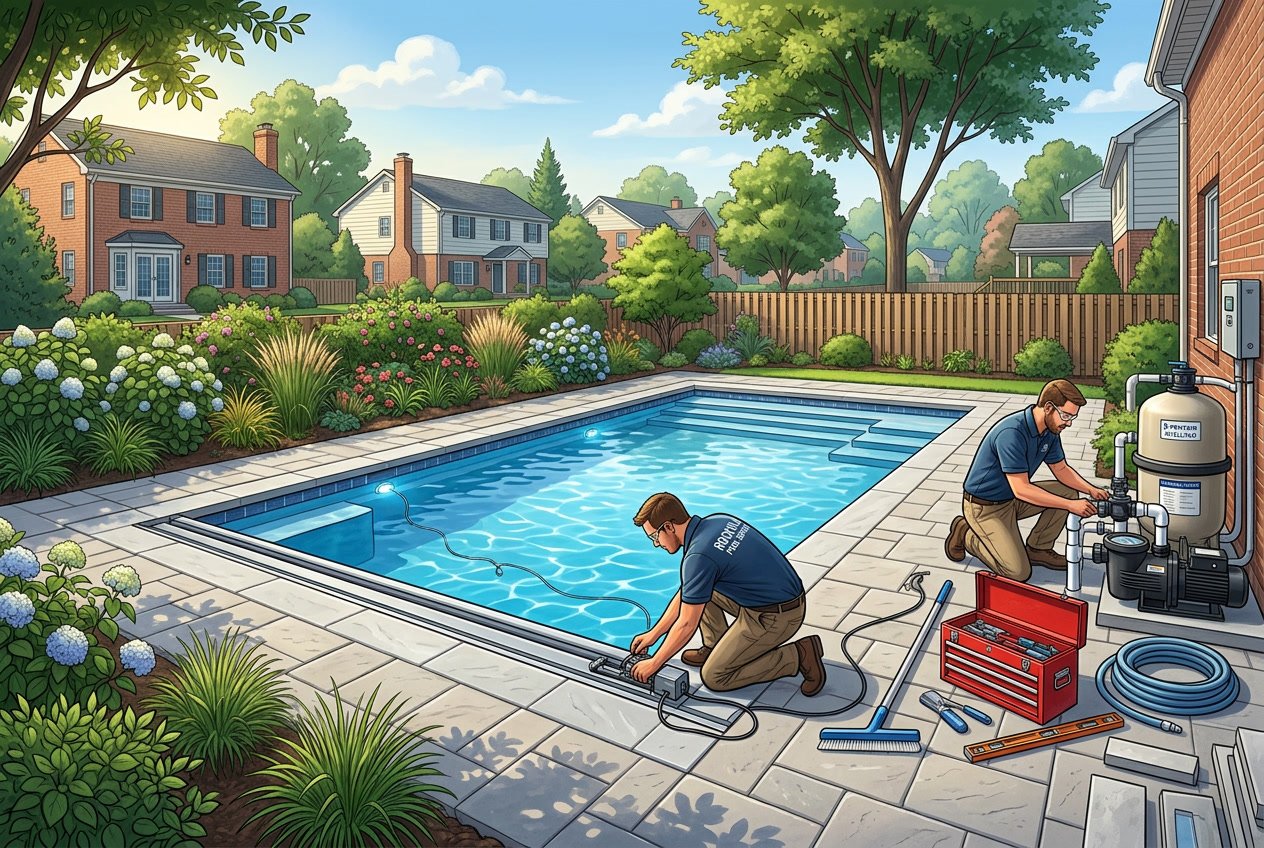
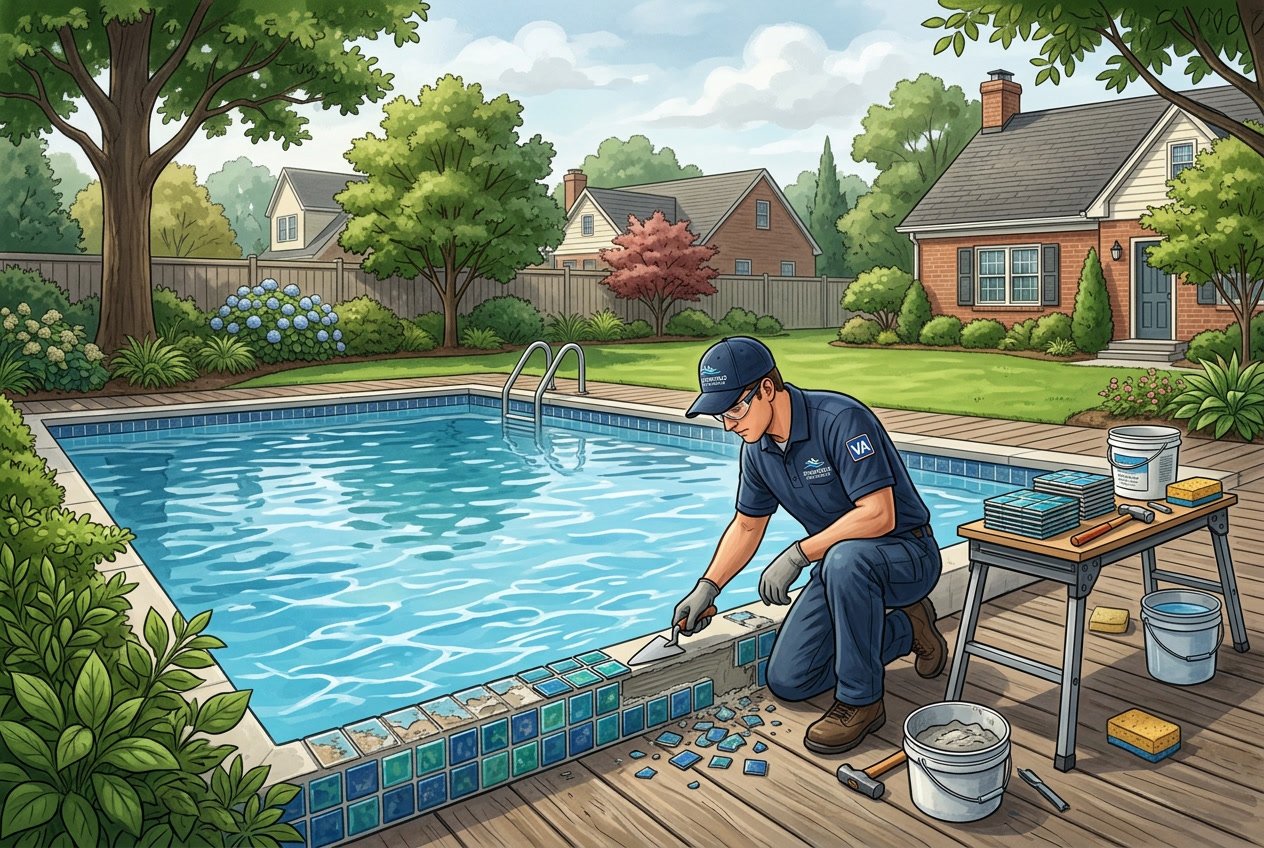
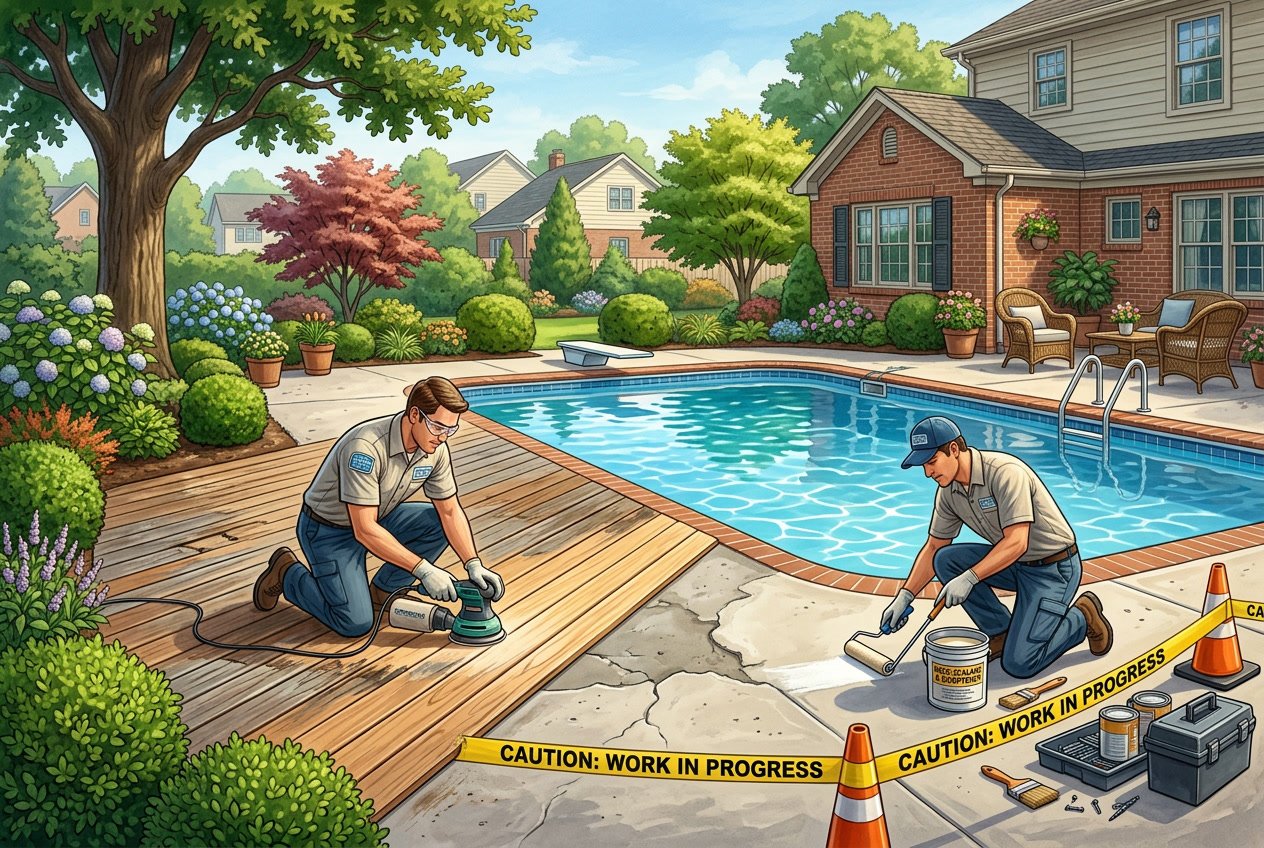
Pool Perimeter Caulking & Sealing Maryland: Essential Maintenance for Longevity and Leak Prevention
Marko M
4th October 2025
Pool perimeter caulking and sealing is essential for protecting your pool from water damage and structural problems. In Maryland’s climate, using the right materials and techniques ensures a flexible, watertight seal that can withstand seasonal changes. Properly installed perimeter caulking keeps water out of the joints, preventing costly repairs to your pool deck, coping, and tile.
When done by professionals like us at Dolphin Pool Services, pool caulking provides long-lasting protection against leaks and chemical damage. Our expertise in Maryland pools helps maintain the pool’s appearance and durability. It’s important to choose a reputable company that understands local conditions and uses high-quality sealants tailored for your inground pool.
Careful sealing around your pool also keeps it safe and comfortable for family and guests. Regular maintenance or replacement of failing caulk can stop problems before they start. We focus on reliable craftsmanship to keep your pool in the best condition year-round.
Key Takeways
Effective pool caulking protects against water damage and structural issues.
Professional service ensures using materials suited for Maryland’s climate.
Regular maintenance extends your pool’s life and preserves its look.
Pool Perimeter Caulking & Sealing in Maryland
Properly maintaining the edges of your inground pool is key to preventing leaks and structural damage. Using the right sealants and expert techniques helps protect your pool deck and keeps water from seeping into gaps around the pool’s perimeter.
Why Caulking Is Essential for Inground Pools
Caulking fills the narrow joints between the pool coping and the surrounding deck. These joints act as expansion areas to absorb pressure changes caused by temperature shifts.
Without caulking, water can leak into these gaps and freeze during colder months. This expansion can cause cracks, weakening the pool’s structure. Caulk also keeps dirt and debris from settling in these spaces, which helps avoid damage or stains.
Regular perimeter caulking helps maintain the pool’s waterproof seal and extends the life of both the pool surface and the deck. This is especially important in Maryland and Virginia, where freeze-thaw cycles are common.
Common Signs It’s Time to Reseal Your Pool Perimeter
Look for visible cracks, gaps, or peeling in the current caulking. These signs indicate the sealant no longer protects the expansion joint, allowing water and debris inside.
Pooling water around the edges of the deck or inside small cracks is another warning sign. Your pool deck might also feel loose or uneven if water has seeped underneath.
Discoloration and mold growth near the pool perimeter can signal moisture intrusion caused by failed caulking. If you notice any of these issues, schedule a professional inspection.
How Professional Pool Services Ensure Lasting Results
A trusted pool company like us, Dolphin Pool Services, uses high-quality, flexible sealants designed for the constant exposure to water and chemicals in pools.
We prepare the surface by removing old caulking and cleaning dirt and residue. Proper drying and sealing techniques ensure the new caulk bonds tightly to the pool edges.
Our trained technicians know how to apply sealants evenly to prevent weak spots. We tailor the work to the local climate conditions in Maryland and Virginia for long-lasting protection.
Choosing a reputable professional helps avoid common mistakes like incomplete sealing or using poor materials, which can cause early failure and costly repairs later.
Choosing the Best Solutions for Maryland Pools
Selecting the right materials and methods for pool perimeter caulking is key to preventing leaks and protecting your pool structure. The local climate and whether you hire a professional or choose a DIY approach affect how long the seal will last. We focus on practical details to help you make the best decision.
Recommended Materials for Pool Caulking
Not all caulking products work well for pools. We always recommend elastomeric sealants because they stretch and move with the pool deck and coping. Popular brands like EZ Patch 23 and Vulkem SSL are designed for outdoor use and resist water, UV rays, and temperature changes.
Avoid using standard silicone or acrylic caulks. These can crack or peel, leading to leaks. Look for caulking labeled specifically for pool expansion joints or perimeter sealing.
Professional pool service companies like us use high-quality, tested materials to ensure a clean, durable seal. This reduces the chance of needing early repairs.
Climate and Regional Considerations
Maryland’s seasons bring broad temperature swings and freeze-thaw cycles. These changes put stress on pool caulking and can cause cracks or gaps over time.
Because of this, flexibility in the caulking material is crucial. A product that remains resilient in cold winters and hot summers can stop water damage around your pool’s coping and deck.
Pools in nearby Virginia face similar conditions. Whether you’re in Maryland or Virginia, choosing a sealant designed for these climates is essential. We advise regular inspections from a trusted pool company to catch problems early.
Comparing DIY vs. Professional Service Options
DIY-caulk jobs may seem cheaper but often lack the precision and product knowledge needed. Applying caulk properly requires careful surface cleaning, correct product choice, and expert sealing around irregular edges.
Professional services like Dolphin Pool Services guarantee thorough prep and installation. We use the right equipment to remove old caulk and apply new sealant evenly.
Hiring experts also means we spot hidden damage during service and prevent bigger issues later. If you want long-lasting pool protection, working with a reputable, experienced company is the best choice.
We handle all types of inground pools to give your pool deck the care it needs.
Frequently Asked Questions
Maintaining the caulking around your pool helps prevent leaks and protects the structure. Knowing when to replace it, the best materials to use, and whether to do it yourself or hire a professional can save time and money. The cost varies based on size, condition, and materials chosen.
What are the benefits of pool perimeter caulking?
Caulking seals the expansion joint where the pool coping meets the deck. This stops water from leaking into gaps and causing damage to the pool structure. It also helps prevent tiles and coping from popping off over time.
How often should caulking around a pool be replaced?
Caulking usually needs to be replaced every 5 to 7 years. The replacement frequency depends on weather conditions and pool usage. Maryland’s climate with its temperature changes can affect how long the caulking lasts.
What are the signs that pool caulking needs repair or replacement?
Cracks, gaps, or peeling caulk show it needs repair. Water leaking through the joint or loose coping stones also means the caulking is failing. Discoloration and hardness are other signs caulk is past its prime.
What materials are recommended for sealing a pool perimeter in Maryland’s climate?
We recommend using professional-grade urethane sealants because they hold up well in temperature changes. These materials are flexible and waterproof, which is important for Maryland’s warm summers and cold winters.
Can I re-caulk my pool perimeter myself, or should I hire a professional?
While DIY is possible, hiring a professional pool company like us at Dolphin Pool Services ensures proper removal of old caulking and correct application. We use backer rods and high-quality sealants to guarantee a longer-lasting seal.
What factors influence the cost of pool perimeter caulking and sealing?
Costs depend on the pool size, the amount of old caulk to remove, and the materials used. Labor charges vary based on how complex the job is. Hiring a trusted company like us ensures the best value with reliable, lasting results.
Get your pool in perfect shape today!
Ensure your pool stays in peak condition with the expertise of our professional, certified operators. We provide top-quality service to keep your pool clean, safe, and well-maintained year-round. Contact us today through our online form to schedule best pool services!