Pool Perimeter Caulking & Sealing Virginia Expert Solutions for Long-Lasting Protection
Marko M
7th October 2025
Pool perimeter caulking and sealing in Virginia is essential to protect your pool’s structure from water damage. The flexible sealant used in this process stops water from seeping into gaps between the pool coping and deck, preventing cracks, tile damage, and deck sinking caused by freeze-thaw cycles. Without proper sealing, structural problems can develop over time and lead to costly repairs.
At Dolphin Pool Services, we understand the unique climate challenges here in Virginia. That’s why we emphasize using high-quality materials and professional techniques to ensure a long-lasting, watertight seal. Proper maintenance of your pool’s perimeter not only extends its lifespan but also preserves its appearance and safety.
Working with a trusted pool company like us ensures the sealing job is done right the first time. We use tested methods tailored to local conditions, so your pool can withstand seasonal changes. We invite you to learn more about why perimeter caulking is vital and how we keep your pool protected year-round.
Key Takeaways
Proper caulking prevents water damage and structural issues in pools.
Using professional services ensures durable and effective sealing.
Routine maintenance keeps pools safe and looking good longer.
Understanding Pool Perimeter Caulking & Sealing in Virginia
Proper pool perimeter caulking and sealing protect the crucial joint where the pool coping meets the deck. This helps avoid water damage, deck sinking, and freeze issues common in Virginia’s climate. Using professional services ensures the right materials and techniques for long-lasting protection on your inground pool.
What Is Pool Perimeter Caulking?
Pool perimeter caulking is a flexible sealant that fills the gap between the pool coping and deck. This gap, called the expansion joint, allows for natural movement caused by temperature changes. Without this caulking, water can seep inside, causing structural damage over time.
The caulk prevents water intrusion from rain, pool splashes, and humidity. It acts as a barrier that stops soil erosion under the deck, which could lead to sinking or cracking. Maintaining this seal is a key part of pool maintenance that extends your pool’s life and keeps the deck stable.
Common Challenges for Inground Pools in Virginia
Virginia’s seasonal weather causes problems for inground pools if perimeter caulking fails. Rainwater can penetrate the joint, washing away soil beneath the deck. This erosion causes uneven settling and can lead to cracks or displacement of both coping and decking.
Winter brings freeze-thaw cycles that expand trapped water, damaging concrete and tile around the pool edge. Over time, this leads to costly repairs and unsafe pool conditions. Virginia’s humid summers also speed up the wear of old or cracked caulk, requiring regular inspection.
Benefits of Professional Caulking & Sealing
Using professional services like Dolphin Pool Services ensures durable, high-quality caulking that suits Virginia’s climate. Experts remove old or failing sealant properly and use materials like high-grade mastic to withstand seasonal changes.
Professional caulking protects your pool’s structure by preventing water damage and freeze cracks. It also keeps the deck solid, reducing the risk of costly repairs. We recommend routine inspections and timely replacement of the seal to maintain peak pool condition year-round.
Pool Perimeter Caulking Process & Maintenance
Proper pool perimeter caulking is a key part of keeping your pool safe from leaks and damage. It involves carefully removing old sealant, cleaning the area, and applying new flexible material. Using quality products and a trusted Virginia pool service makes this process effective and durable.
Step-by-Step Caulking & Sealing Process
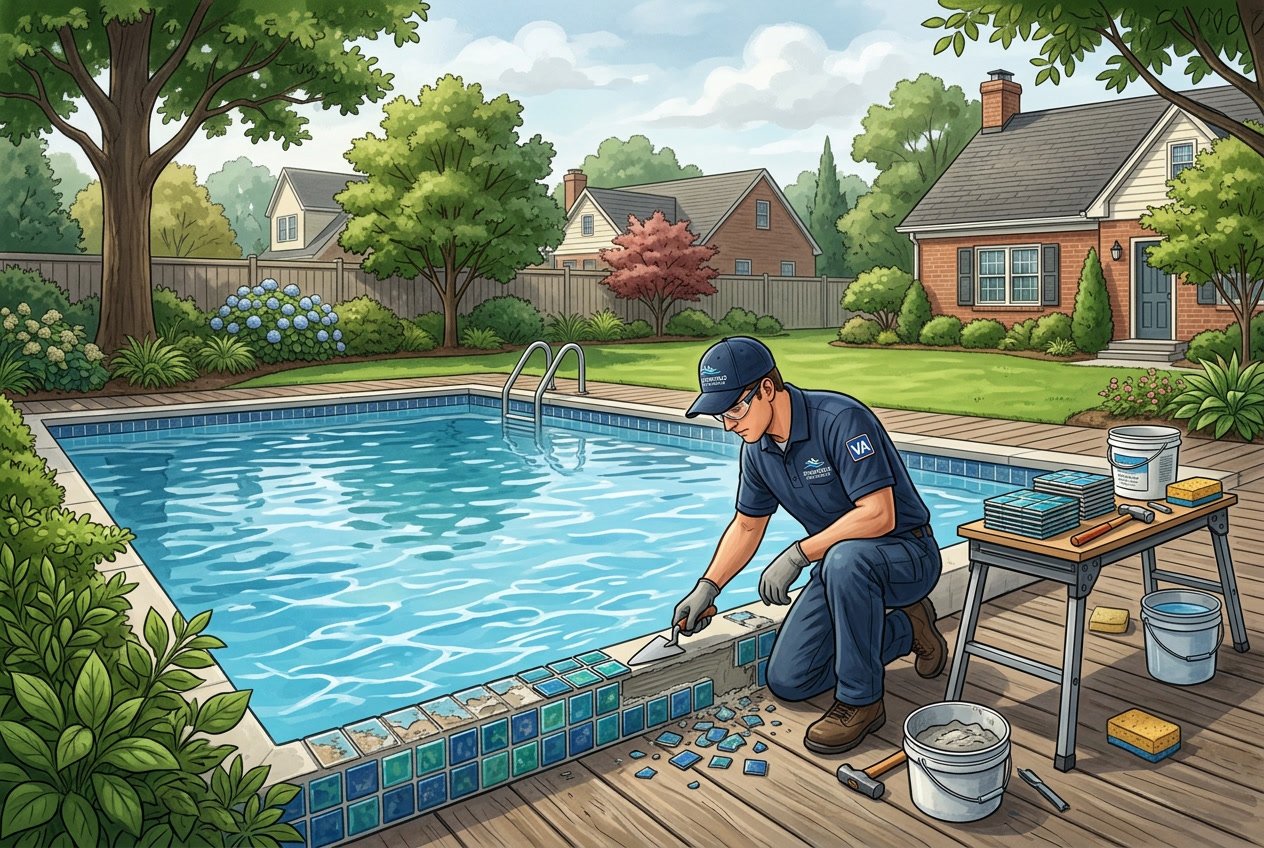
First, we start by removing any old, cracked, or peeling caulk around the pool’s coping where it meets the deck. This step is important to ensure a clean surface.
Next, we carefully clean the expansion joint to remove dirt, debris, or moisture. Clean joints help the new caulk stick better.
Then, we apply a flexible, waterproof sealant like polyurethane or silicone using a caulking gun. We smooth the caulk to fill the joint evenly, ensuring no gaps remain.
Finally, we let the caulk cure fully before exposing it to water or heavy foot traffic. This curing time varies but usually takes 24 to 48 hours.
Best Practices for Long-Term Performance
Using high-quality, flexible caulking material is essential for long-term protection. The material must handle pool deck movement caused by heat changes in Virginia’s climate.
We recommend inspecting the caulking every year, especially during fall. This season is ideal for repairing before winter freezes can cause damage.
Avoid harsh cleaning chemicals near the caulked joints, as these can weaken the sealant over time.
Professional maintenance helps avoid leaks that can damage pool tiles, coping, and decking, saving money on costly repairs later.
Choosing a Pool Service in Virginia
Selecting the right pool service company is crucial for effective caulking and sealing. Look for companies experienced with inground pools and local weather conditions.
We, at Dolphin Pool Services, specialize in precise, professional caulking in Virginia. Our team uses top-grade sealants and follows strict quality standards.
Always ask for references and proof of insurance to ensure reliability.
A reputable pool service will also offer regular maintenance plans, helping you keep your pool structure secure year-round.
Frequently Asked Questions
Proper pool perimeter caulking protects your pool structure from water damage and helps prevent costly repairs. Using the right materials and methods is key, and timing your maintenance correctly keeps everything in good shape.
How much does it typically cost to caulk and seal a pool perimeter in Virginia?
The cost usually depends on your pool size and the job’s complexity. On average, prices range from $300 to $800 for a full pool perimeter caulking service.
Additional factors like old caulk removal or damage repair can increase the cost. We recommend getting a professional estimate to understand your specific needs.
What are the best local services for caulking and sealing a pool perimeter in Virginia?
Choosing a reputable pool company with experience in perimeter sealing is crucial. At Dolphin Pool Services, we specialize in pool caulking and sealing using proven techniques.
Many local companies offer these services, but it’s important to verify their expertise and customer reviews before hiring.
Which type of caulk is most suitable for use around swimming pools?
Flexible, waterproof silicone or polyurethane caulks are best for pool perimeters. These materials accommodate expansion and contraction caused by temperature changes.
Rigid or non-flexible sealants can crack, leading to leaks and damage to the pool and deck.
What is the technical term for the sealant used around swimming pool perimeters?
The sealant is called “pool perimeter caulking” or sometimes “expansion joint sealant.”
It fills the gap between pool coping and the deck, allowing movement while preventing water from entering.
What are the steps involved in repairing damaged caulking around a pool area?
First, remove old caulk completely by scraping it away. Next, clean and dry the area thoroughly.
Then, insert a foam backer rod into the joint if needed, and apply new flexible caulk evenly. Finally, smooth the caulk with a damp towel for a clean finish.
How often should pool perimeter caulking be replaced or maintained?
Generally, pool perimeter caulking should be inspected yearly and replaced every 3 to 5 years.
Extreme weather or visible cracks and gaps mean you should repair sooner to prevent water damage to your pool structure.
Get your pool in perfect shape today!
Ensure your pool stays in peak condition with the expertise of our professional, certified operators. We provide top-quality service to keep your pool clean, safe, and well-maintained year-round. Contact us today through our online form to schedule best pool services!