Waldorf Pool Caulking/Re-Caulking: Services, Maintenance & Renovation
Marko M
15th October 2025
Keeping your pool in top shape means you’ve really got to pay attention to the caulking around it. Proper caulking and re-caulking stop water leaks, protect your pool’s structure, and honestly just help your investment last longer.
Ignore worn or cracked caulk, and you could end up with expensive headaches—damage that’s a pain to fix and even harder to pay for.
At Dolphin Pool Services, we know firsthand that using the right materials and techniques is everything. Pool caulking isn’t just about looks; it keeps water where it should be and stops moisture from sneaking into the deck or pool structure.
If you let just anyone tackle the job, it probably won’t last. When you hire experienced pros like us, the results stick around—saving you time, money, and stress.
Maybe you need to refresh old caulking, or maybe you just want to protect a brand-new pool. Either way, picking a trusted team is crucial.
We get the unique quirks of Waldorf’s weather and pool styles, so we suggest solutions that keep your pool safe and looking sharp, no matter the season.
Key Takeaways
Pool caulking keeps leaks at bay and protects your pool’s structure.
Professional service means results that last.
Regular maintenance helps you dodge expensive repairs.
Essentials of Waldorf Pool Caulking and Re-Caulking
Proper pool caulking shields your pool from water damage and keeps the whole area looking tidy. Knowing when to replace caulk and what materials work best actually matters.
Whether you want to do it yourself or call us in, the right approach can make a huge difference in pool maintenance.
Why Pool Caulking Is Important
Pool caulking seals up the expansion joints between the coping and the deck. These joints let the concrete expand and contract as the weather changes, so things don’t crack.
If you skip caulking, water will find its way into those gaps and start eating away at your pool’s structure.
Caulking also blocks dirt, sand, and junk from filling up the joints. Once debris gets in, the joint loses flexibility and cracks aren’t far behind.
Well-kept caulking does more than protect—it makes your pool area look finished and sharp.
Here in Waldorf, Virginia, where the weather can be all over the place, high-quality caulking helps your pool survive freezing winters and those muggy, blazing summers.
Common Signs Your Pool Needs Re-Caulking
So, how do you know when it’s time? Check for cracks, holes, or spots where the caulk’s pulled away from the coping or deck.
If the caulk feels brittle or crumbly, it’s done its time.
Watch for water sneaking around the expansion joint, or even mold and mildew. Heavy-use pools, like the ones we see all over Maryland and DC, usually need a little more love since all that splashing wears caulk down faster.
We always recommend you check your pool’s caulking every few years—especially before winter hits or after a renovation. If you catch problems early, you’ll save yourself a lot of hassle.
Types of Pool Caulking Materials Used in Waldorf
In Waldorf, we mostly stick with polyurethane and silicone-based caulks for pools. Polyurethane is tough, flexible, and doesn’t mind temperature swings.
It’s waterproof, so it’s perfect for sealing up expansion joints around inground pools.
Silicone caulk is easy to work with and dries quickly, but it usually doesn’t last as long as polyurethane. Sometimes we’ll use it for smaller fixes or on indoor pools.
We sometimes add foam backer rods into the joint before caulking. That gives the caulk a solid base and helps the seal last longer.
We always pick materials based on the local weather, your pool’s design, and what you want out of the project. Sticking with professional-grade products means your investment is protected for the long haul.
Professional vs. DIY Pool Caulking Services
Sure, DIY re-caulking might look like a way to save a buck. But if you don’t have the skills or the right tools, it’s easy to mess up.
Uneven caulking or using the wrong stuff? That just means you’ll have to do it all over again way too soon.
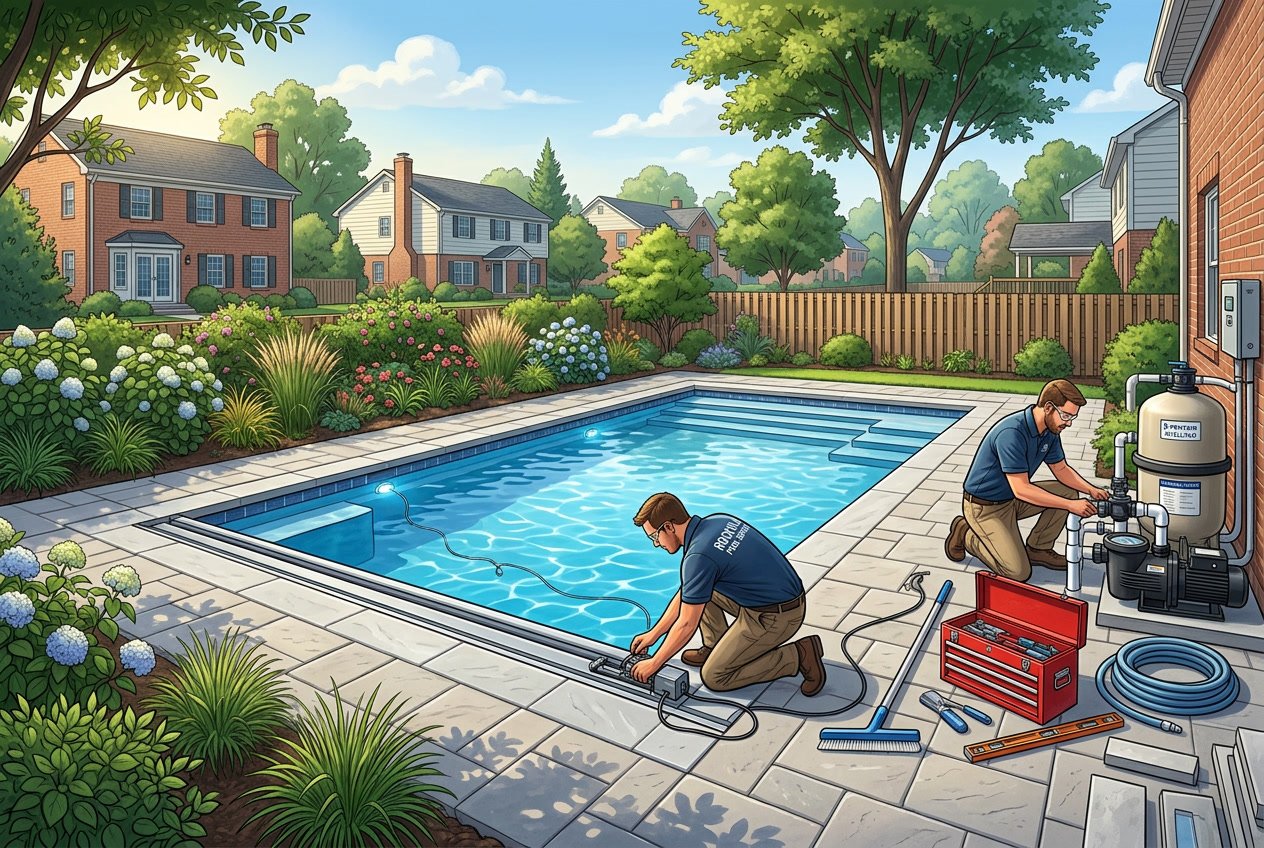
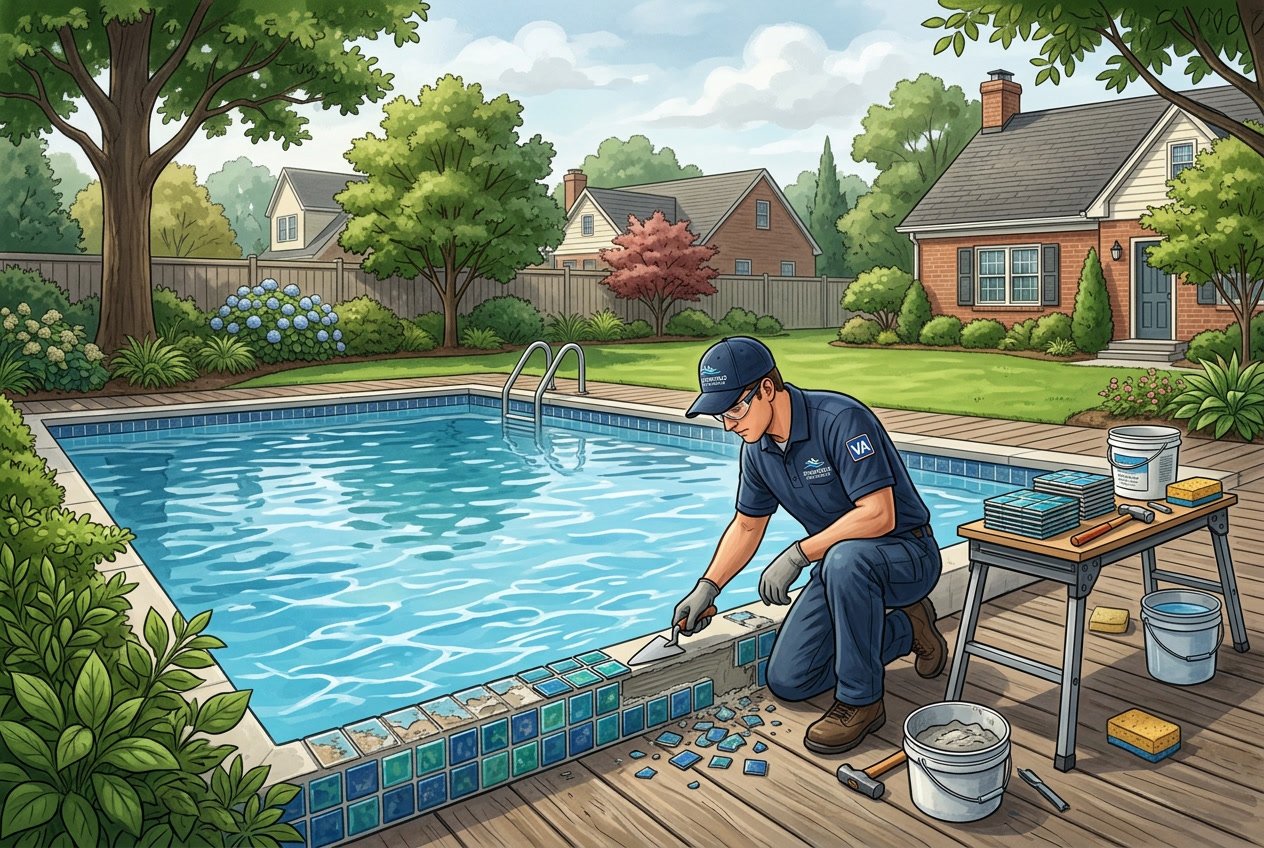
When you call us at Dolphin Pool Services, you get a team that knows how to do it right. We check your pool, remove all the old, cracked caulk, clean up the area, and apply new caulk smoothly.
We don’t just use any old product—we pick what’s best for your pool’s environment in Waldorf. Plus, we back our work with warranties and support. DIY just can’t compete with that.
If you’re in Virginia, Maryland, or DC, hiring pros like us means your pool stays in shape and you avoid big bills later.
Choosing Pool Caulking and Renovation Services in Waldorf
Picking the right pool caulking and renovation services isn’t just about price. You want quality, experience, and a plan that actually fits your pool.
We always tell folks—work with trusted professionals who know the local weather and pool quirks. We help you find what fits, whether your pool’s in Maryland, Virginia, or DC.
Evaluating Experienced Pool Service Providers
Experience really does matter. We look for teams who know how to handle deck sealing and coping repairs, especially with all the freeze-thaw cycles we get around here.
Good caulking keeps water out and makes your pool last.
We use top-notch materials at Dolphin Pool Services, and we get how Maryland’s climate can be tough on pools. Always check for licensed techs and real customer reviews.
A reliable company stands by its work, with warranties and guarantees so you’re not left hanging.
Selecting the Right Maintenance and Renovation Packages
Smart pool care means regular checkups and caulking or resealing every 5 to 7 years, depending on how much wear you see.
We’re big on packages that bundle cleaning, caulking, and structural repairs. That way, you save money and skip surprise repairs.
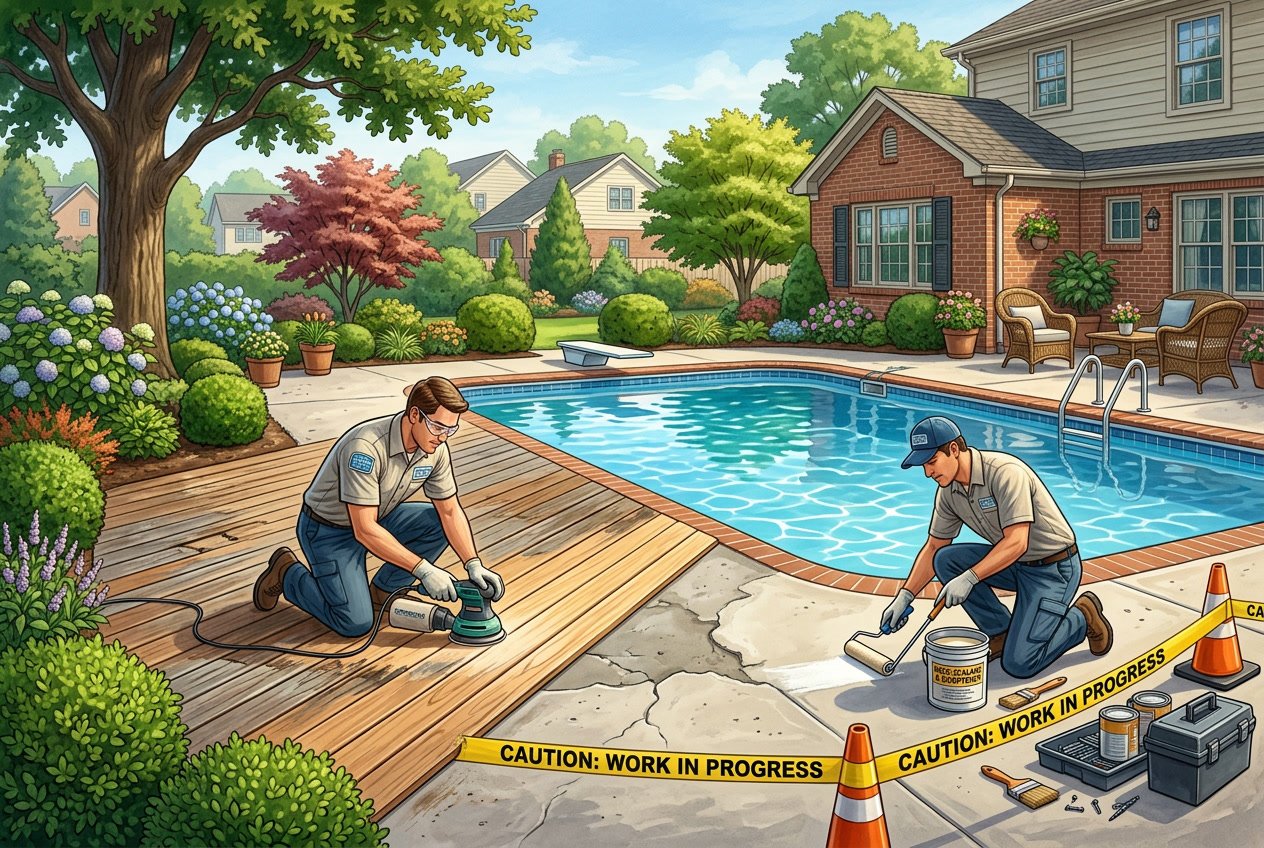
It’s worth picking a service that includes seasonal checkups. If you need a renovation, we’ll help you balance cost with quality materials and pro installation—so your pool’s deck and structure stay protected.
Comparing Local Services Across Maryland, DC, and Virginia
Service quality and prices? They’re all over the map in Maryland, Virginia, and DC.
We always suggest you compare companies by their local experience and how well they know the weather’s impact on inground pools. At Dolphin Pool Services, we focus on this region, so we use sealants and techniques that actually work here.
Look for companies with solid reputations and lots of positive local feedback. Free estimates and clear work plans are a good sign.
Make sure whoever you choose uses industry-grade elastomeric sealants meant for pool expansion joints—not the cheap stuff that cracks at the first sign of a cold snap.
Frequently Asked Questions
If you want your pool’s caulking to last, you need the right materials and a careful touch. Removing old caulk takes patience, and you’ve got to time replacements right to keep your pool’s structure solid.
Applying caulk between the tile and coping the right way? That’s what keeps things watertight.
What is the best type of caulking to use for pool tile?
We always recommend a high-quality polyurethane caulk made for pools. It’s flexible, totally waterproof, and shrugs off weather changes.
That way, your seal around the tile can handle expansion, contraction, and whatever else the seasons throw at it.
How do you properly remove old caulking from a swimming pool?
Carefully cut away the old caulk using a sharp razor or utility knife. Then, scrub the area clean with a power washer or stiff brush to get rid of any leftover dirt or debris.
Make sure the surface is bone dry and grease-free before you lay down new caulk.
What is the average cost range for re-caulking a residential swimming pool?
Usually, you’re looking at $300 to $800, depending on the size of your pool and labor rates.
When you hire us at Dolphin Pool Services, you know you’re getting quality work that helps you avoid bigger bills later.
How frequently should pool caulking be replaced to maintain integrity?
We suggest you check your pool’s caulking every year and replace it every 2 to 5 years. If your pool faces wild temperature swings, you might need to re-caulk more often to keep cracks and leaks away.
Can polyurethane caulk be used for sealing a pool’s expansion joint?
Absolutely. Polyurethane caulk is perfect for expansion joints.
It flexes with temperature changes and keeps water from sneaking behind your coping stones, which protects your pool’s structure from damage.
What is the correct method to caulk between pool tile and coping?
First, we remove the old caulk and clean out the joint thoroughly. If there’s a big gap, we add a foam backer rod to fill it up.
Next, we apply polyurethane caulk right along the joint. We make sure it fills the space but doesn’t spill over onto the pool tile or coping.
Let the caulk cure for at least 24 to 48 hours. That’s the best way we’ve found at Dolphin Pool Services to get a clean, lasting seal around your inground pool.
Get your pool in perfect shape today!
Ensure your pool stays in peak condition with the expertise of our professional, certified operators. We provide top-quality service to keep your pool clean, safe, and well-maintained year-round. Contact us today through our online form to schedule best pool services!